
Sorrel knot grass moth
Acronicta rumicis
Description
How to identify
The Sorrel knot grass moth (Acronicta rumicis) belongs to the Noctuidae family. The adult moth features a wingspan of approximately 35–40 mm, with wings typically colored in shades of gray and brown with distinctive markings.
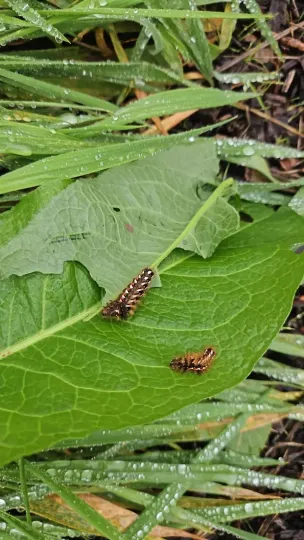
The larvae, or caterpillars, are highly recognizable due to their dense, hairy appearance. They often exhibit a dark background color with contrasting lateral spots or stripes along their bodies.
As a polyphagous species, this moth exhibits a high degree of adaptability. It is widely distributed across various habitats, thriving in both wild environments and cultivated agricultural fields.
The insect completes a full metamorphosis, passing through egg, larval, pupal, and adult stages. It typically overwinters in the pupal stage, encased in a silken cocoon hidden in soil or plant debris.
The biological cycle is heavily influenced by climate conditions. In warmer regions, the species can produce multiple generations within a single growing season, increasing its status as a pest.
What it damages
This pest affects a wide range of crops, including sorrel, strawberries, raspberries, fruit trees like apple and pear, and various ornamental shrubs. Its broad diet makes it a persistent threat.
Damage is primarily caused by the larvae consuming foliage. They create irregular holes in leaves, often skeletonizing them when feeding in groups, which severely hinders the plant's photosynthetic capacity.
Heavy infestations can lead to significant defoliation, particularly in young orchard trees and plant nurseries. This stunts growth and reduces the overall vigor of the host plant.
Beyond foliage damage, the larvae may feed on buds or fruit, leading to aesthetic damage and decay. This reduces the marketability and yield quality of harvested agricultural products.
Infested plants become stressed and are subsequently more susceptible to secondary fungal and bacterial infections. Proactive management is essential to prevent significant harvest losses.
When it appears
The first generation of adults emerges in late spring, usually May. These moths are nocturnal and are highly attracted to artificial light sources during the night.
Larval development typically spans the summer months. Depending on temperature, the active feeding stage can last several weeks, with peak population densities often occurring in mid-summer.
In temperate climates, the species may complete one or two generations annually. The presence of larvae is continuous until temperatures begin to drop in early autumn.
Pupation occurs as the larvae mature, often seeking protected areas to spin their cocoons. These pupae remain dormant throughout the winter, protected from freezing temperatures by soil cover.
Monitoring for adults via light traps is an effective way to forecast larval outbreaks. Early identification allows growers to target the younger larval stages for more efficient control.
Signs of infestation
The most prominent sign of an infestation is the presence of chewed leaf edges and irregularly shaped holes throughout the foliage. Caterpillars are often found resting on the undersides of leaves.
Frass (larval droppings) found on leaves or at the base of plants is a clear indicator of active feeding. Growers should inspect the foliage if any such debris is observed.
Caterpillars may use silk to web leaves together, creating small shelters. Finding these clusters during routine inspections is a strong indicator of a growing colony.
Defoliated shoots or scarred buds on fruit-bearing trees often signal the presence of the pest. Such damage can be catastrophic for the development of the current season's yield.
Regular visual scouting during the evening hours can reveal the presence of adult moths, signaling the start of the egg-laying cycle and the need for vigilance.
Control measures
Effective cultural control includes deep autumn tillage, which disturbs the soil and destroys overwintering pupal cocoons, significantly reducing the population for the next year.
Good sanitation practices are crucial. Removing weeds and crop residues from around the perimeter of fields eliminates primary host sources and reduces the pest's breeding sites.
Biological control methods involve the application of naturally derived insecticides, such as products containing Bacillus thuringiensis, which are effective against larvae while minimizing impact on beneficial insects.
Chemical control should be implemented based on economic thresholds. Targeted insecticide sprays during the early stages of larval development provide the best results in managing population outbreaks.
Always rotate insecticide active ingredients to prevent the development of pesticide resistance. Ensure strict adherence to harvest intervals specified on product labels to guarantee consumer safety.
Taxonomy
- Latin name
- Acronicta rumicis
- Order
- Lepidoptera (butterflies)
- Family
- Noctuidae
- EPPO code
- ACRNRU
Discussion
No discussions yet — be the first.