
South American cotton bollworm
Helicoverpa gelotopoeon
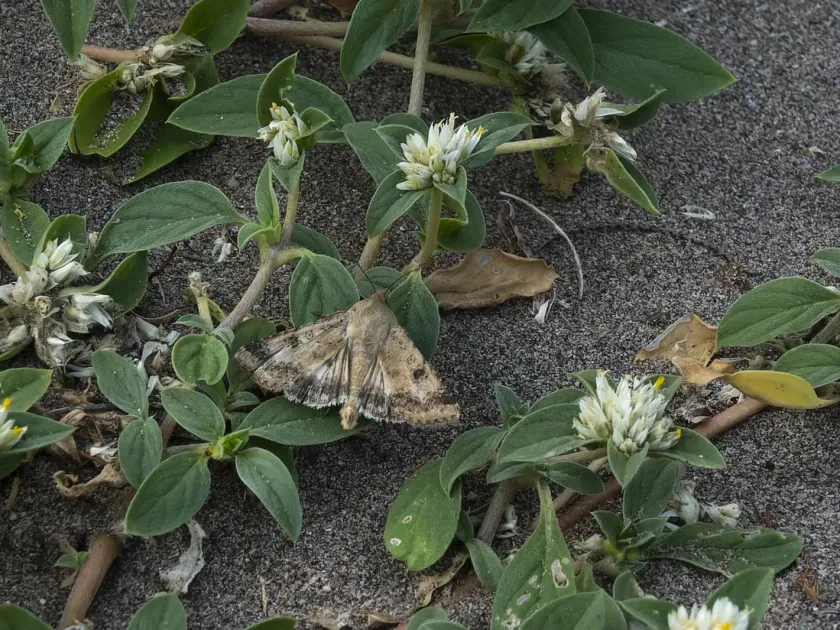
Description
How to identify
The South American cotton bollworm (Helicoverpa gelotopoeon) is a lepidopteran insect belonging to the Noctuidae family, known for its significant impact on regional agriculture.
Adult moths are characterized by a wingspan of approximately 30–40 mm, with coloration varying from light brown to yellowish-gray, providing camouflage on host plants.
Larvae pass through several developmental stages (instars). Their body color is highly variable, ranging from light green to dark brown, often with distinct longitudinal stripes.
Eggs are small, dome-shaped, and usually laid singly on the foliage or reproductive parts of the host plants, making them difficult to spot without close inspection.
The pupal stage occurs in the soil, where the insect remains for a duration determined by environmental factors, protecting it from many external threats.
What it damages
This pest affects a wide range of crops, including cotton, soybean, corn, sunflower, and various vegetable species, posing a threat to production stability.
Early-stage larvae primarily feed on leaf tissues, causing skeletonization and reducing the plant's capacity for photosynthesis during critical growth stages.
As they mature, larvae move to reproductive organs, causing severe damage by feeding on buds, flowers, and developing seeds, which leads to substantial yield loss.
By penetrating fruits and pods, the larvae destroy the commercial value of the crop, creating entry points for pathogens such as fungi and bacteria.
Severe infestations can result in complete crop failure, especially in soybean and cotton fields where the reproductive organs are the primary focus of the larvae.
When it appears
The life cycle begins with the emergence of adult moths in early spring, triggered by the rise in soil temperature that allows pupae to complete their development.
Depending on the region, the pest can complete several generations per season, leading to overlapping populations that require ongoing monitoring.
Peak larval activity is typically associated with the flowering and fruiting stages of the host plants, which provides a high-quality nutritional source for the bollworm.
The duration of the total life cycle is highly dependent on climate conditions; warmer weather accelerates development, leading to faster population growth.
As the growing season concludes, the population enters a stage of winter dormancy, with the insect pupating within the soil to survive lower temperatures.
Signs of infestation
One of the earliest signs of an infestation is the presence of small larval droppings (frass) on the leaves beneath the feeding sites.
Holes found in buds, flowers, or developing cotton bolls are clear indicators that the bollworm has begun attacking the reproductive structures of the plant.
Close observation of the underside of leaves or the bracts of flowers often reveals the presence of eggs, which are key to early detection.
Yellowing or wilting of parts of the plant, often resulting from internal damage by larvae, serves as an indicator of a more advanced infestation.
The presence of fine webbing on leaves or around damaged pods can also point to the high density of larvae, as they use silk to protect themselves.
Control measures
Effective management includes deep plowing during the post-harvest period, which disrupts pupation sites in the soil and reduces the overwintering population.
Biological control, including the release of egg parasitoids like Trichogramma, can be highly effective in reducing the next generation of larvae.
- Deploying pheromone traps to monitor adult flight activity and optimize timing for field interventions.
- Application of bio-rational pesticides like Bacillus thuringiensis for targeted larval control with minimal environmental impact.
- Strategic chemical application based on economic threshold levels to maintain profitability and prevent resistance.
Crop rotation and selecting resistant varieties are essential long-term strategies to diminish the pressure of Helicoverpa gelotopoeon in agricultural landscapes.
Taxonomy
- Latin name
- Helicoverpa gelotopoeon
- Order
- Lepidoptera (butterflies)
- Family
- Noctuidae
- EPPO code
- HELVGE
Discussion
No discussions yet — be the first.