
Tomato moth
Lacanobia oleracea
Description
How to identify
The tomato moth (Lacanobia oleracea) belongs to the Noctuidae family. The adult moth has a wingspan of approximately 35–45 mm, characterized by reddish-brown forewings with a distinctive white kidney-shaped spot, which is a key identification feature.
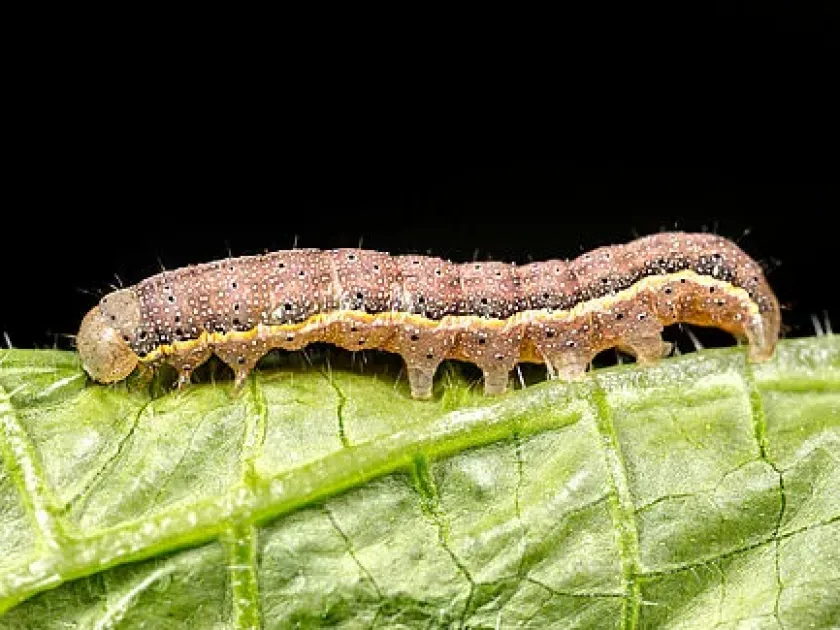
The larvae, or caterpillars, go through five to six larval stages. Their color is highly variable, ranging from pale green to dark brown, which helps them camouflage effectively on various host plants. Fully grown larvae can reach up to 50 mm in length.
Eggs are typically laid in clusters on the undersides of leaves. A single female can produce up to 1500 eggs, making this species a prolific breeder capable of causing rapid infestations within a crop season.
Pupae are dark brown and usually hibernate in the soil within a cocoon. This subterranean life stage provides significant protection against environmental stressors and predators during the colder months.
As a polyphagous species, the tomato moth possesses great adaptability to different environments, making it a persistent pest in both open-field agriculture and greenhouse operations.
What it damages
The tomato moth infests a wide range of vegetable crops, including tomatoes, peppers, cucumbers, cabbage, and lettuce. The larvae are responsible for the vast majority of the damage caused by this pest.
Young larvae feed by skeletonizing the leaf tissue, leaving only the veins. As they mature, they begin to consume the entire leaf blade, creating large, irregular holes that severely reduce the plant's photosynthetic capacity.
The most severe damage occurs when larvae bore into fruits. In tomatoes and peppers, they tunnel deep inside, consuming seeds and flesh. This causes the fruits to rot prematurely and renders them unmarketable.
In cabbage crops, the caterpillars burrow into the heart of the plant. This makes them difficult to reach with topical treatments and causes significant yield losses by destroying the core of the vegetable.
The larvae's frass (excrement) contaminates the fruit and provides a substrate for secondary fungal and bacterial infections, which can rapidly spread across the entire harvested crop.
When it appears
The flight period for adult moths generally begins in late spring, around May or June. Depending on the local climate, the insect can produce one to three generations per year.
Moths are nocturnal, spending the daylight hours in sheltered areas like dense foliage or debris. This makes detection difficult without the use of specialized pheromone or light traps.
The peak period of larval activity and damage typically occurs in mid-to-late summer. During this time, the insect population grows rapidly, often coinciding with the maturation phase of many popular vegetable crops.
In greenhouses, where conditions are more stable, the tomato moth can exhibit continuous overlapping generations throughout the year, requiring vigilant year-round monitoring.
As autumn approaches, late-stage larvae prepare for diapause by entering the soil. Proper field sanitation after harvest is crucial to reduce the overwintering population for the next growing season.
Signs of infestation
Initial signs of infestation include small "windows" or skeletonized areas on leaves. These are often the first indicators that young larvae are present and feeding on the crop.
The presence of dark, granular excrement on the surface of leaves or near the base of the plant is a strong indicator of an active caterpillar infestation nearby.
Holes appearing on the surface of ripening fruit are a critical sign of damage. If you notice dark, soft patches on tomatoes or peppers, it is likely that a larva has tunneled inside.
Monitoring with light or pheromone traps during the night can confirm the presence of adult moths and help determine the timing for protective measures.
Routine inspections of the underside of leaves for egg clusters can help growers intervene before the larvae reach a size that causes significant structural damage.
Control measures
Cultural control is a primary line of defense. Deep tilling of the soil in late autumn or early spring helps bring pupae to the surface, where they become vulnerable to birds and weather conditions.
Maintaining a weed-free environment is essential, as many common weeds serve as secondary hosts for the tomato moth, allowing the population to build up before moving onto main crops.
Biological control agents, such as Bacillus thuringiensis (Bt), are highly effective against early-instar larvae and offer an environmentally friendly alternative to chemical pesticides.
In commercial settings, chemical control using systemic insecticides or insect growth regulators may be necessary. Always observe the pre-harvest interval to ensure food safety.
Integrated Pest Management (IPM) strategies, which combine trap monitoring, natural enemy conservation, and timely applications of control agents, remain the most sustainable way to manage this pest.
Taxonomy
- Latin name
- Lacanobia oleracea
- Order
- Lepidoptera (butterflies)
- Family
- Noctuidae
- EPPO code
- POLIOL
Discussion
No discussions yet — be the first.