
Sudan bollworm
Diparopsis castanea
Description
How to identify
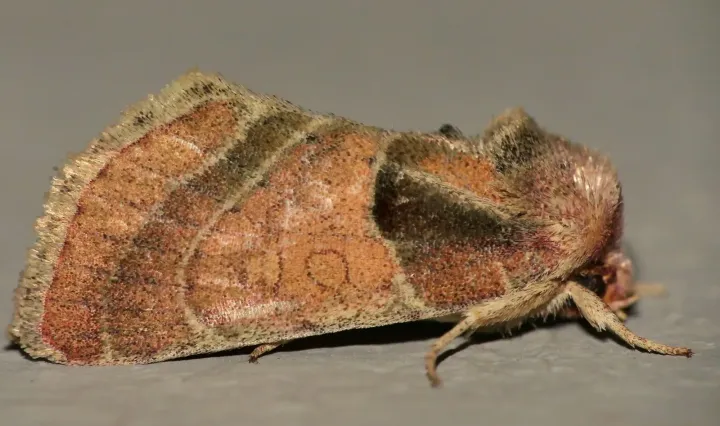
The Sudan bollworm (Diparopsis castanea) is a significant moth species within the Noctuidae family. The adult moth typically has a wingspan of approximately 30–35 mm, with a distinctive orange-brown to brick-red coloration and dark transverse lines across its wings.
The larvae progress through several instars, eventually reaching a length of 25–30 mm. Young larvae are pale, while older ones develop a darker, pinkish-brown appearance with longitudinal stripes, which serves as a key identification feature.
Pupation occurs within the soil, where the insect constructs a tough, silk-lined earthen cocoon. This stage is highly resistant to environmental fluctuations, allowing the species to survive prolonged periods of heat and dry weather.
The eggs are spherical with a ribbed surface and are typically laid singly on young leaves, flower buds, or bracts of the cotton plant. Their small size makes them difficult to detect during field scouting.
As a highly specialized pest, its entire life cycle is closely synchronized with the phenology of the cotton plant, making it a persistent threat in cotton-growing regions of Africa.
What it damages
The primary host of Diparopsis castanea is cotton (Gossypium). The larvae are specialized feeders that focus on the reproductive parts of the plant, directly impacting the final yield quantity and quality.
Initial damage often involves feeding on the terminal buds and young leaves. However, the most severe damage occurs when larvae move to the reproductive structures, boring into squares, buds, and young bolls.
Once a larva enters a cotton boll, it consumes the developing seeds and fiber, leading to internal rot or premature shedding. This destruction renders the fiber commercially unviable.
The entry points created by the larvae also allow for secondary infestations of bacteria and fungi, which can cause rotting of adjacent bolls, further exacerbating the economic loss.
In cases of severe infestation, crop loss can range from 50% to 80%, necessitating aggressive management strategies to protect the harvest and maintain profitability.
When it appears
Adult emergence typically aligns with the onset of the cotton squaring phase. Soil temperature and moisture levels are the main triggers for the transition from pupal diapause to active adult flight.
The species can complete several generations within a single growing season, depending on the ambient temperature and the availability of host plants. Each generation cycle typically lasts between three to six weeks.
During the off-season or unfavorable conditions, the pest enters diapause in the soil. These dormant pupae provide a reservoir for the next season's infestation if the field is not properly managed.
Monitoring the adult flight activity using light traps or pheromone lures is essential for determining the timing of control measures and predicting potential population surges.
Understanding the synchronization between the pest's life cycle and the cotton crop stage is vital for integrated pest management (IPM) success.
Signs of infestation
The earliest sign of infestation is the presence of flared, withered, or fallen flower buds, commonly known as "rosettes." These symptoms often indicate that a larva has already entered or exited the bud.
Small entry holes on the surface of the cotton bolls are characteristic signs of larval boring. Often, frass (larval excrement) can be found near these entry points, appearing as dark, granular deposits.
Deformed, misshapen bolls are another indicator that a larva is developing inside and consuming the inner tissues. Such bolls frequently fail to open properly or drop from the plant entirely.
In cases of heavy infestation, secondary infections may cause the bolls to turn dark or become soft due to rotting, which is easily visible during field inspections.
- Shedding of buds and young bolls.
- Entry holes in the boll wall with visible frass.
- Consumed or stained lint within the boll.
- Deformation of developing cotton bolls.
- Presence of larvae inside the reproductive organs.
Control measures
Cultural control is foundational, with deep plowing after harvest being the most effective method to destroy overwintering pupae in the soil and break the pest's cycle.
Crop rotation and maintaining a "closed season" (a period without cotton cultivation) are essential practices to starve the population and prevent the carry-over of larvae to the next season.
Biological control options include the conservation and augmentation of natural enemies, such as parasitoid wasps that prey on the eggs and early-stage larvae of the bollworm.
Chemical control should be implemented based on economic thresholds derived from trap monitoring. Applications must be timed before the larvae tunnel deep into the bolls, where they are shielded from insecticides.
Sanitation practices, including the removal of crop debris and control of alternative host weeds, help to reduce the overall field population and pressure on the cotton crop.
Taxonomy
- Latin name
- Diparopsis castanea
- Order
- Lepidoptera (butterflies)
- Family
- Noctuidae
- EPPO code
- DIPACA
Discussion
No discussions yet — be the first.