
Smeared dagger moth
Acronicta oblinita
Description
How to identify
The Smeared dagger moth (Acronicta oblinita) is a member of the Noctuidae family. The adult moth features a subtle, mottled grey-brown coloration, providing camouflage against bark and plant stems.
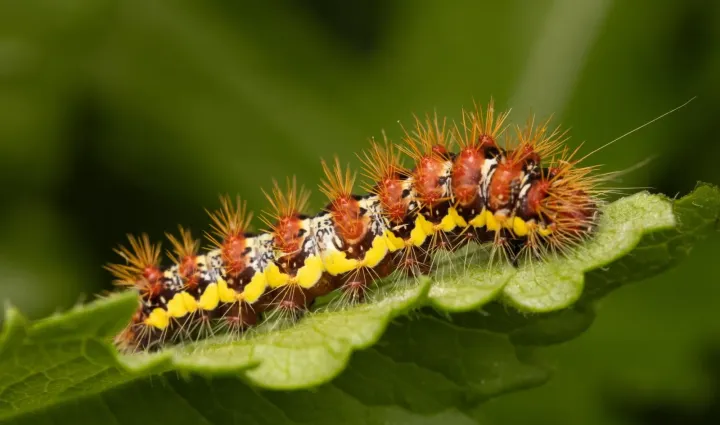
The caterpillars are the most recognizable life stage. They are densely covered in tufts of hair, ranging in color from yellow to brown, which gives them a distinct, fuzzy appearance.
A dark head and pale, longitudinal stripes along the body serve as key physical characteristics for distinguishing this species from other similar moth larvae.
The larvae grow significantly during their development, reaching a length of about 35 to 40 mm. They possess strong mandibles adapted for continuous leaf consumption.
Pupation occurs within a cocoon made of silk and debris. This structure is often found in sheltered spots like leaf litter or crevices, serving as protection for the developing pupa.
##damage##This pest is highly polyphagous, meaning it feeds on a wide variety of plant hosts, ranging from ornamental flowers to commercial agricultural crops.
Commonly affected plants include raspberries, blackberries, apple trees, and various garden vegetables. The moth readily feeds on common weeds as well.
The primary damage is caused by the caterpillars consuming leaves. They start by creating small holes and progress to skeletonizing the foliage, leaving only major veins.
High infestations lead to significant defoliation, which hampers the plant's ability to photosynthesize, resulting in weakened growth and reduced yield quality.
The loss of foliage in late summer can also negatively impact the plant's preparation for winter, reducing its overall hardiness and future productivity.
##season##Adult moths are typically active from late spring through the summer months. They are nocturnal and are frequently attracted to artificial lights at night.
Eggs are deposited on the undersides of host plant leaves. Depending on the local climate and temperature, development from egg to adult is relatively rapid.
The caterpillars are most active and damaging during mid-summer, when their consumption rate peaks during the high-growth phase of garden plants.
The species usually completes one or more generations per year depending on the length of the growing season and regional thermal conditions.
The moth overwinters in the pupal stage. The pupa remains dormant in a protected cocoon within the soil or ground debris until temperatures rise in the spring.
##signs##The most immediate sign of infestation is the presence of irregular holes in leaves, caused by early-stage larvae feeding on the leaf tissue.
Frass, or caterpillar droppings, visible on the leaves or the ground beneath the plant, indicates that larvae are currently active and feeding nearby.
Leaf curling or webbing, where the caterpillar has used silk to fold a leaf for protection or nesting, is a strong indicator of their presence.
Necrotic patches, appearing as discolored brown or yellow spots on the foliage, often develop around the areas where the caterpillar has fed.
A visual search of the plant canopy, especially on tender young shoots, will often reveal clusters of larvae feeding or resting during the day.
##control##Effective management begins with manual removal; on smaller plants, simply picking off the caterpillars and destroying them can significantly reduce damage.
Cultural practices, such as maintaining a clean garden by removing weeds, help eliminate alternative food sources and reduce the overall pest population.
Tilling the soil in the fall can disrupt overwintering pupae, exposing them to environmental elements or predators and lowering the population for the following year.
Biological control methods, including the application of Bacillus thuringiensis sprays, are effective against young caterpillars while being safe for beneficial insects.
- Applying approved insecticides when larval populations exceed economic thresholds.
- Using light traps to monitor population levels and capture adult moths before they lay eggs.
- Encouraging natural predators such as birds and parasitic wasps that target caterpillar larvae.
Taxonomy
- Latin name
- Acronicta oblinita
- Order
- Lepidoptera (butterflies)
- Family
- Noctuidae
- EPPO code
- ACRNOB
Discussion
No discussions yet — be the first.