
Southern armyworm
Persectania ewingii
Description
How to identify
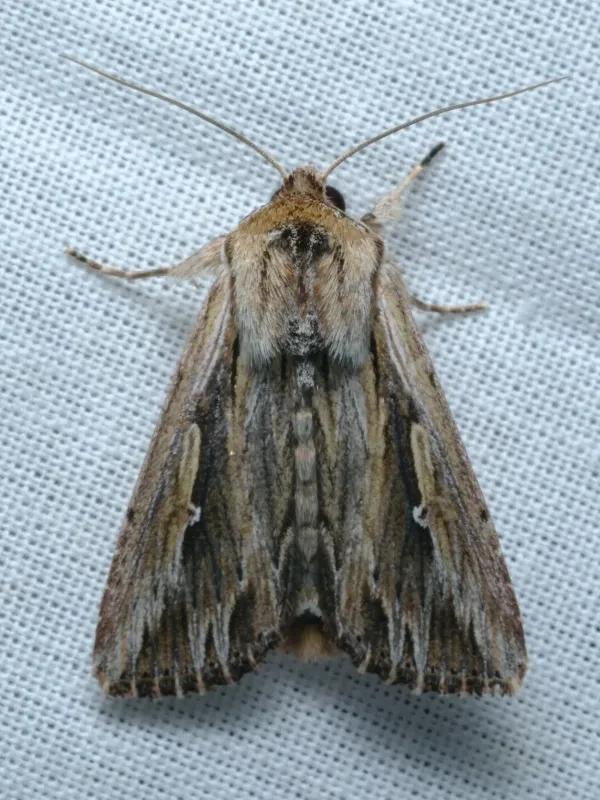
The Southern armyworm (Persectania ewingii) is a member of the Noctuidae family, widely recognized for its impact on cereal crops. Adult moths typically have a wingspan of 35-40 mm and possess brownish-grey wings marked with subtle patterns for camouflage.
The life cycle encompasses eggs, larvae (caterpillars), pupae, and adults. Moths are nocturnal, making them difficult to spot during daytime, as they hide among dense vegetation or within soil crevices.
Larvae exhibit color variation depending on their stage of development, ranging from light green to dark brown, which aids in their survival by blending in with the host plants.
Pupation primarily occurs within the soil, where the insects remain protected during the winter months, emerging as adults when environmental conditions become favorable in the spring.
This species is known for its high reproductive rate, which, under suitable climate conditions, can lead to rapid population spikes that overwhelm natural control mechanisms.
What it damages
This pest specializes in attacking cereal crops such as wheat, barley, and oats. In instances of food scarcity, they may expand their host range to other grasses and green fodder crops.
Larvae cause direct damage by feeding on leaves and stems. During the grain-filling stage, they can cause severe losses by consuming developing grains directly from the ears.
The term "armyworm" is well-deserved, as larvae tend to migrate in dense groups across fields, systematically consuming green tissue and leaving behind stripped stems.
Beyond the direct consumption of biomass, the wounds created by the larvae provide entry points for secondary pathogens, such as fungal infections, which further stress the plants.
Economic damage is often severe when the population density is high, leading to significant yield reduction if interventions are not applied promptly.
Signs of infestation
Initial signs of infestation often include skeletonized leaves where the tissue between the veins has been consumed, leaving the plant structure visibly damaged.
Accumulation of frass (caterpillar excrement) on the ground or in the leaf axils is a primary indicator of active feeding by these pests in the immediate area.
In the grain-filling stage, mangled ears with missing kernels are a clear sign that larvae have been feeding on the maturing seeds.
Visual confirmation of larvae requires careful inspection of the base of plants or soil surfaces, particularly during the twilight hours when the insects are most active.
The presence of predators such as flocks of birds or parasitic wasps in the field can often be a biological signal of a high larval population.
Control measures
Integrated Pest Management (IPM) is essential for controlling this species, focusing on a combination of cultural, biological, and chemical methods.
Cultural practices, such as deep plowing in the autumn, can significantly reduce the number of pupae by exposing them to the surface, where they succumb to cold and predators.
Biological control, including the use of entomopathogenic bacteria or encouraging natural predator populations, serves as a sustainable way to keep numbers in check.
Chemical control remains the most effective option for high-density infestations, provided that insecticides are applied at the correct developmental stage of the larvae.
- Monitoring fields using pheromone traps to predict flight cycles.
- Encouraging natural predators such as ground beetles and birds.
- Applying insecticides only after reaching the economic threshold.
- Keeping field borders free from weeds that host the pest.
Taxonomy
- Latin name
- Persectania ewingii
- Order
- Lepidoptera (butterflies)
- Family
- Noctuidae
- EPPO code
- PERSEW
Discussion
No discussions yet — be the first.