
Tiracola plagiata
Tiracola plagiata
Description
How to identify
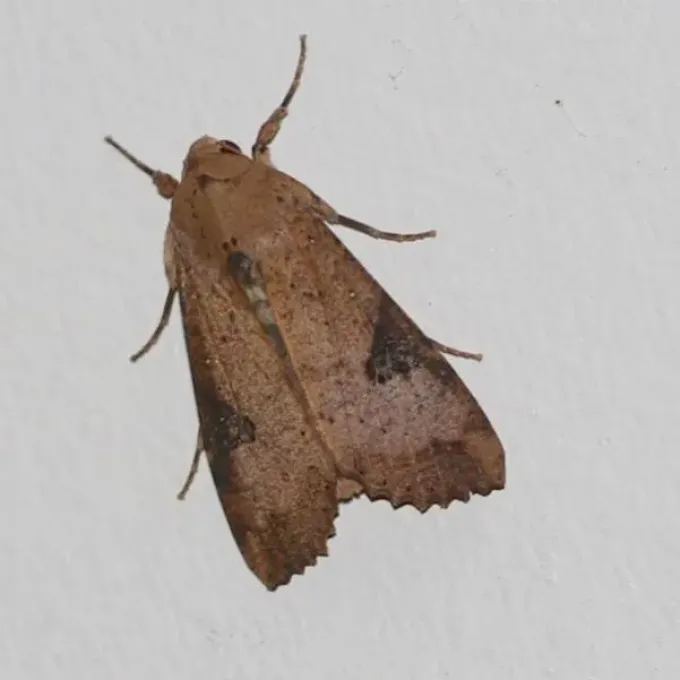
Tiracola plagiata, commonly known as the cacao armyworm or banana moth, is a moth species belonging to the family Noctuidae. It is a significant pest in tropical and subtropical regions worldwide.
The adult moth has a wingspan of approximately 50-60 mm, with brownish or grayish-brown wings featuring complex markings that provide excellent camouflage against tree bark.
The life cycle encompasses four stages: egg, larva (caterpillar), pupa, and adult. The larval stage is the most destructive, characterized by rapid growth and intense feeding behavior.
Mature caterpillars are large, often dark brown or blackish, and possess a robust structure that allows them to consume significant amounts of vegetation in a short period.
The pest completes several generations per year depending on the temperature and humidity, making its management complex and requiring year-round vigilance.
What it damages
This species is highly polyphagous and infests a wide range of economically important crops, including cocoa, coffee, bananas, tea, and various ornamental plants.
The larvae are notorious for their voracious appetite, stripping leaves down to the veins and often consuming soft stems, which can lead to complete defoliation.
Feeding on growing points and young buds causes stunted growth and severe yield losses, especially in young seedlings or nursery settings.
The damage caused by the larvae also facilitates the entry of secondary pathogens, such as fungi and bacteria, which further degrade the health of the host plant.
Heavy infestations can result in the total destruction of foliage, leading to the death of young plants or significant reduction in the productivity of mature crops.
Signs of infestation
Irregular holes or scalloped edges on leaves are the most common early indicators of larval feeding activities in the crop canopy.
Frass (larval droppings) accumulates at the base of the plant or on the surface of lower leaves, serving as a diagnostic sign of active caterpillar presence.
Daytime inspections may reveal larvae hiding in leaf folds, soil debris, or crevices near the roots, as they are nocturnal feeders.
Wilting of terminal shoots due to stem girdling or internal feeding is a clear sign of severe infestation that warrants immediate intervention.
Increased moth activity around light sources at night indicates a high population density and suggests that a new generation of larvae may soon appear.
Control measures
Light traps are essential for monitoring the population density of adult moths and for predicting the timing of peak larval emergence to optimize control efforts.
Biological control agents, such as Bacillus thuringiensis, provide an effective and environmentally friendly way to manage caterpillar populations without harming beneficial insects.
Chemical insecticides should be utilized as part of an integrated pest management (IPM) strategy, focusing on application during early larval stages for maximum effect.
Cultural practices, including regular weeding and maintenance of healthy soil conditions, remove potential refuge areas and reduce the overall attractiveness of the crop to pests.
Manual removal of larvae in small-scale farming or nurseries can significantly suppress localized outbreaks before they expand into the wider plantation area.
Taxonomy
- Latin name
- Tiracola plagiata
- Order
- Lepidoptera (butterflies)
- Family
- Noctuidae
- EPPO code
- TIRAPL
Discussion
No discussions yet — be the first.