
Spodoptera albula
Spodoptera albula
Description
How to identify
Spodoptera albula belongs to the family Noctuidae. It is a nocturnal moth species that is morphologically similar to other members of the genus Spodoptera, often requiring laboratory examination of genitalia for accurate identification.
The larvae, or caterpillars, of this pest pass through several instars. The body of the larva is typically dark in color with longitudinal lateral stripes, providing camouflage against the host plant leaves.
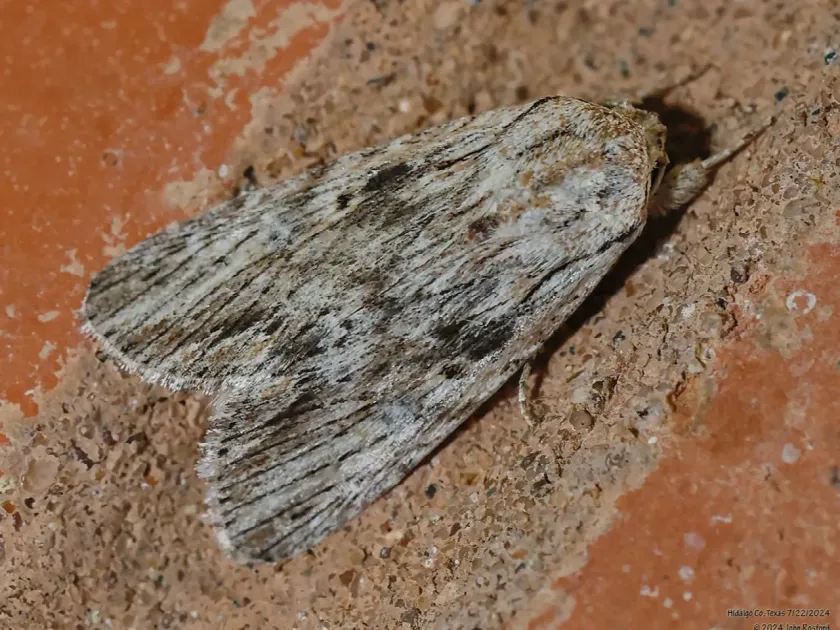
Adult moths have a wingspan of approximately 25–30 mm. The forewings display a grayish-brown pattern consisting of various spots and lines, which helps the insect blend into bark or soil surfaces.
The life cycle encompasses four distinct stages: egg, larva, pupa, and adult (imago). In warmer climates, this species is capable of completing multiple generations within a single growing season.
This species is thermophilic, primarily occurring in tropical and subtropical climates, although it has the potential to expand its range when environmental conditions are favorable.
What it damages
This pest is highly polyphagous, meaning it feeds on a wide array of agricultural crops. Vegetables, cereals, and ornamental plants are all at high risk of infestation.
The greatest economic damage is caused by the larvae, which are voracious feeders. They are capable of destroying both vegetative plant parts and reproductive organs such as buds and fruits.
In soybean, tomato, and corn fields, larvae often consume leaves entirely, leaving only the primary veins behind, which severely impairs the plant's ability to perform photosynthesis.
During outbreaks, Spodoptera albula can decimate entire fields in a very short time, leading to significant financial losses for agricultural producers.
Furthermore, larvae may bore into the stems of young plants, causing them to lodge or die completely, which is particularly devastating during the early stages of crop development.
When it appears
The pest's activity is closely linked to temperature levels. Periods characterized by sustained high temperatures and moderate humidity are most conducive to rapid reproduction and feeding.
Adults are primarily active during the night, during which time they engage in flight, mating, and laying eggs on the underside of leaves.
The overwintering strategy depends on the specific climate zone; in regions with mild winters, development may continue year-round, interrupted only by temporary unfavorable weather conditions.
Monitoring the appearance of the first generation is conducted using pheromone traps, which allow agronomists to detect the start of moth flights and predict potential population explosions.
The developmental period for a single generation typically ranges from 3 to 6 weeks depending on ambient temperature, often resulting in overlapping generations during the summer months.
Signs of infestation
The initial sign of infestation is the presence of small pinholes in the foliage, which expand over time as the growing larvae consume more leaf tissue, resulting in ragged leaf edges.
The accumulation of larval frass (excrement) on the leaves or beneath the plant canopy is a reliable indicator that the crop is infested and requires immediate scouting.
Damaged buds and developing fruits often drop prematurely or begin to rot due to secondary bacterial or fungal infections introduced through larval feeding wounds.
Because early-stage larvae tend to feed in groups, localized yellowing or defoliation is a key warning signal for field managers.
- Presence of egg masses under leaves, often covered in scales from the female's abdomen.
- Characteristic skeletonization of the leaf lamina.
- Twisting or malformation of young developing leaves.
Control measures
Integrated pest management includes cultural practices such as deep plowing, which helps destroy pupae residing in the soil profile.
Effective weed management along field borders is crucial, as many weeds act as alternative hosts that support the survival and reproduction of the pest between crops.
Biological control agents, such as formulations based on Bacillus thuringiensis, are highly effective against younger larval instars and are environmentally friendly alternatives to chemicals.
Chemical control involves the application of contact and systemic insecticides once economic thresholds are exceeded, to prevent widespread destruction of the crop.
It is essential to rotate insecticides from different chemical classes to prevent the development of resistance, which is a common challenge when dealing with Spodoptera species.
Taxonomy
- Latin name
- Spodoptera albula
- Order
- Lepidoptera (butterflies)
- Family
- Noctuidae
- EPPO code
- PRODSU
Discussion
No discussions yet — be the first.