
Tokyo moth
Trachea tokiensis
Description
How to identify
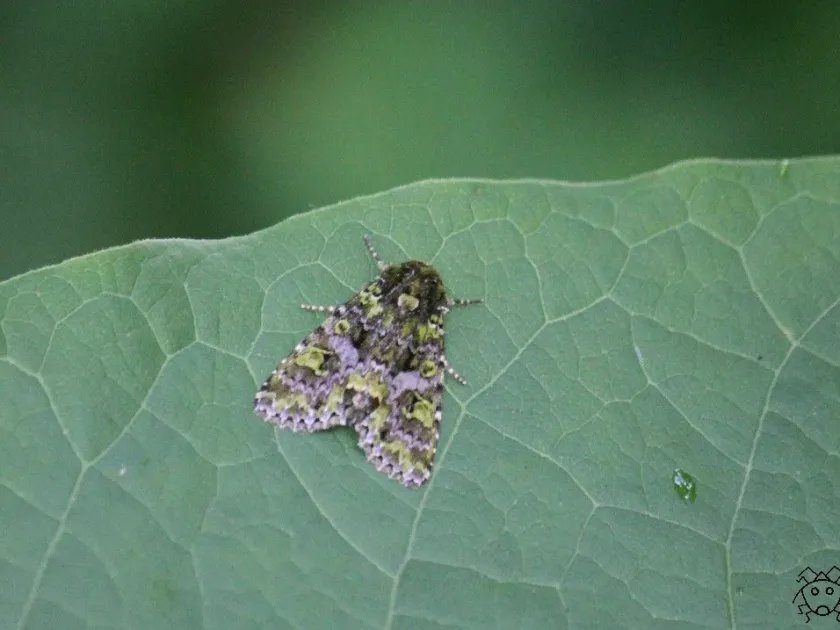
The Tokyo moth Trachea tokiensis belongs to the family Noctuidae. It is a nocturnal insect with a wingspan of approximately 35–45 mm. The forewings feature a cryptic pattern of greyish-brown lines, providing excellent camouflage against bark and soil.
The larvae, known as caterpillars, can reach a length of up to 50 mm. They are generally earth-toned, varying from greenish-grey to brownish, which allows them to hide effectively in the soil or within plant leaf clusters during daylight hours.
This species overwinters as a pupa within the soil at a depth of 10–15 cm. They form robust cocoons mixed with soil particles, which protect the pupa from fluctuating winter temperatures and moisture levels.
The life cycle encompasses four main stages: egg, larva (undergoing five to six instars), pupa, and imago. Development is highly dependent on ambient temperature and the availability of suitable host plants.
Depending on the climatic zone, the Tokyo moth can complete one or two generations per year. The ability to complete multiple life cycles in a single season poses a significant threat to agricultural production.
What it damages
The Tokyo moth is a polyphagous pest, meaning it feeds on a wide range of host plants. It is particularly notorious for damaging potato crops, cabbage, tomatoes, and various leafy greens.
Caterpillars cause extensive damage by chewing through foliage. Young larvae often skeletonize leaves, while older instars consume large portions of the leaf blade, often leaving only the primary veins behind.
In addition to foliage loss, the larvae may feed on stems and underground parts of the plant, such as roots or tubers, significantly compromising the plant's overall health and structural integrity.
Secondary infections are a common consequence of larval feeding. Open wounds left by caterpillars facilitate the entry of bacterial and fungal pathogens, leading to rot and further yield reduction.
Severe infestations can lead to total crop loss if left unmanaged, particularly during the critical developmental stages of the plants when they are most vulnerable to defoliation.
When it appears
Adult moths begin to emerge in late spring or early summer, following the stabilization of nighttime temperatures above 12–15 degrees Celsius. Their activity continues through the peak of the summer season.
Oviposition typically occurs on the undersides of leaves, where eggs are laid in clusters. These eggs incubate for 7 to 12 days, depending on environmental factors like humidity and heat.
The larval stage is the most destructive phase and typically lasts for 30–40 days. During this period, caterpillars grow rapidly and require high levels of nourishment from host crops.
A second generation often emerges in late summer, which is particularly hazardous for late-season harvests. These caterpillars prepare for overwintering by feeding intensely before entering the pupal stage.
As autumn progresses and temperatures fall, the final larval instar burrows into the soil to pupate. The pupal stage serves as the primary mechanism for surviving the winter months.
Signs of infestation
An early indicator of an infestation is the appearance of small "windows" on leaves, where the upper layer of tissue is left intact while the inner tissue is consumed. This eventually creates irregular holes.
The presence of fecal pellets (frass), which appear as small dark granules on the leaves or at the base of the plant, is a reliable sign of active feeding in the immediate area.
Wilting of entire plants can be a sign that larvae are feeding on the roots or the base of the stem, effectively cutting off the plant's supply of nutrients and water.
Monitoring using light traps or pheromone traps is the most effective way to detect the presence of adult moths before damage becomes visible on the foliage.
Careful inspection of the soil near the base of plants during the early morning may reveal hiding larvae, which retreat into the topsoil to avoid daylight and predators.
Control measures
Cultural control methods involve deep autumn plowing or soil cultivation. This process brings pupae to the surface, exposing them to freezing temperatures and natural predators such as birds.
Weed management is critical, as weeds serve as alternative hosts and reservoirs for the pest population. Keeping fields and perimeters clear reduces the moth's ability to thrive.
Biological control, including the use of B. thuringiensis, is effective against young larvae and minimizes the impact on non-target beneficial insects within the ecosystem.
Chemical intervention should be used as a last resort, timed according to the economic threshold of the pest. Always select insecticides that comply with local agricultural safety regulations.
- Implement crop rotation to disrupt the life cycle.
- Use pheromone traps for early detection and monitoring.
- Encourage natural predators like carabid beetles and parasitoid wasps.
- Apply systemic insecticides during the peak larval feeding stage.
Taxonomy
- Latin name
- Trachea tokiensis
- Order
- Lepidoptera (butterflies)
- Family
- Noctuidae
- EPPO code
- TRAETO
Discussion
No discussions yet — be the first.