
Sword-grass moth
Xylena exsoleta
Description
How to identify
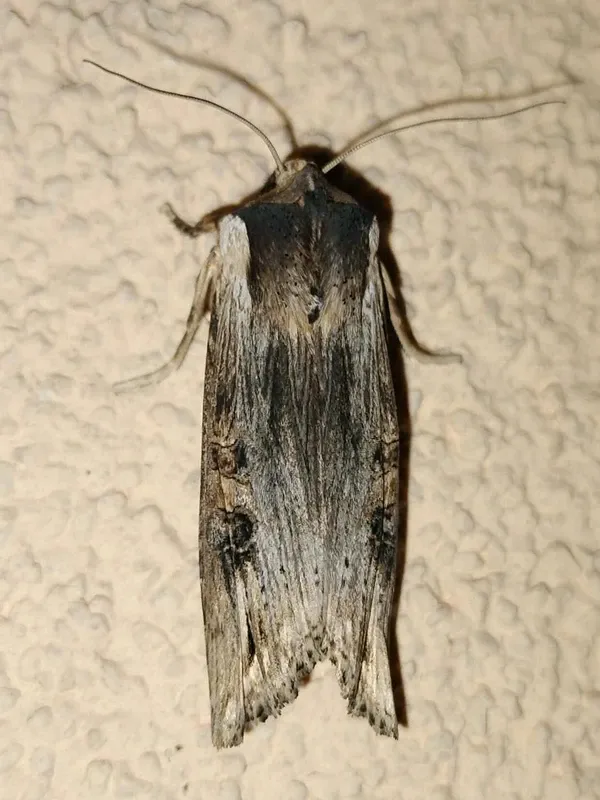
The Sword-grass moth (Xylena exsoleta) belongs to the Noctuidae family. The adult moth has a wingspan ranging from 50 to 65 mm, featuring cryptic coloration that provides camouflage against tree bark.
The forewings are brownish-grey with a pattern that mimics wood grain, while the hindwings are lighter with a diffuse smoky dusting, typical for this genus.
The larvae, or caterpillars, reach a length of 60 mm. They are brightly colored, often possessing a distinct yellow lateral stripe and scattered black and white dots across their dorsum.
Adults overwinter in protected areas, emerging in early spring to deposit eggs on the host plants. The pupal stage typically occurs within a subterranean cell constructed of soil particles.
The species undergoes a complete metamorphosis: egg, larva, pupa, and adult. The timing of generations can vary depending on local climatic conditions and host availability.
What it damages
This insect is a polyphagous pest, capable of feeding on a wide variety of vegetable crops, fruit trees, and ornamental plants found in gardens and agricultural settings.
Larvae feed on leaves, buds, and blossoms. During outbreaks, they can cause severe defoliation, which severely stunts the plant's growth and diminishes its overall health.
In spring, the larvae represent a significant threat to young sprouts and burgeoning fruit buds, as they consume critical tissues necessary for the season's yield.
Damage caused by feeding often results in weakened plants, making them more susceptible to secondary pathogens such as bacteria and fungi, which can be even more destructive.
Vegetable crops are particularly at risk during their early developmental stages when the plant is unable to compensate for the significant loss of foliage.
Signs of infestation
Signs of infestation include irregular holes in leaves and chewed margins. Frass (larval excrement) found on the soil surface under the plant is a clear indicator of feeding activity.
Because the caterpillars are nocturnal, they are rarely seen during the day, as they hide in leaf axils or just beneath the surface of the soil at the base of the plant.
Damaged flower buds and young fruit may show visible bite marks or be entirely hollowed out, leading to premature fruit drop and reduced harvest quality.
The presence of egg batches on the undersides of leaves or twigs during the early growing season is a crucial sign to start monitoring for larval emergence.
Stunted growth or wilting of individual branches often suggests larval feeding at the base of the shoot or on the stem, compromising nutrient flow to the affected area.
Control measures
Cultural control measures, such as soil tillage and hoeing, are effective in disrupting the life cycle by destroying pupae hidden in the ground near host plants.
Biological control involves the use of microbial insecticides or the encouragement of natural predators like parasitic wasps, birds, and carabid beetles that prey on the larvae.
Chemical intervention should be reserved for periods of high infestation, utilizing localized application of selective insecticides to minimize impact on beneficial insects.
Pheromone traps and light traps can be utilized to monitor adult moth populations and provide an early warning system for farmers and gardeners.
- Regular weeding to reduce alternative food sources.
- Hand-picking larvae during early morning or evening hours.
- Maintaining healthy soil to promote vigorous plant resistance.
Taxonomy
- Latin name
- Xylena exsoleta
- Order
- Lepidoptera (butterflies)
- Family
- Noctuidae
- EPPO code
- XYLIEX
Discussion
No discussions yet — be the first.