
Tiliacea citrago
Tiliacea citrago
Description
How to identify
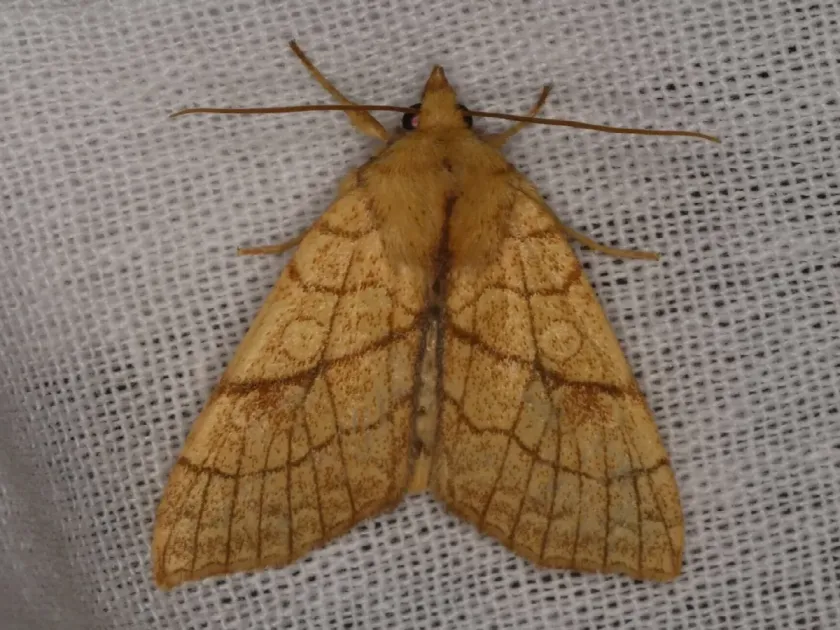
Tiliacea citrago, commonly known as the Orange Sallow, is a moth belonging to the Noctuidae family, order Lepidoptera. Adult moths typically have a wingspan ranging from 30 to 40 mm, with forewings displaying colors from ocher-yellow to golden-orange with characteristic dark transverse lines.
The larvae (caterpillars) of this species undergo several developmental stages, shifting in color from light green to a darker, brownish hue as they mature. Their bodies often feature pale longitudinal stripes that act as camouflage against the foliage of the host tree during the day.
Pupae of this insect are generally brown with a smooth surface. They develop inside a firm cocoon made of silk threads, which the caterpillar constructs either in the soil or within folded leaves of the host plant to overwinter successfully.
This species completes one generation per year. It is a dendrophilous insect, adapted to the conditions of deciduous forests and parklands across temperate regions of Europe and Asia.
To accurately identify adult moths, entomologists often use light traps, as the imagoes are strictly nocturnal and are highly attracted to artificial light sources during the autumn months.
What it damages
The primary host plant for Tiliacea citrago larvae is the small-leaved lime or linden tree (Tilia cordata). On rare occasions, the caterpillars may be found on other Tilia species or associated hardwood trees in forest ecosystems.
The damage is primarily caused by caterpillars of middle and late instars. During periods of population outbreaks, they can cause significant stress to the host tree, leading to severe physiological exhaustion.
Feeding begins in early spring, synchronized with the opening of the tree buds. The caterpillars consume the buds first, subsequently moving to skeletonize or entirely consume the leaf blades, leaving only the major veins.
Heavy feeding pressure results in premature defoliation of trees in parks and urban avenues. This significantly reduces the decorative value of the plantings and weakens the tree's health, diminishing its photosynthetic capacity.
Extensive damage to the crown negatively impacts annual shoot growth. Weakened trees become more susceptible to secondary infections and secondary infestation by stem-boring pests.
When it appears
The flight period of the adult Tiliacea citrago occurs from late August through October. After mating, the females lay eggs on the bark of linden branches, where they remain until the following spring.
The overwintering stage is the egg. Eggs are highly resilient and capable of withstanding low winter temperatures, ensuring the species' survival throughout the temperate winter cycle.
Larval emergence is perfectly synchronized with the beginning of the linden's vegetative phase, specifically bud break. This ensures that the newly hatched larvae have immediate access to the most nutritious food source.
The active feeding and development period of the caterpillars spans through April and May. By late spring, the larvae reach the final instar, pupate, and enter a state of diapause until the autumn.
Because the life cycle is strictly univoltine, the most critical window for implementing pest control measures is the early spring period, when caterpillars are most vulnerable to chemical or biological treatments.
Signs of infestation
The first sign of infestation is the presence of eaten or damaged buds on linden trees at the very beginning of the spring season. Closer inspection reveals boreholes or signs of larval excrement near the bud base.
The presence of rolled leaves, fastened together with silk threads, is a distinct behavioral sign of caterpillar activity. These retreats serve as shelter from predators and adverse weather conditions.
Skeletonization of leaves in the lower and middle sections of the tree canopy indicates the presence of younger caterpillar instars. As the larvae grow, the extent of damage to the leaf blade increases proportionally.
The presence of fine frass (excrement) on the surface of leaves in the lower canopy is a reliable indicator of active caterpillar feeding. This helps in quickly locating centers of population outbreaks.
During periods of high population density, a significant amount of larval waste may accumulate beneath the trees, which indicates the necessity for immediate protective intervention.
Control measures
Biological control methods are based on the use of preparations containing Bacillus thuringiensis. These agents effectively target caterpillars during their active feeding phase and are relatively safe for beneficial entomofauna.
Chemical control is justified when the population density exceeds the economic threshold. Insecticides with systemic or contact action that are approved for use in urban green spaces can be utilized.
Agrotechnical management includes maintaining high tree vitality, timely removal of dead or diseased branches, and implementing practices to attract insectivorous birds to the park areas.
Installing sticky bands on tree trunks can help limit the movement of caterpillars, which is particularly effective for protecting young trees where crown treatment is difficult or undesirable.
- Regular monitoring of population numbers using light traps.
- Application of insecticides during the bud burst phase.
- Preservation of natural enemies: parasitic wasps, predatory insects, and birds.
- Sanitary maintenance of crowns by removing damaged foliage and branches.
- Utilizing biological pesticides to control caterpillar populations effectively.
Taxonomy
- Latin name
- Tiliacea citrago
- Order
- Lepidoptera (butterflies)
- Family
- Noctuidae
- EPPO code
- COSICI
Discussion
No discussions yet — be the first.