
Swiss Dart
Rhyacia helvetina
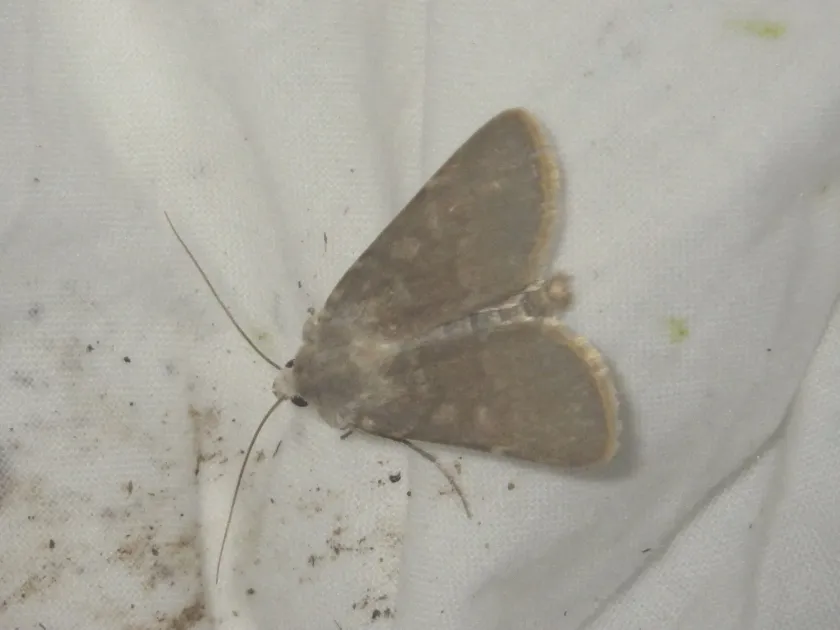
Description
How to identify
The Swiss Dart moth (scientific name: Rhyacia helvetina) is a member of the Noctuidae family, belonging to the order Lepidoptera. This moth is characterized by its average size and the classic, tightly folded wing posture typical of the family.
The adult moth is nocturnal, featuring a coloration that ranges from grey to brownish-grey, providing excellent camouflage against tree bark and organic matter during the daylight hours.
The larvae, commonly known as cutworms, possess a robust and smooth body structure, which is a hallmark of the genus. Their dark coloration serves as an adaptation to remain hidden in the topsoil during the day.
Accurate species identification usually requires professional entomological analysis of genitalia, but field agronomists can recognize them by their feeding patterns and host plant associations.
Adult moths remain inactive and well-hidden under leaves or in soil crevices during the day, becoming active foragers only after dusk when they begin to mate and lay eggs.
What it damages
The primary damage is caused by the larval stage (caterpillars), which are polyphagous and feed voraciously on the vegetative parts of a wide range of agricultural crops.
Major hosts include various cereal crops, vegetable plantations, and forage grasses, leading to significant yield losses in regions where the pest is established.
The larvae typically exhibit secretive behavior, preferring to damage the root crown, underground stems, and the base of young seedlings beneath the soil surface.
This feeding activity disrupts the plant's nutrient uptake, causing yellowing, wilting, and eventually the death of the crop in infested areas.
- Severing of the root system and plant stems.
- Defoliation and feeding on the base of young sprouts.
- Increased susceptibility of damaged plants to various secondary soil-borne infections.
When it appears
The life cycle of the Swiss Dart is heavily influenced by regional climatic conditions, which dictate the timing of adult emergence and larval development.
The pest primarily overwinters in the soil as a larva or pupa, which allows it to survive low winter temperatures and emerge early in the spring season.
As soil temperatures rise in the spring, the larvae resume active feeding, which coincides with the germination and early growth stages of most agricultural crops.
The peak flight of adult moths occurs in mid-summer, during which mating takes place and eggs are laid directly onto host plants or the adjacent soil surface.
Depending on the climatic zone, the pest may produce one or two generations per year, necessitating constant vigilance and monitoring throughout the growing season.
Signs of infestation
The most evident sign of an infestation is the emergence of stressed, wilting plants in patches, which are easily uprooted due to extensive damage to the root system.
Inspection of the soil surface during evening hours may reveal the presence of larvae as they emerge to feed on the accessible parts of the plants.
The presence of frass (larval excrement) near the root zone is a definitive sign of active feeding by a population of cutworms within the soil layer.
Feeding marks such as notches on leaves or stems severed at the soil level are classic indicators of cutworm activity within the field.
The rapid expansion of empty patches in a crop field is a serious warning sign of high pest density that requires immediate diagnostic action and treatment.
Control measures
Effective management of the Swiss Dart moth requires an integrated pest management (IPM) approach combining mechanical, cultural, and chemical controls.
Deep autumn plowing is a vital cultural practice that disturbs the soil, exposing overwintering larvae and pupae to predators and adverse environmental conditions.
Rigorous weed management is essential, as many weeds act as alternative hosts and egg-laying sites for the moths, sustaining the population throughout the season.
Chemical control involving systemic or contact insecticides should be applied during the evening, when larvae are most active on the soil surface and feeding.
Biological control, utilizing beneficial insects or microbial agents, can serve as a sustainable method to maintain pest numbers below the economic injury level.
Taxonomy
- Latin name
- Rhyacia helvetina
- Order
- Lepidoptera (butterflies)
- Family
- Noctuidae
- EPPO code
- RHYIHL
Discussion
No discussions yet — be the first.