
Suspected moth
Parastichtis suspecta
Description
How to identify
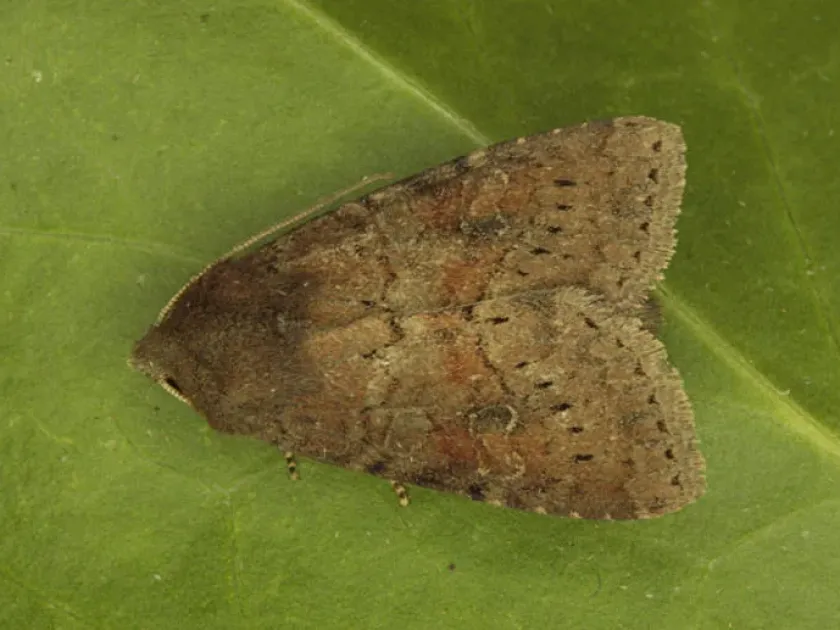
The suspected moth (Parastichtis suspecta) is a moth belonging to the family Noctuidae, order Lepidoptera. Adult specimens possess a wingspan ranging from 30 to 38 mm, featuring forewings with a mottled gray-brown or ochre coloration.
The larvae, or caterpillars, are typically 30–35 mm long when fully grown. They display a cylindrical body shape and camouflage colors, which aid in concealment against the bark and leaves of their host plants.
This species follows a complete metamorphosis life cycle, involving four distinct stages: egg, larva, pupa, and adult. This biological progression is standard for members of the Noctuidae family.
The moth is primarily found in woodland areas where its host trees, specifically birch and poplar, are abundant. It is known to be attracted to both artificial light sources and tree sap during the night.
Scientific observation of this species is essential for managing woodland health, as population spikes can lead to significant localized defoliation events.
What it damages
The primary hosts for Parastichtis suspecta include various species of the genera Betula (birch) and Populus (poplar). Larvae feed voraciously on young leaves and developing buds.
Feeding damage is concentrated in early spring, when the larvae emerge from their overwintering stage. They consume leaf tissue, which can result in severe defoliation if populations are high.
Defoliation significantly reduces the tree's photosynthetic capability, leading to reduced vitality and weakened immunity against secondary pathogens or pests.
In forestry settings, persistent attacks from this moth can cause reduced biomass gain, negatively impacting timber production and the aesthetic value of ornamental trees.
Young nursery stock is particularly susceptible to the damage caused by these caterpillars, which can lead to stunted growth or deformed structural development in the trees.
When it appears
The flight period for the adult suspected moth typically occurs during the mid-summer, specifically between July and August. During this time, mating and egg-laying take place.
The overwintering stage is the egg, which is laid in the crevices of host tree bark. Embryonic development concludes in the spring as temperatures rise and buds begin to burst.
Larval feeding peaks between April and May, coinciding with the most rapid growth phase of the trees. This timing makes the impact of the pest most severe during the early season.
Pupation takes place in early June within the soil or ground litter layer. The pupal stage lasts approximately one month before the next generation of adults emerges.
This annual life cycle is tightly synchronized with the phenology of host trees, ensuring that food availability is at its peak when the larvae are most active.
Signs of infestation
The most prominent sign of infestation is the skeletonization of leaves or ragged edges on the foliage of birches and poplars during the spring months.
Caterpillars may be found hiding at the base of leaf stems or within curled leaf rolls, making visual detection difficult due to their effective mimicry.
Accumulated frass (larval droppings) on the leaves or beneath the tree canopy is a clear indicator of the presence of an active feeding population.
Trees heavily infested by the suspected moth often exhibit delayed budding or a sparse canopy, which is a major indicator of high pest density.
Monitoring the presence of adults via light traps in mid-summer allows arborists to estimate the severity of the potential infestation for the following spring season.
Control measures
Biological control methods are preferred, including the encouragement of natural predators like insectivorous birds and predatory wasps that regulate moth populations.
Biological pesticides, specifically those containing Bacillus thuringiensis, are highly effective against early-instar larvae and have minimal environmental impact.
Chemical control with contact insecticides should be reserved for severe outbreaks and applied in accordance with regional environmental regulations to avoid harming beneficial species.
Cultural practices, such as maintaining healthy soil conditions and ensuring proper tree spacing, help improve tree resilience against defoliator attacks.
Pheromone monitoring systems are a precise tool for tracking population levels, allowing for targeted intervention only when necessary, thus reducing the need for broad-spectrum chemicals.
Taxonomy
- Latin name
- Parastichtis suspecta
- Order
- Lepidoptera (butterflies)
- Family
- Noctuidae
- EPPO code
- PARISU
Discussion
No discussions yet — be the first.