
Soybean looper
Chrysodeixis subsidens
Description
How to identify
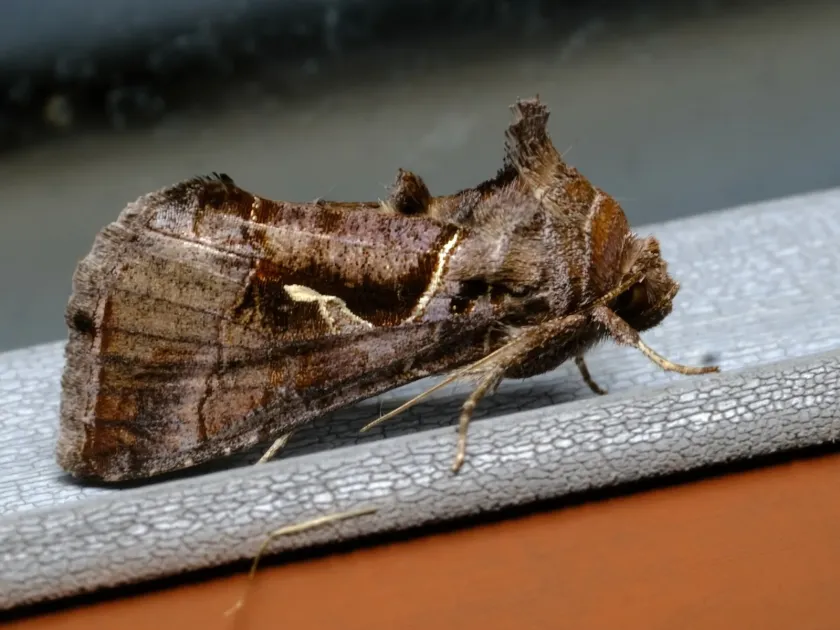
The Soybean looper (Chrysodeixis subsidens) belongs to the order Lepidoptera and the family Noctuidae. The adult moth typically has a wingspan ranging from 30 to 40 millimeters, making it a medium-sized noctuid moth.
The forewings are generally greyish-brown with a metallic sheen. A diagnostic feature is the presence of a central golden spot, which resembles the Greek letter "gamma". However, this spot can sometimes appear smaller or less distinct compared to other related species.
The larvae are known for their distinct "looping" movement, which is a result of having fewer abdominal prolegs compared to other caterpillar species. They are typically light green, helping them blend into the foliage of their host plants.
The pupal stage occurs within a silken cocoon, which is usually spun on the underside of leaves or within plant debris. This behavior provides a level of protection against predators and environmental fluctuations.
The lifecycle and number of generations per year are highly dependent on temperature. In warmer climates, this species can complete multiple lifecycles in a single season, leading to rapid population surges that require monitoring.
What it damages
This pest is a polyphagous insect, feeding on a wide variety of crops. It is known to cause significant damage to legumes, vegetables, cereals, and industrial crops like cotton and oilseeds.
Early-stage larvae primarily feed by skeletonizing leaves, eating the soft tissue while leaving the larger veins intact. As they grow, they consume more leaf area, which drastically reduces the plant's capacity for photosynthesis.
In addition to leaf consumption, the larvae often attack the reproductive structures of the plant, such as flower buds and pods. This direct damage to reproductive organs leads to yield loss and a decrease in the overall quality of the harvested produce.
During periods of drought or plant stress, the damage caused by the soybean looper becomes more severe. Stressed plants have less capacity to recover from defoliation, which can lead to significant economic impacts on crop production.
Furthermore, the physical damage created by larval feeding provides entry points for secondary pathogens. Infections by fungi or bacteria can follow, further weakening the crop and adding to the yield loss.
Signs of infestation
The first indicator of an infestation is the appearance of irregular holes, often called "windowing," on the leaves. Observing these signs in the morning, along with the presence of small, granular frass, confirms larval activity.
Finding loop-moving caterpillars on the undersides of leaves is a definitive diagnostic step. Large infestations may result in heavily defoliated plants, with damage often appearing initially in the lower canopy.
Monitoring for adult moths is essential for early detection. The use of pheromone traps placed in fields can help identify the timing of moth flights, which is a key indicator for predicting subsequent egg-laying periods.
Curled or webbed leaves are common hiding spots for older larvae and can be used as a sign during scouting. Border rows should be inspected regularly as the moths often invade fields from adjacent areas or weeds.
A sudden decline in plant health or patches of yellowing foliage without root damage should prompt a search for looper caterpillars, as they can sometimes feed in a way that is not immediately visible.
Control measures
Integrated Pest Management (IPM) is the most effective approach. This includes regular field scouting to determine the economic threshold before applying any chemical insecticides, especially those targeting larvae.
Cultural control practices, such as deep plowing after harvest, can help bury and destroy pupae residing in the soil. Maintaining field sanitation and managing weeds, which serve as alternative hosts, is critical to reducing early-season population spikes.
Biological controls include the use of Bacillus thuringiensis sprays, which are highly effective against young larvae. Encouraging natural enemies, such as parasitic wasps like Trichogramma, can also help keep populations in check.
Crop rotation and selecting resistant plant varieties can contribute to long-term population management. These practices help break the life cycle of the pest and reduce its ability to build up in the soil over time.
- Application of insecticides at the recommended economic threshold.
- Use of biological control agents and biopesticides.
- Deep tillage for pupae destruction.
- Weed control to eliminate host refuges.
Taxonomy
- Latin name
- Chrysodeixis subsidens
- Order
- Lepidoptera (butterflies)
- Family
- Noctuidae
- EPPO code
- PLUSPS
Discussion
No discussions yet — be the first.