
Spodoptera pulchella
Spodoptera pulchella
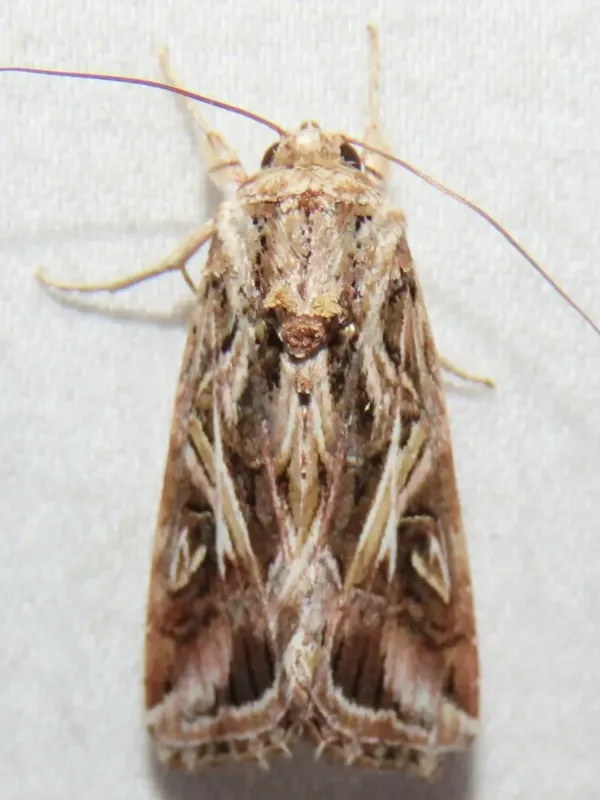
Description
How to identify
Spodoptera pulchella belongs to the order Lepidoptera and the family Noctuidae. Like many other members of the Spodoptera genus, it is a significant pest known for its ability to thrive in various agricultural environments.
The adult moth features intricate patterns on its forewings, providing excellent camouflage against soil and foliage. The hindwings are generally paler, often exhibiting a slight sheen, which is typical for this nocturnal species.
The larvae progress through several instars, with their appearance changing as they grow. They often exhibit distinct markings that distinguish them from other similar caterpillar species found in crop fields.
Pupation occurs in the soil, where the insect constructs a subterranean chamber. This stage is crucial for survival, protecting the pupa from fluctuating environmental conditions and natural enemies.
Monitoring the population of this pest is best achieved through the use of light traps or pheromone traps, which are highly effective for detecting the presence of adults before significant damage occurs.
What it damages
As a polyphagous insect, Spodoptera pulchella can cause extensive damage to a wide array of crops. This includes vegetable crops, legumes, and several field crops, making it a major concern for farmers.
Early-stage larvae typically engage in leaf skeletonization, feeding on the soft tissue while leaving the veins intact. This behavior can quickly lead to widespread leaf dehydration and reduced plant vigor.
As larvae reach later instars, their feeding capacity increases dramatically. They consume entire leaf blades and may target tender shoots, causing significant loss of leaf area and impeding plant growth.
Reproductive parts, including buds and developing fruits, are also targeted by the larvae. This direct damage significantly affects the yield quantity and quality of the harvested produce.
The feeding activity creates wounds that serve as entry points for secondary infections, such as bacterial or fungal rot, which can further compound the damage caused by the insect itself.
When it appears
The life cycle of Spodoptera pulchella is highly dependent on climate and temperature. In tropical and warm temperate regions, the species can produce multiple generations per year.
The flight of adult moths typically commences with the onset of favorable spring temperatures. Mating and egg-laying follow, often occurring in the cover of darkness to avoid detection.
Eggs are laid in batches, often protected by hairs derived from the female's body. These clusters are frequently deposited on the underside of leaves to provide shade and moisture.
The duration of the developmental cycle is influenced by the heat index. Higher temperatures result in a faster turnover of generations, requiring continuous monitoring throughout the growing season.
The species overwinters in the pupal stage within the soil. Cultivation practices that disturb the soil after harvest can disrupt this process and significantly reduce the emergence of the next generation.
Signs of infestation
Early detection is possible by looking for egg masses on the lower surface of leaves. These masses often appear as small, fuzzy patches, which are distinct from the leaf texture.
The presence of larval frass (excrement) on leaves or the soil surface is a clear indicator of active feeding by caterpillars, even if the larvae themselves are hidden.
Small, translucent patches on leaves where the parenchyma has been consumed, leaving the epidermal layer intact, are classic symptoms of early larval feeding activity.
Wilted buds or unexplained defoliation are signs that the larvae have moved to more critical parts of the plant and are causing significant stress to the crop.
Finding nocturnal larvae resting in the soil or at the base of plants during the day is a primary indication of an active and potentially damaging infestation.
Control measures
Effective management requires an integrated approach that combines biological, mechanical, and chemical control measures to minimize crop loss.
Tillage is a highly effective mechanical method to destroy pupae residing in the soil, effectively reducing the carryover population for the following season.
Weed management in and around the fields is essential, as many weeds act as secondary hosts for Spodoptera pulchella when primary crops are not available.
Biological control agents, such as formulations of Bacillus thuringiensis, are effective against young larvae and represent an environmentally friendly control option.
- Utilize pheromone traps for precise monitoring and timing of interventions.
- Apply systemic insecticides only when economic thresholds are reached.
- Encourage the presence of natural predators and parasitoids in the field.
Taxonomy
- Latin name
- Spodoptera pulchella
- Order
- Lepidoptera (butterflies)
- Family
- Noctuidae
- EPPO code
- SPODPU
Discussion
No discussions yet — be the first.