
Thysanoplusia
Thysanoplusia
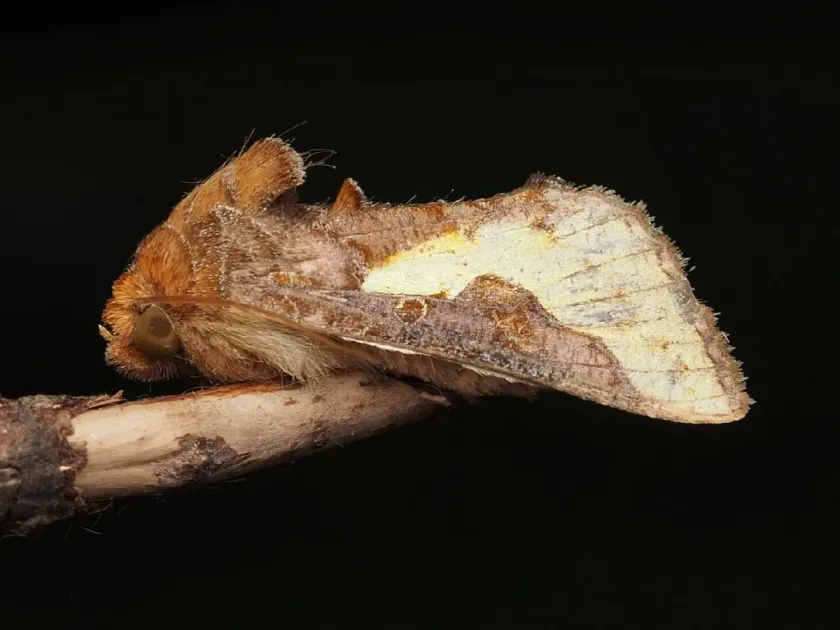
Description
How to identify
Thysanoplusia is a genus of moths belonging to the Noctuidae family within the order Lepidoptera. These moths are nocturnal and often remain undetected in the field due to their excellent camouflage abilities.
Adult moths typically have a wingspan of 30–40 mm. Their forewings are generally brown or golden-toned, featuring a distinct metallic, silvery mark in the center shaped like a droplet or the Greek letter gamma.
The larvae, known as loopers, have slender green bodies with thin white longitudinal stripes. They exhibit a characteristic looping movement, arching their backs to bring their hind prolegs toward their thoracic legs.
These larvae are equipped with developed prolegs that allow them to grip plant stems securely. A mature larva can reach 35–40 mm in length and possesses powerful chewing mouthparts.
The pupae develop inside a delicate white silken cocoon, which the larvae spin within folded leaves or leaf litter. The pupal color transitions from light green to dark brown depending on the developmental stage.
What it damages
Thysanoplusia is a polyphagous pest, meaning it feeds on a wide variety of agricultural plants. Major crops at risk include tomatoes, potatoes, legumes, brassicas, and various ornamental greens.
Significant damage occurs on crop foliage where larvae feed aggressively. In the early stages of infestation, they create small, window-like holes in the leaf surface.
As the infestation increases in density, the larvae consume almost the entire leaf tissue, leaving behind only the larger veins. This destruction significantly reduces the plant's photosynthetic capacity.
For ornamental or floral crops, the larvae can damage flower buds and growth points, severely impacting the marketability and development of the plants.
The loss of foliage weakens the overall plant vigor, making it more susceptible to secondary fungal or bacterial infections through the damaged tissue.
When it appears
The life cycle of Thysanoplusia is highly dependent on ambient temperature, as the species thrives in warm conditions. In temperate regions, activity starts in late spring as soon as temperatures stabilize.
The species can complete multiple generations within a single growing season, which makes control efforts more challenging. Moths are primarily active at night, while larvae feed throughout the day and night.
Adult flight usually occurs from June through September. Optimal development occurs at temperatures ranging between 22 and 28 degrees Celsius with moderate humidity levels.
They typically overwinter as pupae or older larvae in the upper soil layers or beneath dense plant debris. This behavior ensures their survival during the winter months.
Field monitoring should commence as soon as the first true leaves appear on the crop, ideally utilizing pheromone traps to detect the arrival of adult moths.
Signs of infestation
The primary sign of infestation is the presence of frass (larval droppings) on the leaves or the soil surface beneath the plants. They appear as small, dark, granular pellets.
Another obvious symptom is the skeletonized appearance of the leaves, characterized by irregular holes and jagged margins. These edges often dry out and turn yellow over time.
Careful inspection of the undersides of leaves is required to locate the larvae themselves. Because of their green coloration, they blend seamlessly with the foliage.
If you notice leaves folded or webbed together, it indicates that a larva is preparing to pupate. Unfolding these leaves often reveals the caterpillar or a completed white cocoon.
General plant decline, including stunted growth and premature wilting, serves as an indirect indicator that the vascular integrity of the leaf has been compromised by heavy feeding.
Control measures
Cultural control methods include regular cultivation of the soil between rows to disturb pupation sites and destroy larvae hiding in the upper soil horizon.
Weed management, especially removing plants from the Asteraceae and Brassicaceae families, eliminates alternative food sources and breeding sites for the pest.
Biological control involves the application of Bacillus thuringiensis-based products, which effectively target younger larvae while remaining harmless to beneficial pollinator populations.
Chemical control should be implemented based on economic injury levels using systemic or contact insecticides. It is essential to rotate chemical modes of action to prevent resistance.
- Utilizing pheromone traps to disrupt mating cycles.
- Encouraging natural predators such as parasitic wasps and predatory bugs.
- Ensuring thorough post-harvest field sanitation and deep plowing of crop residues.
Taxonomy
- Latin name
- Thysanoplusia
- Order
- Lepidoptera (butterflies)
- Family
- Noctuidae
- EPPO code
- THYPSP
Discussion
No discussions yet — be the first.