
Stalk borer
Papaipema nebris
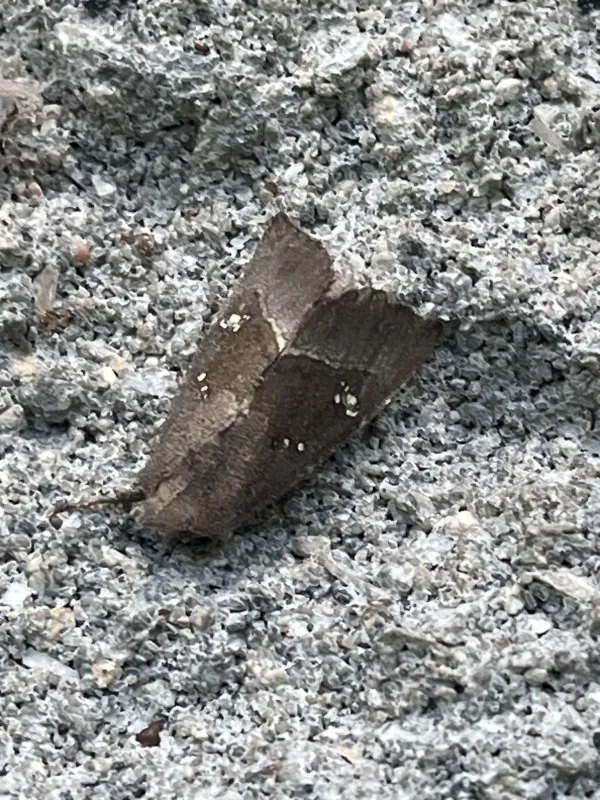
Description
How to identify
The stalk borer (Papaipema nebris) is a moth belonging to the Noctuidae family. It is a well-known pest in agricultural regions, particularly where corn is grown as a primary crop.
Adult moths typically have a wingspan of about 30-35 mm. They are generally brownish-grey with a characteristic lighter-colored transverse band across the wings, allowing them to blend into their environment.
The larvae, which are the stage responsible for the damage, are easily recognizable. When young, they are creamy-white with a distinctive dark stripe along their bodies. As they mature, they become more brownish and lose some of the distinctness of their stripes.
The life cycle of the stalk borer is typically univoltine, meaning there is one generation per year. They overwinter as eggs, which are deposited in plant debris and grassy areas near crop fields.
Understanding the life cycle is crucial for effective management, as timing the interventions to match the larval emergence period is the key to preventing major damage.
What it damages
The stalk borer is highly polyphagous, meaning it feeds on a wide range of plants. While corn is the primary target for economic damage, it also infests various weeds, which serve as reservoirs for the pest population.
Larvae cause damage by boring into the stems of plants. This boring activity physically weakens the stem, leading to reduced nutrient uptake and potential collapse of the plant during windy conditions.
Infested corn plants often show poor ear development and reduced grain quality. The open holes created by the larvae also allow moisture and fungal pathogens to enter the plant tissues, further exacerbating the damage.
High infestation levels can result in significant yield losses, especially if the plants are attacked at an early stage of development when they are most vulnerable.
The presence of weeds like giant ragweed or cocklebur in or near fields significantly increases the risk of stalk borer migration into the main crop.
Signs of infestation
The most early and noticeable sign of a stalk borer infestation is the presence of "ragged" leaves. This happens when the larvae tunnel into the whorl of the plant before the leaves have fully unfurled.
Another classic symptom is the "dead heart" condition, where the central leaf or whorl of the corn plant wilts and dies while the lower leaves remain green for some time.
Physical inspection of the stem often reveals entry holes where the larvae have bored inside. These holes are usually found near the base of the plant and are accompanied by piles of sawdust-like frass.
Severely damaged stems may become brittle and break easily. In the late stages of growth, the plant may show uneven maturity or stunted growth compared to healthy surrounding plants.
During the scouting process, identifying the specific patterns of leaf damage or missing plants in a row helps in assessing the population density of the pest.
Control measures
Integrated Pest Management (IPM) is the most effective approach. This includes the management of grassy weeds and field borders to reduce the initial overwintering population.
Tillage practices, such as fall plowing, can help disrupt the life cycle of the pest by burying the eggs and debris where they are laid, thereby reducing survival rates.
Chemical control is challenging because larvae are protected once they enter the stem. Therefore, insecticide applications must be timed precisely during the larval migration period.
Biological controls, including natural predators and parasitoids, play a role in maintaining the population at manageable levels. In some cases, releasing beneficial insects can be a viable strategy.
- Maintain weed-free field margins.
- Monitor pest movement using pheromone traps.
- Use insecticides only at the peak of larval emergence.
Taxonomy
- Latin name
- Papaipema nebris
- Order
- Lepidoptera (butterflies)
- Family
- Noctuidae
- EPPO code
- PAPANE
Discussion
No discussions yet — be the first.