
Syngrapha epigaea
Syngrapha epigaea
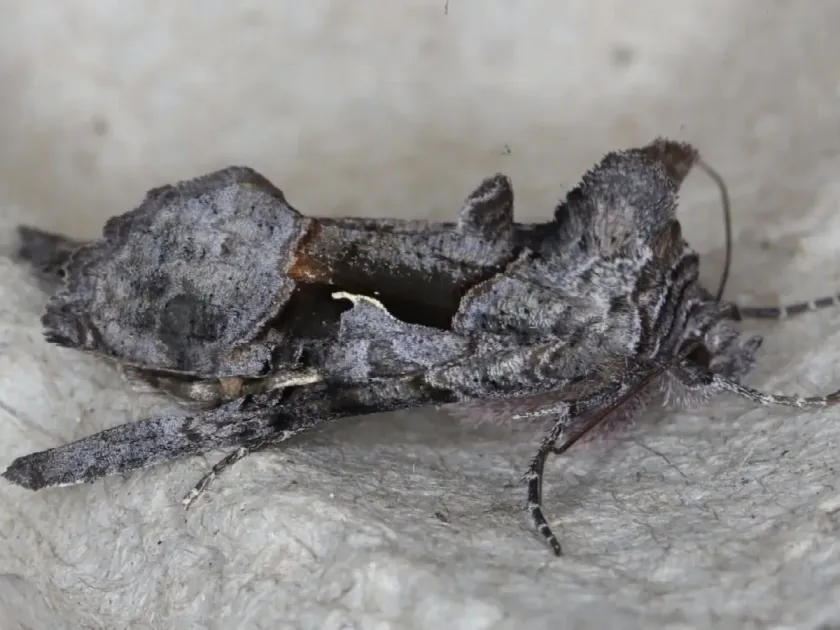
Description
How to identify
Syngrapha epigaea is a moth species belonging to the family Noctuidae and the subfamily Plusiinae. These moths are characterized by a medium size, with a wingspan ranging from 30 to 40 mm.
The forewings typically feature a metallic or silvery marking in the center, which serves as a key identification feature for this specific species within the subfamily.
Adult moths are nocturnal, spending daylight hours resting on vegetation or under bark, relying on their protective coloration to blend in with the environment.
The life cycle follows a complete metamorphosis: egg, larva, pupa, and adult. The overwintering stage is typically the pupa, which remains protected in a loose cocoon within the soil.
These moths are adapted to temperate forest and grassland regions, often appearing in areas where suitable host plants are abundant throughout the spring and summer months.
What it damages
As a polyphagous species, the larvae of Syngrapha epigaea feed on a variety of plants, occasionally causing significant pressure on commercial crops.
The primary damage is caused by the caterpillars consuming the leaves, which reduces the plant's ability to photosynthesize and store energy for development.
In cases of high infestation, the larvae may feed on flowers and reproductive structures, directly reducing the potential yield of the crop.
Young larvae often start by skeletonizing the leaf tissues, while older larvae consume larger portions of the leaf blade, often reaching the midrib.
Severe infestations can lead to stunted plant growth and an increased susceptibility of the crop to secondary pathogens, further exacerbating the damage caused by the pest.
Signs of infestation
Evidence of infestation is usually found by observing irregular holes or chewed edges on the leaves of the target plants during regular field scouting.
The presence of frass (caterpillar droppings) on the leaves or the soil surface is a strong indicator of recent feeding activity by the larvae.
Observation of the larvae themselves, especially in the evening, confirms the presence of the pest, as they are typically most active at night.
In some cases, the presence of light webbing on the leaves where the caterpillars hide indicates their activity, particularly in dense foliage.
Light traps are highly effective for detecting the presence of adult moths in the field, providing an early warning for potential egg-laying cycles.
Control measures
Cultural control measures, such as deep autumn plowing, are highly effective in disrupting the overwintering pupae and reducing the population for the next season.
Weed management is critical, as controlling alternative host plants significantly limits the population growth of the larvae before they migrate to cash crops.
Biological control using microbial insecticides containing Bacillus thuringiensis offers a targeted approach that is safer for beneficial insects and the environment.
Chemical control should be implemented as a last resort when monitoring indicates that the larval population has exceeded the economic threshold for the specific crop.
Integrating pheromone monitoring helps farmers time their interventions precisely, ensuring maximum efficacy of pest management efforts while minimizing the total amount of pesticide used.
Taxonomy
- Latin name
- Syngrapha epigaea
- Order
- Lepidoptera (butterflies)
- Family
- Noctuidae
- EPPO code
- SYNGEP
Discussion
No discussions yet — be the first.