
Tobacco budworm
Chloridea virescens
Description
How to identify
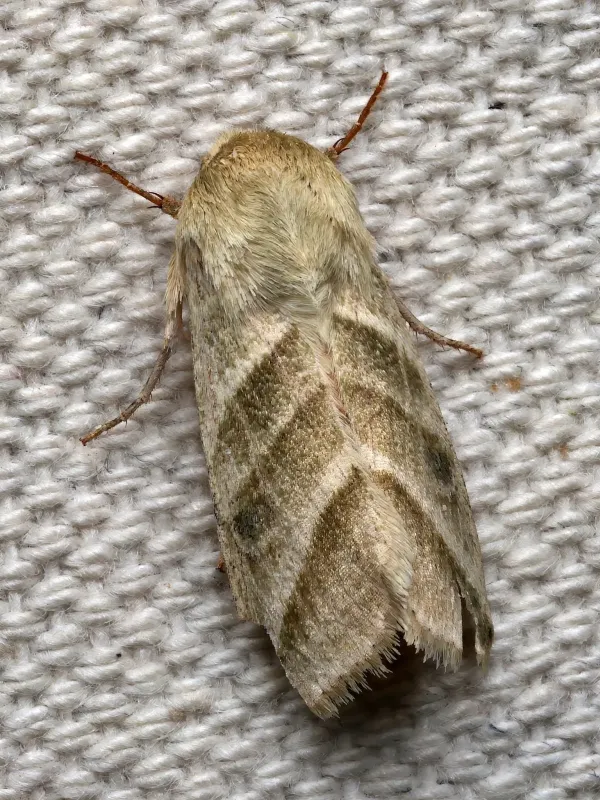
The tobacco budworm (Chloridea virescens) is a member of the Noctuidae family, order Lepidoptera. Adult moths have a wingspan of approximately 30–35 mm. Their forewings are generally greenish-brown, featuring three dark, oblique bands across the surface.
Larvae pass through five to six instars. Their body color varies significantly depending on their diet and age, ranging from pale green to reddish-brown or nearly black. A distinctive feature of this species is the presence of microscopic spines on the larval skin.
Females typically deposit eggs singly on the upper surface of leaves, usually focusing near the growing points or flower buds. The eggs are hemispherical and change color from creamy white to dark brown as they approach hatching.
Pupation occurs in the soil at depths ranging from 2 to 10 cm. The pupa is brown and smooth, and the species overwinters in this stage, allowing it to survive unfavorable weather conditions during the cold season.
Adult moths are primarily nocturnal, feeding on nectar. Their lifespan usually lasts between 10 and 15 days, during which time a single female can lay up to 1,000 eggs, contributing to rapid population expansion.
What it damages
This pest is highly polyphagous, attacking a wide variety of crops including cotton, tobacco, tomatoes, soybeans, and legumes. Its broad host range makes it a consistent threat across different agricultural sectors.
Early-instar larvae feed on young, succulent leaves and tender terminals. As they mature, they shift their feeding behavior to target generative organs, specifically buds, flowers, and developing fruit.
High infestation levels during the flowering and fruit-setting stages lead to severe yield losses. The loss of buds and fruits directly impacts the plant's productive capacity and reduces total harvest quantity.
Damaged fruits, particularly in tomatoes and cotton, become highly susceptible to secondary infections like fungal rots and bacterial diseases, which can destroy the remaining crop in the field.
The tobacco budworm has demonstrated a remarkable ability to develop resistance to various synthetic insecticides, necessitating sophisticated management programs to maintain effective control.
When it appears
Activity begins in the spring when soil temperatures consistently rise above 15°C. The first generation often develops on early-season weeds or early-planted crops before migrating to primary hosts.
Moth flight patterns typically align with the flowering period of major crops. Depending on the local climate and temperature, this species can produce between three and five generations per year.
Periods of high temperature combined with moderate humidity accelerate the developmental cycle. Under ideal conditions, a single generation can reach adulthood in as little as 20–25 days.
In the autumn, shortening day length and cooling temperatures trigger diapause. The larvae burrow into the soil to pupate, ensuring survival throughout the winter months until the next season begins.
Monitoring using pheromone traps is essential for detecting the arrival of adult moths, allowing farmers to predict potential outbreaks and apply protective measures at the right time.
Signs of infestation
The earliest signs of infestation are small, clear pin-sized holes on leaves caused by young larvae. As feeding continues, these holes grow, resulting in ragged leaves with irregular margins.
Frass, which appears as dark granular pellets, is a clear indicator of larval presence. Accumulations of frass on leaves or near the base of buds suggest that larger caterpillars are actively feeding.
Wilting of terminal shoots and the premature shedding of flower buds are strong indicators of budworm activity. This damage often occurs inside the plant tissue, making it harder to spot initially.
Upon closer inspection, bored holes in fruits or buds confirm the pest's presence. Finding live larvae inside these protective structures is definitive proof of an active infestation requiring immediate intervention.
In cotton, extensive damage to bracts and the subsequent decay of squares or bolls often signal significant population pressure that can lead to total crop failure if left unmanaged.
Control measures
Cultural control includes deep fall plowing, which disrupts the soil, killing overwintering pupae by exposing them to predators and freezing temperatures.
Effective weed management is crucial, as weeds serve as early-season reservoirs for the pest. Removing these hosts helps reduce the initial population pressure on cultivated fields.
Biological control methods involve the use of natural enemies, including the egg parasitoid Trichogramma. Additionally, microbial insecticides based on Bacillus thuringiensis have proven effective against larvae.
Chemical control requires the use of insecticides timed with egg-hatch peaks. To combat resistance, it is vital to rotate modes of action and avoid relying on a single class of chemistry.
Adopting integrated pest management (IPM) practices, including the use of resistant crop varieties and careful crop rotation, helps maintain population levels below the economic threshold.
Taxonomy
- Latin name
- Chloridea virescens
- Order
- Lepidoptera (butterflies)
- Family
- Noctuidae
- EPPO code
- HELIVI
Discussion
No discussions yet — be the first.