
Sugarcane stem borer
Acigona steniellus
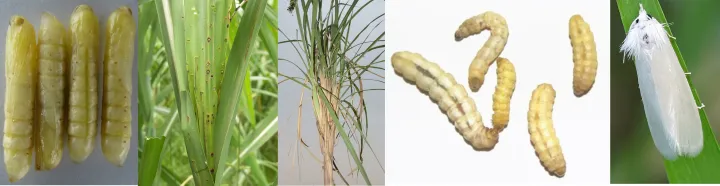
Description
How to identify
The sugarcane stem borer (Acigona steniellus) belongs to the order Lepidoptera, family Crambidae. It is a specialized pest known for its cryptic lifestyle during the larval stage.
The adult moth has a wingspan of approximately 25–30 mm. Its forewings are characterized by a yellowish-brown color with a distinct dark longitudinal stripe running through the center.
The larvae are about 30–40 mm long and exhibit a cream or light grey coloration with visible dark longitudinal lines and a hardened, brown head capsule.
Pupation typically occurs within the host plant's stem, where the larva creates a silk-lined chamber, providing a secure environment for metamorphosis into an adult.
Field identification is often based on the observation of adult moths caught in light traps or by inspecting the internal tissues of the sugarcane stem for larval presence.
What it damages
The primary host of Acigona steniellus is sugarcane. The larvae bore into the stems, creating extensive galleries that disrupt the vascular system of the plant.
This damage severely impacts the translocation of nutrients and water, leading to stunted growth, reduced internode length, and a significant decrease in sugar content.
Structural integrity is compromised, making the stems prone to snapping or lodging during high winds, which complicates harvest and results in substantial yield loss.
The entry and feeding holes created by the larvae serve as entry points for various fungal and bacterial pathogens, exacerbating the overall damage to the crop.
Economic damage is most pronounced when infestation occurs early in the season, as it prevents the plant from developing a robust root system and stalk diameter.
When it appears
The life cycle of the sugarcane stem borer is closely linked to the climatic conditions of the cultivation region, with peak activity during the tropical rainy season.
Multiple generations can occur throughout the year in favorable conditions, ensuring continuous pressure on the sugarcane crop during its active growth phases.
Adult moths are nocturnal and active during warm, humid nights, when they lay eggs on the leaves or the leaf sheaths of the host plants.
Overwintering or survival through dry periods is facilitated by the larvae remaining within the stalks or sugarcane stubble left behind after harvesting.
Monitoring the flight period of adults allows agronomists to determine the optimal timing for intervention before larvae penetrate the stems.
Signs of infestation
The most characteristic sign is the 'dead heart' symptom, where the central shoot of a young sugarcane plant withers and turns brown due to larval boring.
Small exit holes on the surface of the stalks, often surrounded by frass (a mixture of excrement and wood particles), are clear indicators of internal larval infestation.
Cross-sectioning the stem reveals longitudinal galleries that are often discolored and filled with decaying plant matter and larvae remnants.
Plants often exhibit irregular growth patterns, chlorosis, and a general loss of vigor, which becomes visible as the infestation spreads across the field.
Visual inspection of field margins often reveals the first signs of the pest, characterized by wilting leaves despite adequate soil moisture levels.
Control measures
Integrated pest management (IPM) for this borer involves a combination of mechanical, biological, and chemical methods to effectively manage population densities.
Biological control methods include the release of egg parasitoids such as Trichogramma species, which have proven effective in reducing the next generation of larvae.
Chemical control using systemic insecticides should be applied strategically, targeting the early larval stages before they gain entry into the protected stem tissues.
Cultural practices, such as the destruction of crop residues after harvest, are essential to break the life cycle and prevent the carryover of the pest to new crops.
- Utilizing resistant sugarcane varieties.
- Regular pheromone trap monitoring.
- Proper disposal of infested plant material.
Taxonomy
- Latin name
- Acigona steniellus
- Order
- Lepidoptera (butterflies)
- Family
- Noctuidae
- EPPO code
- ACIGST
Discussion
No discussions yet — be the first.