
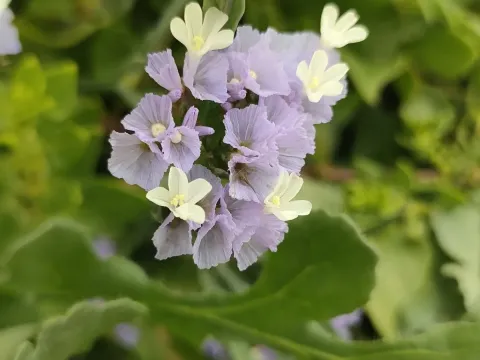
Statice
Limonium
Statice is typically started from seeds indoors in late winter, specifically from February to March, to ensure a strong root system before transplantation.
What the section contains
 Donets statice
Limonium donetzicum
Donets statice
Limonium donetzicum
 Golden statice
Limonium aureum
Golden statice
Limonium aureum
 Greek sea lavender
Limonium graecum
Greek sea lavender
Limonium graecum
 Heart-leaved statice
Limonium cordatum
Heart-leaved statice
Limonium cordatum
 Limonium algarvense
Limonium algarvense
Limonium algarvense
 Limonium arboreum
Limonium arboreum
Limonium arboreum
 Limonium articulatum
Limonium articulatum
Limonium articulatum
 Limonium bungei
Limonium bungei
Limonium bungei
 Limonium cancellatum
Limonium cancellatum
Limonium cancellatum
 Limonium chazaliei
Limonium chazaliei
Limonium chazaliei
 Limonium companyonis
Limonium companyonis
Limonium companyonis
 Limonium confusum
Limonium confusum
Limonium confusum
 Limonium contortirameum
Limonium contortirameum
Limonium contortirameum
 Limonium cuspidatum
Limonium daveaui
Limonium daveaui
Limonium cuspidatum
Limonium cuspidatum
Limonium daveaui
Limonium daveaui
 Limonium densissimum
Limonium densissimum
Limonium densissimum
 Limonium diffusum
Limonium diffusum
Limonium diffusum
 Limonium dodartii
Limonium dodartii
Limonium dodartii
 Limonium dubium
Limonium dubyi
Limonium dubyi
Limonium dubium
Limonium dubium
Limonium dubyi
Limonium dubyi
 Limonium echioides
Limonium echioides
Limonium echioides
 Limonium ferulaceum
Limonium ferulaceum
Limonium ferulaceum
 Limonium girardianum
Limonium girardianum
Limonium girardianum
 Limonium humile
Limonium humile
Limonium humile
 Limonium hybrid
s
Limonium hybrid
Limonium hybrids
 Limonium hypanicum
Limonium laxiusculum
Limonium laxiusculum
Limonium hypanicum
Limonium hypanicum
Limonium laxiusculum
Limonium laxiusculum
 Limonium lobatum
Limonium lobatum
Limonium lobatum
 Limonium lowei
Limonium lowei
Limonium lowei
 Limonium meyeri
Limonium meyeri
Limonium meyeri
 Limonium multiflorum
Limonium multiflorum
Limonium multiflorum
 Limonium nydeggeri
Limonium nydeggeri
Limonium nydeggeri
 Limonium obtusifolium
Limonium obtusifolium
Limonium obtusifolium
 Limonium ocymifolium
Limonium ocymifolium
Limonium ocymifolium
 Limonium papillatum
Limonium plurisquamatum
Limonium plurisquamatum
Limonium papillatum
Limonium papillatum
Limonium plurisquamatum
Limonium plurisquamatum
 Limonium pruinosum
Limonium pruinosum
Limonium pruinosum
 Limonium pseudominutum
Limonium pseudominutum
Limonium pseudominutum
 Limonium sareptanum
Limonium sareptanum
Limonium sareptanum
 Limonium suffruticosum
Limonium suffruticosum
Limonium suffruticosum
 Limonium tarcoense
Limonium tarcoense
Limonium tarcoense
 Limonium tenuifolium
Limonium tetragonum
Limonium tetragonum
Limonium tenuifolium
Limonium tenuifolium
Limonium tetragonum
Limonium tetragonum
 Limonium tomentellum
Limonium tomentellum
Limonium tomentellum
 Limonium tremolsii
Limonium tremolsii
Limonium tremolsii
 Limonium virgatum
Limonium virgatum
Limonium virgatum
 Notch-leaf sea lavender
Limonium emarginatum
Notch-leaf sea lavender
Limonium emarginatum
 Otolepis statice
Limonium otolepis
Otolepis statice
Limonium otolepis
 Oval-leaved sea lavender
Limonium ovalifolium
Oval-leaved sea lavender
Limonium ovalifolium
 Rock sea-lavender
Limonium binervosum
Rock sea-lavender
Limonium binervosum
 Sea lavender
Limonium vulgare
Sea lavender
Limonium caesium
Sea lavender
Limonium vulgare
Sea lavender
Limonium caesium
 Sea lavender
Limonium auriculae-ursifolium
Sea lavender
Limonium auriculae-ursifolium
 Sea lavender
Limonium narbonense
Sea lavender
Limonium narbonense
 Sharp-leaved sea lavender
Limonium acutifolium
Sharp-leaved sea lavender
Limonium acutifolium
 Shrubby sea lavender
Limonium duriusculum
Shrubby sea lavender
Limonium duriusculum
 Southern sea lavender
Limonium australe
Southern sea lavender
Limonium australe
 Strict limonium
Limonium strictissimum
Strict limonium
Limonium strictissimum
 Two-colored sea lavender
Limonium bicolor
Two-colored sea lavender
Limonium bicolor
Statice
Seeds are known for their hard coat, so soaking them or performing a brief period of cold stratification can significantly improve germination rates.
When sowing indoors, use high-quality, well-draining seed-starting mix and maintain a temperature of approximately 18–21°C.
Transplanting to the field should occur once the danger of frost has passed, usually late spring, to allow plants to establish in warm soil.
Direct sowing is possible in warmer regions, but spacing should be strictly maintained at 30–40 cm to prevent overcrowding and fungal issues.
Limonium belongs to the Plumbaginaceae family and is highly valued for its exceptional drought tolerance and adaptability to various climates.
The plant thrives in full sun, which is critical for producing stiff, upright stems and vibrant, long-lasting flowers for commercial use.
Well-drained soil is a primary requirement; while it can grow in sandy or rocky soils, it will not tolerate waterlogged conditions or heavy clay.
Statice exhibits a unique tolerance for saline soils, making it an excellent crop choice for challenging agricultural environments.
Nitrogen applications should be moderate, as excessive fertilization can lead to soft, weak stems that are unsuitable for dried flower production.
The yield of Statice is measured by the number of harvestable stems per square meter, which varies depending on the specific cultivar and field conditions.
Under optimal light and moisture management, a healthy mature plant can produce multiple flushes of blooms throughout the peak growing season.
Regular harvesting of mature stems promotes vegetative regrowth and stimulates the production of secondary flowering branches.
High yields are most consistently achieved when the crop is grown in regions with long, sunny days and low humidity levels during the flowering phase.
Proper harvest intervals allow for multiple cuts per season, maximizing the overall economic return on the planted area.
Root rot is the most common threat to Statice, primarily caused by overwatering or poor soil drainage in the root zone.
Powdery mildew often appears during periods of high humidity and poor air circulation, necessitating the use of preventive fungicide sprays.
Insect pests, such as aphids and spider mites, are frequent issues during hot, dry weather and can significantly reduce the quality of the foliage.
Integrated pest management, including regular crop scouting and the removal of infected debris, is essential for maintaining a healthy field.
Avoiding overhead irrigation can drastically reduce the incidence of foliar diseases, keeping the flower heads clean and marketable.
Harvesting should occur when the individual flowers on the stems are fully open and display their peak, vibrant coloration.
The ideal time for cutting is mid-morning, after any dew has evaporated but before the heat of the day peaks, to ensure better shelf life.
For drying, stems should be gathered into loose bundles and hung upside down in a dark, dry, and well-ventilated space to preserve color.
Avoiding direct sunlight during the drying process is crucial to prevent the fading of natural pigments in the calyces.
Once completely dried, the stems should be stored in a climate-controlled environment to prevent moisture re-absorption and mold growth.