
Limoniastrum monopetalum
Limoniastrum monopetalum
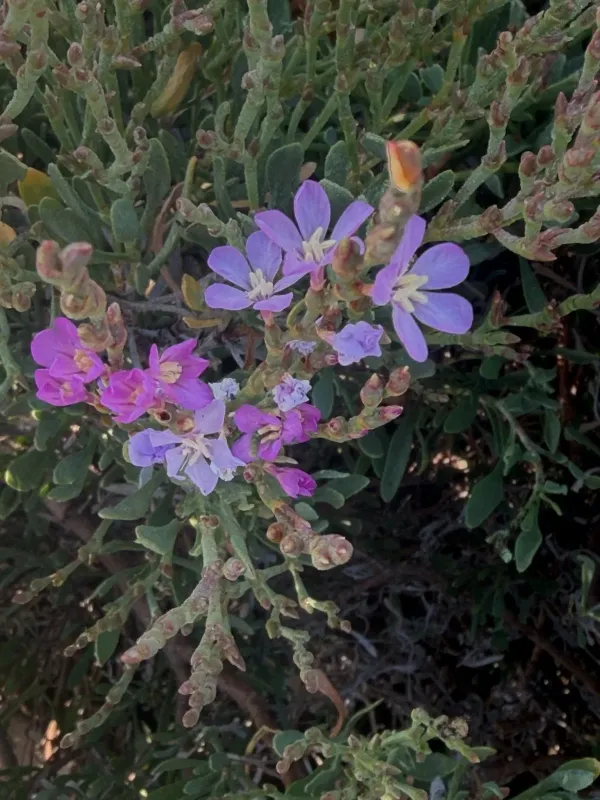
Description
Growing requirements
Limoniastrum monopetalum is a woody shrub belonging to the Plumbaginaceae family, widely known for its exceptional salt tolerance. Its origin is primarily in the Mediterranean Basin, where it thrives in saline coastal habitats that are challenging for most typical agricultural crops.
The plant is characterized by its succulent leaves and long spikes of pink to purple flowers. This unique anatomy allows the species to store water effectively, making it highly drought-resistant and suitable for arid environment cultivation.
The primary requirements for successful cultivation include well-draining, sandy, or stony soils and full sun exposure. The plant does not tolerate waterlogging, which is the most common cause of failure for non-native plantings.
Regarding climate, it prefers mild to warm temperatures and is well-adapted to high wind speeds. While it can withstand occasional dips in temperature, it is not considered frost-hardy in areas with prolonged freezing conditions.
Economically, it is valued for xeriscaping, coastal erosion control, and its role in soil desalination programs. It acts as a biological pioneer, preparing the substrate for more sensitive vegetation over time.
Main diseases and pests
This species is remarkably robust and rarely suffers from major pest infestations due to its high salinity levels in the foliage. It remains a low-maintenance choice for large-scale landscaping projects.
The most significant threat is improper soil management, specifically high humidity in the root zone. Poor drainage almost invariably leads to crown rot and bacterial infections that can destroy the root system.
Insects like aphids may occasionally appear during periods of poor plant vitality, but they generally do not threaten the survival of the shrub. Biological control methods or simple pruning are usually sufficient to mitigate such issues.
Fungal issues such as powdery mildew can occur if the plant is grown in dense, poorly ventilated areas. Ensuring proper spacing during the planting phase is a critical preventive measure.
Monitoring for signs of root stress, such as yellowing leaves or wilting, is essential. Once identified, adjusting the watering regime or improving soil aeration is typically enough to restore plant health.