
Sea lavender
Limonium narbonense
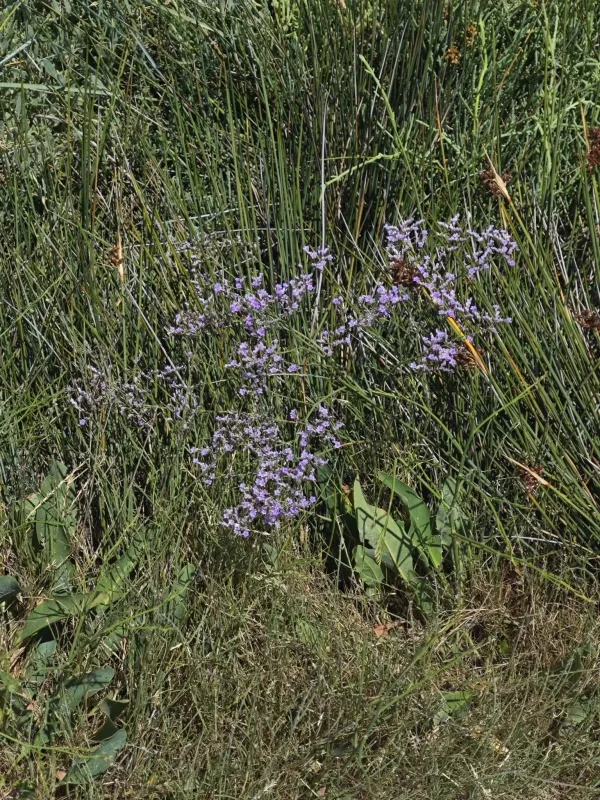
Description
Sowing dates
Seeds of Sea lavender should be sown indoors in late winter or early spring to ensure a long growing season. Due to the hard seed coat, it is often recommended to soak seeds briefly or perform short cold stratification to improve the overall germination rate.
Direct sowing in the garden is possible in late spring once the soil has warmed up thoroughly, though starting indoors in peat pots is preferred because the taproot system makes transplanting difficult for older seedlings.
When sowing, the seeds require exposure to light to germinate, so they should be only lightly covered with a thin layer of fine soil or vermiculite. Maintaining a temperature range of 18°C to 20°C is crucial for consistent success during the initial stages.
Pricking out the seedlings should be done carefully once the first pair of true leaves appears. It is vital to handle the roots with extreme care to avoid shock, which can significantly delay the growth of young plants.
Acclimatization of seedlings before planting out is an essential step, involving a gradual transition to outdoor conditions over a period of two weeks, followed by planting at a spacing of 30–40 cm.
Growing requirements
Sea lavender belongs to the Plumbaginaceae family and is an exceptionally hardy perennial that thrives in arid conditions. It is well-known for its natural ability to tolerate saline soils and harsh seaside environments, making it a robust choice for coastal gardening.
This crop requires full sun exposure to flourish and maintain its compact, healthy growth habit. Planting in shaded areas often results in weak stems, reduced flower production, and increased susceptibility to fungal issues.
Well-drained soil is the most critical requirement for long-term survival. The plant is prone to root rot if left in heavy, waterlogged soil, preferring sandy or gritty loams that allow oxygen to reach the roots easily.
The plant is highly drought-tolerant once established and requires only moderate watering during extended dry periods. Over-fertilization, especially with nitrogen, should be avoided as it encourages excessive leaf growth and compromises the plant's structural integrity.
Maintenance includes regular weeding of the surrounding area and occasional loosening of the topsoil to ensure proper aeration, which prevents the build-up of moisture around the root crown.
Main diseases and pests
Powdery mildew is a common threat, particularly in regions with high humidity or poor air circulation. It appears as a dusty white coating on the leaves and stems and can significantly detract from the plant's ornamental value.
Root rot is the most common fatal condition caused by poor drainage or excessive irrigation. Once the root system is compromised, the plant usually wilts rapidly and cannot be recovered.
Pests like aphids and spider mites can attack the plants during hot, dry spells, feeding on the cell sap and weakening the plant's overall health. Monitoring the undersides of leaves is recommended for early detection.
Control measures primarily involve using organic or chemical insecticides when necessary and ensuring that the planting site is not overcrowded, which helps naturally discourage pest colonization.
To prevent disease, ensure that the plants have enough space between them for air to move freely, and always avoid overhead irrigation which wets the foliage unnecessarily.
Harvesting
For the best results as a dried flower, stems should be harvested when the flowers are fully open. Early harvesting leads to a lack of color retention, while late harvesting may cause the flowers to shatter once dried.
The ideal time to cut stems is in the morning after the dew has evaporated but before the heat of the day reaches its peak. This helps preserve the structural integrity and moisture levels of the stems during the drying process.
Bundles of stems should be hung upside down in a dark, dry, and well-ventilated area. Darkness is essential to prevent the flower pigments from fading due to ultraviolet light exposure during the drying cycle.
Once fully dried, the flowers remain durable and retain their color for long periods. They are highly sought after in the floral industry for use in bouquets, wreaths, and various artistic installations.
Professional growers often harvest multiple times throughout the flowering season to encourage continuous stem production, provided that the plant receives adequate light and minimal nutrients throughout the summer.