
Limonium humile
Limonium humile
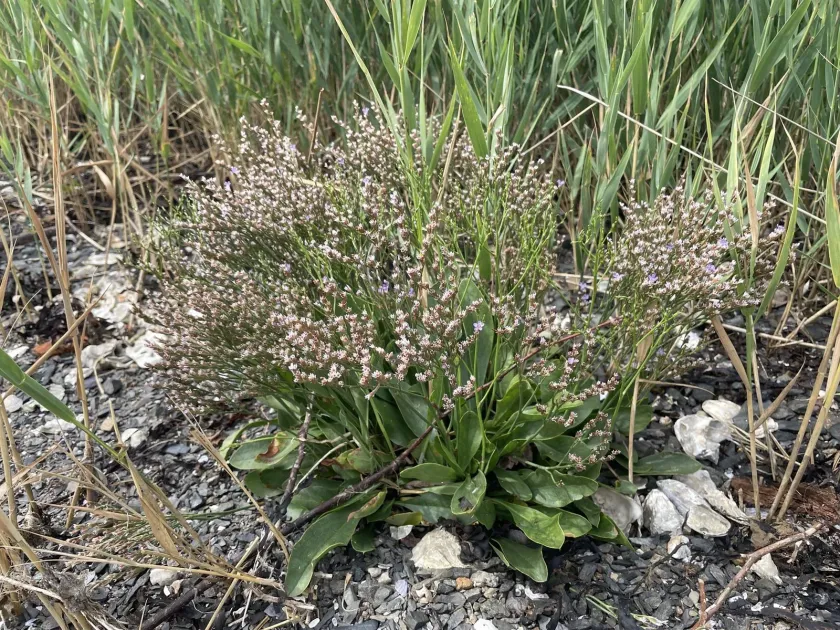
Description
Sowing dates
Limonium humile is a perennial herb belonging to the Plumbaginaceae family. In agricultural practices, it is typically propagated by seeds, which require specific conditions for successful germination, including consistent temperature and light.
Sowing in containers is recommended in early spring to establish strong seedlings before transplanting. Seeds should be surface-sown or covered with a very thin layer of substrate, as light exposure is often necessary to trigger the germination process.
For direct seeding in field conditions, timing is crucial. The seeds are sown once the soil temperature is sufficiently warm, typically when all risks of frost have passed. Spacing is important to ensure each plant has enough room for root expansion.
Seedling development can be slow, requiring careful management during the first few weeks. Weeding must be performed manually or with light mechanical tools to avoid disturbing the young root systems, which are sensitive to disruption.
Once established, the plant shows strong resilience. Natural regeneration via self-seeding is common in favorable environments, which can be utilized to maintain dense populations without additional labor costs.
Growing requirements
As a halophyte, Limonium humile thrives in environments where other crops fail, specifically in saline soils. It has adapted to extract minerals efficiently, making it an excellent candidate for landscape restoration in coastal or saline regions.
The plant requires full sun exposure to maintain its compact habit and produce vibrant blooms. Lack of direct sunlight often results in stunted growth and weakened stalks that are prone to lodging during wind events.
Soil drainage is perhaps the most critical factor for this species. It prefers sandy or loamy soils where water does not pool, as excess moisture in the root zone quickly leads to rot and plant mortality.
Watering requirements are low, as the plant is adapted to drought conditions. Supplemental irrigation should only be provided during extreme dry spells and only at the base of the plant to avoid wet foliage, which invites fungal growth.
Nutrient needs are minimal. Excess fertilization, particularly nitrogen, is counterproductive. The plant is adapted to nutrient-poor soils and will respond to heavy manuring by losing its characteristic form and robustness.
Main diseases and pests
Fungal diseases are the primary threat to Limonium humile, especially powdery mildew and root rot. These occur predominantly when the plant is exposed to excessive humidity or poor air circulation within the planting site.
Pests such as aphids can infest the flower spikes during the flowering stage. These pests cause damage by sucking sap, which stunts the development of the blossoms and reduces the overall aesthetic and commercial value of the crop.
Spider mites are another potential issue, especially during hot, arid summer months. They feed on the underside of leaves, causing yellowing and premature leaf senescence if left untreated by appropriate biological or chemical controls.
Root-dwelling nematodes might be a problem in certain soil types, inhibiting the plant's ability to take up water and nutrients. Proper soil testing and solarization prior to planting are effective preventative strategies for large-scale operations.
Slugs and snails can cause significant damage to young transplants. Protecting young plants with barrier materials or trapping mechanisms is often necessary to ensure a healthy establishment during the first growth season.