
Shrubby sea lavender
Limonium duriusculum
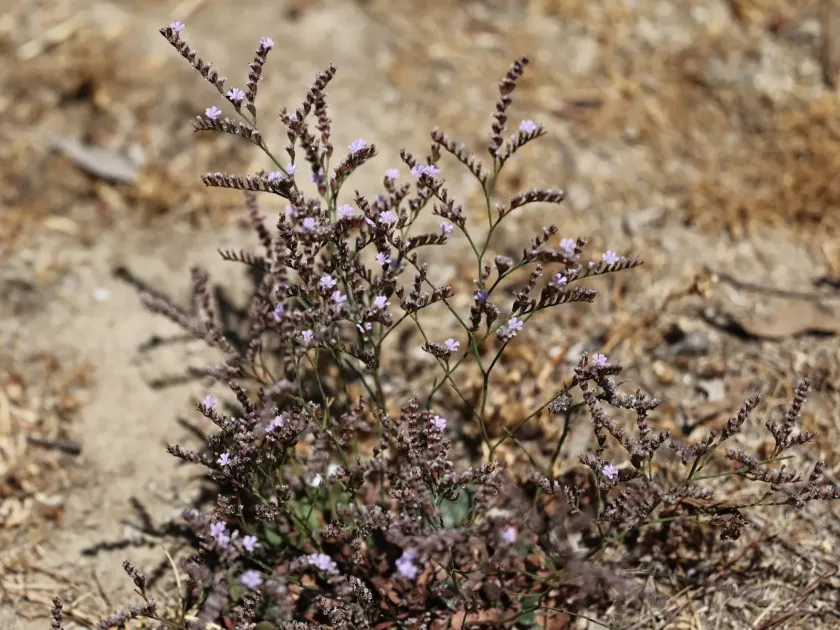
Description
Growing requirements
Limonium duriusculum, commonly known as shrubby sea lavender, belongs to the Plumbaginaceae family. This perennial is naturally adapted to the harsh conditions of saline coastal environments.
The plant is defined by its compact rosette of leathery leaves, which serves as an adaptation to minimize transpiration and survive in arid, windswept habitats.
Regarding light requirements, this species is a sun-seeker. It thrives in full sun exposure and is essential for locations where intense solar radiation would scorch less adapted species.
The soil profile must be sandy or stony to ensure excellent drainage. Limonium duriusculum does not require fertile soil but prefers substrates that mirror its native, slightly saline coastal conditions.
Agricultural management should prioritize minimal interference. Once established, the plant rarely requires supplemental irrigation, as its deep taproot system is highly efficient.
Main diseases and pests
The most critical threat to Limonium duriusculum is waterlogging. Excessive moisture in the root zone is the primary cause of mortality in cultivation and must be avoided.
High humidity levels during the growing season can lead to fungal infections, particularly leaf spot diseases or gray mold, which damage the aesthetic foliage.
Common agricultural pests include aphids and spider mites. These insects tend to colonize the flower stalks during warm, dry spells, feeding on the nutrient-rich sap.
To mitigate these risks, it is recommended to maintain wide spacing between plants to facilitate airflow, which keeps the foliage dry and discourages pest infestations.
In cases of severe infestation, specialized acaricides or insecticides should be applied with caution, ensuring that the treatment does not stress the plant's sensitive root system.