
Golden statice
Limonium aureum
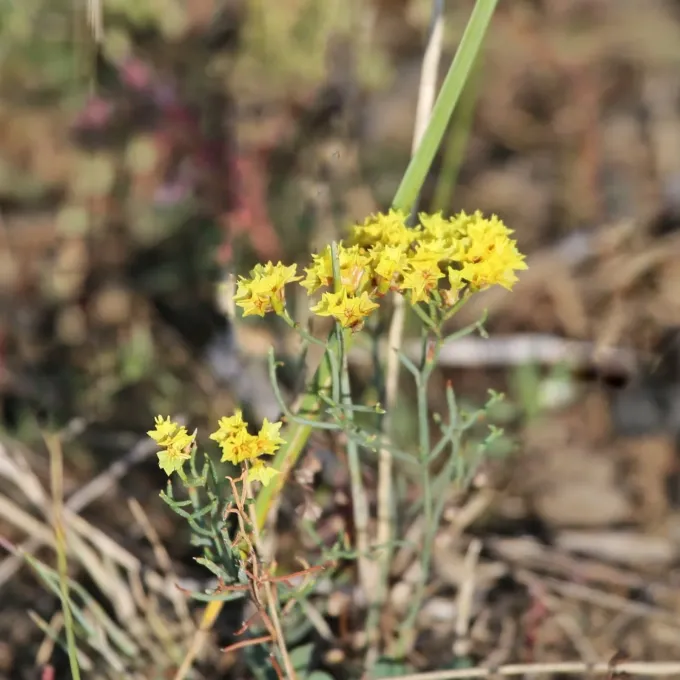
Description
Sowing dates
Sowing of Golden statice is typically performed in early spring once the threat of heavy frost has passed. For better control over germination, starting seeds in greenhouses during late winter is recommended to ensure strong plant establishment before moving outdoors.
Seeds of Limonium aureum are small and benefit from being sown on the surface or covered with a very thin layer of substrate. Adequate light exposure is crucial for uniform germination, so care must be taken not to bury them too deep.
Spacing between plants should be approximately 30 to 40 centimeters to allow for proper airflow. This distance helps prevent humidity-related issues, which are common if plants are overcrowded and unable to dry off quickly after rainfall.
When transplanting seedlings, it is vital to keep the root ball intact. The plant possesses a taproot that, if disturbed, can cause significant transplant shock, leading to slow growth or potential plant failure in the first few weeks.
Gradual acclimatization, or hardening off, is necessary before permanent planting. Moving pots outdoors for increasing periods over a week helps the plant adjust to external wind and temperature variations, ensuring a smoother transition to the field.
Growing requirements
Golden statice, belonging to the Plumbaginaceae family, is a hardy perennial native to arid regions of Mongolia and Siberia. It is physiologically adapted to withstand extreme weather conditions, including drought and high heat indices.
The primary requirement for successful cultivation is excellent soil drainage. The plant thrives in sandy or light loamy soils where water does not linger. In heavy clay soils, amendments like coarse sand or gravel are necessary to prevent root rot.
Full sun is non-negotiable for this species. Even minimal shade will cause the plant to become leggy and drastically reduce the vivid golden color of its inflorescences, which is the plant's main ornamental feature.
Limonium aureum is highly tolerant of saline soil conditions. This makes it an ideal candidate for soil reclamation projects or gardens situated near coastal areas where salt spray may damage more sensitive horticultural varieties.
Minimal fertilization is required as the plant is adapted to nutrient-poor soils. Excessive nitrogen application can be counterproductive, leading to an overabundance of foliage and a corresponding decrease in the production of flowering stems.
Main diseases and pests
The most common threat to Golden statice is fungal disease, primarily caused by excessive moisture. Conditions like crown rot or mildew can occur if the soil remains waterlogged or if the planting site lacks adequate air circulation.
Aphids can occasionally target the tender new growth during the spring, leading to distorted leaves. Regular monitoring and the use of insecticidal soap can effectively manage small infestations without harming the plant's health.
Root-knot nematodes can potentially cause issues in sandy soils. To mitigate this risk, crop rotation should be practiced, and the planting site should be maintained with good organic health to encourage beneficial soil microbes.
Weed competition is a significant concern during the early establishment phase. Keeping the area clear of competitive vegetation ensures that the young statice plants receive enough light and nutrients to develop their robust root systems.
Regular inspection of the basal foliage is recommended to catch early signs of distress. Timely removal of affected leaves and improving the drainage characteristics of the surrounding soil are usually sufficient to contain most localized issues.
Harvesting
Harvesting Golden statice for dried flower production should occur at the peak of the flowering stage. At this point, the florets are fully open, and the golden yellow pigmentation is at its most vibrant and stable state.
The stems should be cut in the morning, shortly after any dew has evaporated. Using sharp, clean shears helps ensure a clean cut, which promotes plant health and prevents the introduction of pathogens into the cut stem.
For optimal drying, stems are gathered into small bunches and hung upside down in a dark, dry, and well-ventilated location. Keeping them out of direct sunlight during the drying process is essential to preserve the brilliance of the yellow color.
Once dried, the flowers maintain their structure for a considerable amount of time. They are widely appreciated in professional floristry for their ability to add texture and consistent color to long-lasting floral arrangements.
Seed harvesting should be undertaken only after the seed heads have fully matured and turned brown. The seeds can then be carefully collected and stored in cool, dry conditions for sowing in the following growing season.