
Donets statice
Limonium donetzicum
Description
Growing requirements
Donets statice (Limonium donetzicum) is a perennial herbaceous plant belonging to the Plumbaginaceae family. It is an endemic species primarily associated with the sandy habitats of the Siverskyi Donets basin.
The plant exhibits remarkable adaptation to arid conditions. It is a halophyte, which means it thrives in salty or alkaline soil environments that would typically inhibit the growth of standard crops.
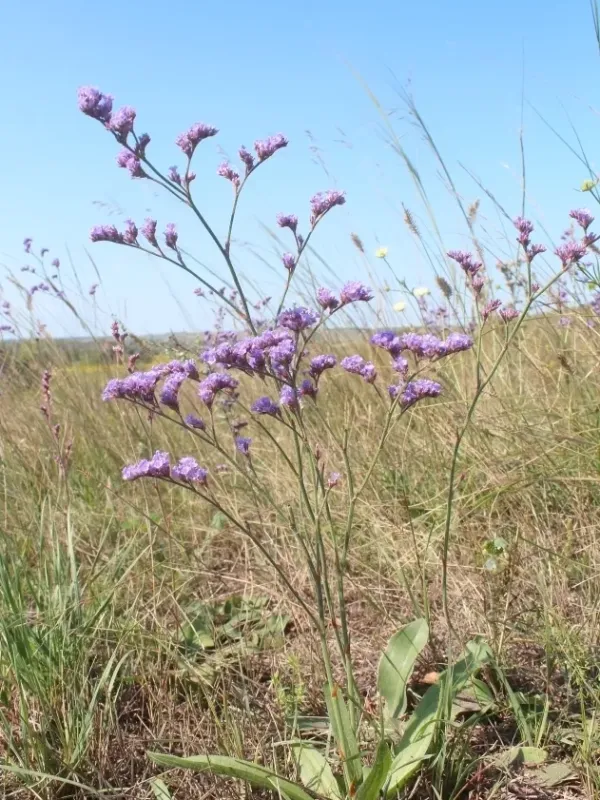
Botanically, it features a robust taproot system that reaches deep water tables. The leaves are typically arranged in a basal rosette, and the inflorescence consists of branched panicles with small, dry, papery flowers.
Cultural success depends on mimicking its native sandy environment. High light intensity is essential for optimal growth; the species does not tolerate shading and performs best in full-sun conditions.
Soil requirements focus on extreme drainage. Heavy clay soils are unsuitable, as they hold too much moisture and cause root decay. Sandy or gravel-based substrates are highly recommended for cultivation.
Main diseases and pests
The primary threats to Limonium donetzicum are loss of habitat and ecological changes in its native range. Sand mining and riverbed modifications directly impact the plant's survival.
In cultivation, fungal pathogens are the most significant risk. Specifically, root rot may occur if the irrigation schedule does not allow for proper drying of the substrate between watering cycles.
Pests such as aphids and spider mites can colonize the foliage during hot, dry spells. Integrated pest management strategies should prioritize biological controls over heavy chemical applications.
Weed control is critical during the establishment phase. Because the plant grows slowly during its first year, it cannot compete with aggressive weeds for nutrients and solar radiation.
Excessive fertilizer application can weaken the plant's structural integrity. Using high-potash fertilizers in moderation is preferable to ensure healthy, resilient growth without forcing overly soft tissue.