
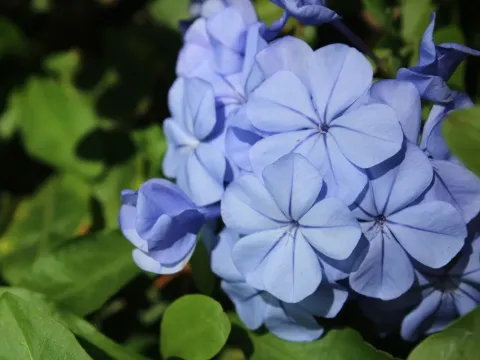
Plumbago
Plumbago L.
Plumbago is a genus of flowering plants belonging to the Plumbaginaceae family. These plants are primarily native to tropical and warm temperate regions of the world, with many species originating from Southern Africa, where they grow as evergreen shrubs or climbing vines.
What the section contains


Plumbago
The plant thrives in warm climates and requires abundant sunlight to produce its signature vibrant blue or white flowers. In cooler regions, it is essential to cultivate Plumbago in containers so that it can be moved indoors or to a sheltered greenhouse during the winter months.
Regarding soil conditions, Plumbago demands a well-draining, fertile medium. It is sensitive to waterlogged conditions, which can lead to rapid root decay; therefore, using a potting mix enriched with organic matter and incorporating drainage material is crucial for healthy root systems.
Cultural practices involve frequent watering during the peak growing season, ensuring the soil remains moist but not saturated. Regular fertilization with a balanced, water-soluble fertilizer encourages continuous blooming throughout the summer months.
Pruning is a vital aspect of maintaining a healthy and aesthetically pleasing Plumbago plant. Cutting back the stems in late winter or early spring promotes new, vigorous growth and prevents the plant from becoming excessively leggy or sparse in its foliage.
Plumbago is frequently targeted by sucking pests, with spider mites being one of the most common threats, especially in dry, warm environments. These tiny pests pierce the leaf tissue, causing yellowing and eventual leaf drop if left unchecked.
Mealybugs represent another significant challenge, characterized by the white, cotton-like masses they produce on the stems and leaf axils. They feed on plant sap and can severely weaken the plant, leading to stunted growth and yellowing foliage.
Scale insects can attach to the woody stems of the shrubs, where they are protected by their hard outer shells. Because of this armor, they are difficult to remove manually and often require systemic insecticides for effective control.
Root rot caused by various soil-borne fungi is a common ailment associated with improper irrigation. Symptoms include wilting despite moist soil, browning of the roots, and a general lack of vigor that can eventually lead to plant death.
Effective management strategies include maintaining good air circulation around the plants and avoiding overhead irrigation. Regular monitoring and the application of appropriate horticultural oils or insecticides are recommended to keep pest populations at manageable levels.