
Heart-leaved statice
Limonium cordatum
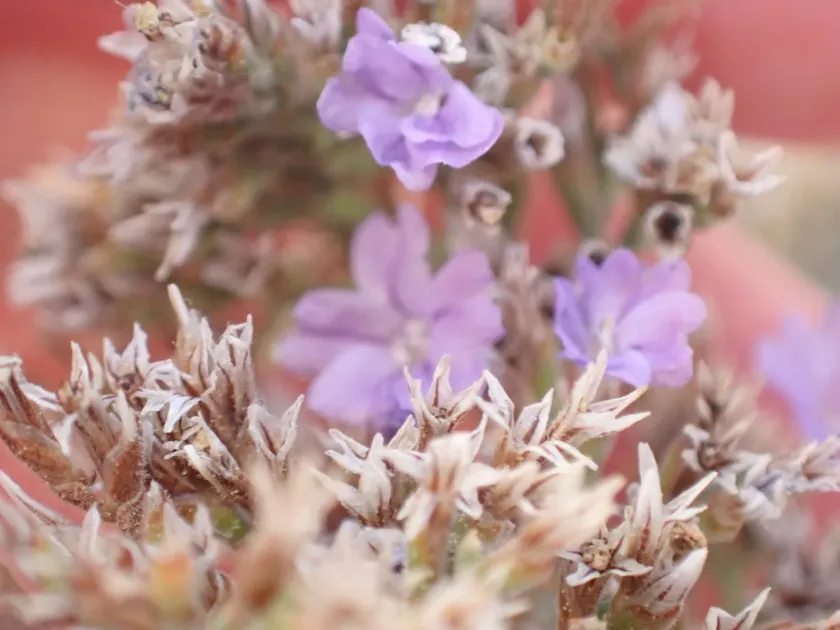
Description
Sowing dates
Seeds of Limonium cordatum should be sown in trays in late February or March, as the culture develops slowly in the early stages. The optimal germination temperature is between 18–20 degrees Celsius.
Seedlings are transplanted into the open ground only after the risk of spring frosts has passed. Choose well-lit areas with well-draining soil to prevent moisture stagnation.
If direct sowing in the ground is practiced in southern regions, the timeline shifts to April or May. The seeds should be planted at a depth of no more than 0.5–1 cm, as light is required for successful germination.
The plant does not tolerate transplanting well due to its taproot, so individual peat pots are recommended. This helps maintain root system integrity when moving plants to their permanent location.
Planting density is calculated based on decorative goals; typically, 4–6 plants per square meter are placed, keeping an interval of 30–40 cm between them.
Growing requirements
Heart-leaved statice belongs to the Plumbaginaceae family. In its natural habitat, it grows in coastal Mediterranean regions, favoring rocky and sandy substrates.
The plant is a xerophyte and halophyte, making it highly resistant to saline soils and prolonged drought periods. High solar radiation is an essential condition for full and vibrant flowering.
It prefers light, sandy, or loamy soils with a neutral or slightly alkaline pH. It is extremely sensitive to water stagnation, which can lead to root neck rot.
The culture is quite hardy within its natural range, but in colder regions, it requires light protection during winter. Excessive application of organic fertilizers can negatively affect plant development.
During the active vegetation period, statice requires almost no watering, except during critically long droughts in young plants. Optimal growth is achieved with minimal care and the absence of weed competition.
Main diseases and pests
The main threat to the statice is excessive humidity in both air and soil, which triggers fungal diseases such as root rot and fusarium wilt.
When water stagnates, powdery mildew may develop on the leaves. Prevention involves ensuring excellent air circulation between plants and choosing an appropriate planting site.
Harmful insects, such as aphids or spider mites, may attack the plant if agricultural practices are violated. Control is performed using systemic insecticides and acaricides.
Slugs and snails may damage young leaf rosettes during the spring. Using gravel mulching helps deter these pests and keeps the area around the stem dry.
To maintain plant health, it is recommended to remove dead residues annually and ensure an efficient drainage system, preventing any conditions that favor the development of rot-causing microorganisms.
Harvesting
Commercial use of Limonium cordatum is primarily focused on floristry. It is highly valued as one of the best species for creating dried flower bouquets and interior compositions.
Harvesting of inflorescences is carried out when the flowers are fully opened and have achieved their most saturated color. Fresh usage is limited as the plant is prized for its longevity after drying.
To preserve shape and color, stems are hung upside down in a well-ventilated area protected from direct sunlight. The drying process takes between 7 to 14 days, depending on air humidity.
Due to the high density of inflorescences, the statice retains its rigidity and brightness for many months. This makes it a sought-after crop for commercial flower production.
Cut inflorescences are also used in dry decor, wreaths, and as fillers for wedding floristry. Properly harvested material does not shed and maintains its structure for a long time.