

Disease · fungal · affects Alfalfa, Anemone coronaria, Carnation
Especially harmful
Peronosporosis
Peronospora conglomerata
Description
Symptoms
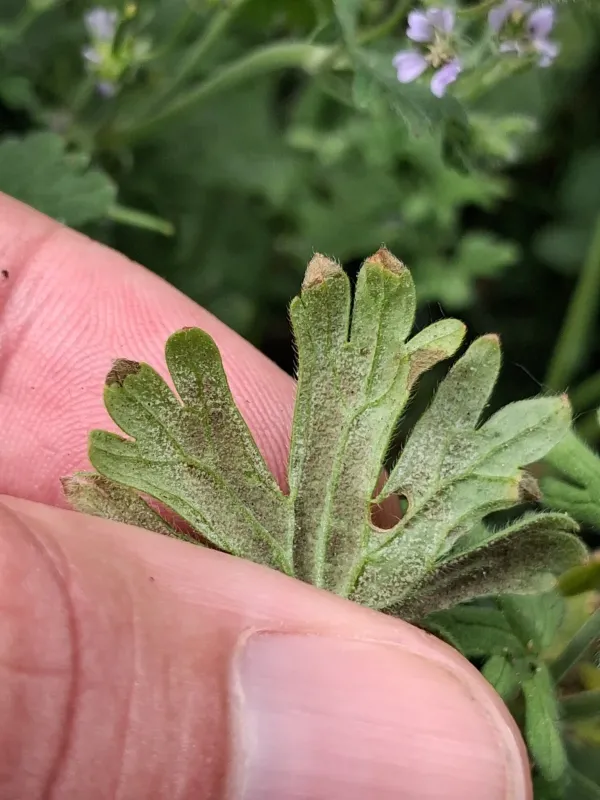
Initial signs of the disease are characterized by chlorotic, yellow spots appearing on the upper side of the leaf. These spots often develop irregular shapes and may expand over time.
On the underside of the leaves, a grayish-purple or white fuzzy growth becomes visible. This is the sporulation layer of the fungus, confirming the presence of the active infection.
As the infection progresses, the tissues within the affected areas collapse and turn brown. This leads to dry, brittle, and necrotic spots that may eventually cause the entire leaf to wither and fall off.
In bulb crops like onions, the leaves become twisted and stunted. The disease typically starts from the tips, gradually moving downwards until the entire foliage is incapacitated.
In root crops such as beets, the infection can spread to petioles, causing significant deformation of the leaf rosette and impairing the plant's ability to store energy in the root.
Pathogen
The causative agent of this disease is the obligate parasite Peronospora conglomerata, which belongs to the class of oomycetes. This pathogen lives strictly within the plant tissues, extracting essential nutrients and moisture from the host's cells.
The fungus produces conidiophores that emerge from the stomata of the host plant. This process results in the visible growth of a fuzzy-like layer on the leaf surface, which is a hallmark of the infection.
The pathogen overwinters as oospores, which are highly resilient structures found in plant debris, soil, or within the tissues of perennial plants, allowing it to survive extreme environmental conditions.
Spring germination of oospores releases zoospores that spread through water droplets to colonize emerging seedlings. Once established, the fungus continues its life cycle through the production of conidia.
A broad range of crops are susceptible to this pathogen, including onions, garlic, celery, oats, forage beets, Indian mustard, winter oilseed rape, and the decorative anemone (Anemone coronaria).
Conditions for development
High relative humidity, typically exceeding 85-90%, is the most critical environmental factor required for the development and rapid spread of the disease.
Moderate temperatures ranging from +15 °C to +20 °C create an optimal environment for the germination of fungal spores and their colonization of healthy plant tissues.
The presence of free water, such as dew, fog, or prolonged rainfall, is essential for the pathogen to thrive, as it enables the motile zoospores to navigate and penetrate the plant's stomata.
Dense planting patterns reduce air circulation, which prevents the foliage from drying out after rain or dew, thereby extending the period of infection risk.
Improper irrigation practices, specifically overhead watering in the late afternoon, often lead to stagnant moisture on the leaves throughout the night, drastically increasing infection rates.
Why it matters
Peronosporosis causes substantial agricultural loss by reducing the leaf surface area available for photosynthesis, leading to stunted growth and lower overall yields.
Bulbs from infected onions or garlic exhibit poor shelf life and are highly prone to secondary rotting when stored, which often results in complete post-harvest losses.
For crops like oilseed rape, the disease can devastate young populations, causing significant stand reduction and necessitating costly replanting efforts in the fields.
Infected crops often fail to reach their full biological potential, as the metabolic stress induced by the fungus drains the resources that would otherwise go into fruit or root development.
Due to the ease with which spores are dispersed by wind, the disease can travel rapidly across large areas, threatening commercial farms and requiring expensive chemical control measures.
Protection
Strategic crop rotation is the primary defense, as it helps break the pathogen's life cycle and prevents the build-up of oospores in the soil over consecutive growing seasons.
The use of resistant cultivars and hybrids is the most sustainable way to manage the disease, reducing both the need for chemicals and the risk of significant yield losses.
Proper field sanitation, including the deep incorporation of crop residues into the soil, denies the fungus a place to survive during the winter months.
- Application of copper-based or systemic fungicides at the onset of initial symptoms.
- Maintaining optimal plant density to ensure sufficient ventilation and sun exposure for leaf drying.
- Balanced fertilization to promote strong plant immunity and avoid excessive nitrogen, which can make tissues more susceptible.
Regular scouting and early detection are crucial; identifying small outbreaks allows for localized treatment and prevents the disease from spreading across the entire plantation.
In brief
37
Affects crops
Biology
Pathogens and affected parts
Pathogens
Peronospora conglomerata· oomycete
Plasmopara· oomycete
Peronospora trifoliorum· oomycete
Peronospora viciae· oomycete
Plasmopara pygmaea· oomycete
Sclerophthora rayssiae· oomycete
Phytophthora nicotianae· oomycete
Phytophthora phaseoli· oomycete
Peronospora farinosa· oomycete
Peronospora schachtii· oomycete
Peronospora dianthicola· oomycete
Plasmopara umbelliferarum· oomycete
Affected plant parts
whole plant
Content graph
Affects crops · 37
AlfalfaAnemone coronariaCarnationCeleryChickpeaCommon beanCommon hopCommon oatCommon sunflowerField peaFodder beetGarlicGerbera jamesoniiGrapevineHempImpatiensIndian mustardIvy-leaved pelargoniumJerusalem artichokeLentilLettuceOnionPelargoniumPepperRed cloverRiceRoseScented geraniumSoybeanSpinachStrawberrySugarcaneTurnipWatermelonWinter barleyWinter rapeseedWinter wheat
Reference
Connections · Peronosporosis
Most often together:
Marketplace
Products · 5039






Community
Discussion
No discussions yet — be the first.