
Willow powdery mildew
Erysiphe adunca
Description
Symptoms
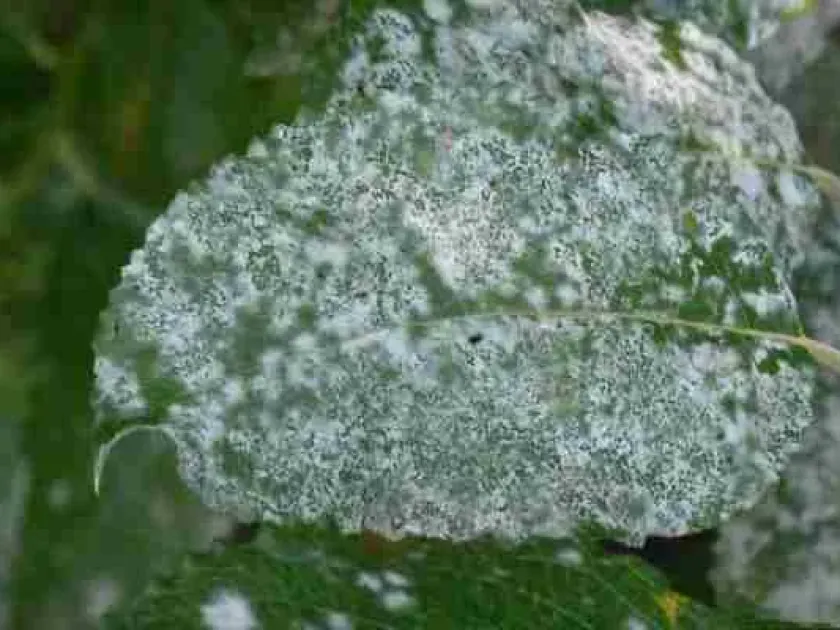
The first clinical sign is the appearance of small, white, web-like mycelial patches on the leaves. As the colony expands, these patches merge to cover larger areas of the leaf surface.
The "powdery" appearance is due to the development of vast numbers of asexual spores (conidia) produced by the fungus. When touched, this substance often feels dusty or like flour.
Severe infections lead to chlorosis (yellowing), curling, and eventual distortion of the leaves. In many cases, infected foliage falls prematurely, leaving the tree sparse.
Young shoots may become stunted, twisted, or distorted because the fungus robs the developing tissues of vital nutrients and water necessary for proper growth.
By late summer, small, dark brown or black dots appear within the white mycelial mats; these are the sexual reproductive structures of the fungus preparing for dormancy.
Pathogen
The causal agent of this disease is the fungus Erysiphe adunca, an obligate parasite that specifically affects various species of willow (Salix). It thrives by extracting nutrients from the host plant via haustoria.
The fungus reproduces primarily through conidia, which are produced in massive quantities on the surface of infected leaves, allowing the disease to spread rapidly during the growing season.
The overwintering stage involves the formation of chasmothecia (or cleistothecia), which are microscopic, dark, spherical bodies found on fallen leaves or bark crevices. These act as the primary inoculum source for the following spring.
As an ectoparasite, the mycelium remains almost entirely on the outside of the leaf surface, creating the characteristic white, felt-like covering that interferes with plant metabolism.
Genetic diversity of the fungus allows it to adapt to various environmental conditions, making it a persistent challenge in both commercial nurseries and residential landscapes.
Conditions for development
Erysiphe adunca thrives in environments with high humidity but moderate temperatures, typically between 18°C and 25°C. Warm, humid days following cool nights often trigger spore release.
Poor air circulation within the tree canopy is a major factor that encourages the disease. Dense foliage prevents evaporation, keeping leaf surfaces moist and favorable for fungal germination.
Over-fertilization with nitrogen leads to a flush of succulent, tender growth that is more susceptible to fungal penetration due to thinner cuticle layers on the leaves.
Environmental stress, such as inconsistent watering, weakens the willow's natural defense systems, making it easier for the pathogen to establish a successful infection.
Shaded areas within a garden or plantation that lack direct sunlight exposure tend to experience higher rates of infection compared to trees growing in open, sunny locations.
Why it matters
The primary damage is caused by a drastic reduction in photosynthesis. The dense mycelial mat covers the leaf surface, effectively blocking sunlight and inhibiting gas exchange.
Premature leaf drop causes the tree to lose vital energy reserves that would otherwise be stored for the following spring, leading to overall plant vigor decline.
Aesthetically, the disease is devastating for landscape trees, as the white, dusty coating and deformed leaves completely compromise the willow's visual appeal.
The cumulative stress caused by the mildew makes trees more susceptible to secondary issues, including winter injury and attack by opportunistic wood-boring insects.
In nursery settings, a powdery mildew outbreak can result in a significant percentage of plant stock being deemed unmarketable, leading to direct financial losses.
Protection
- Implement strict sanitation measures, such as raking and destroying all fallen leaves in the autumn.
- Prune branches regularly to improve light penetration and air movement within the tree canopy.
- Avoid excessive nitrogen fertilizers and focus on balanced nutrition to support sturdy cell walls.
- Apply fungicides containing sulfur or systemic triazole compounds at the first sign of symptoms.
- Monitor plants frequently during the peak growing season to catch the early stages of infection.
Discussion
No discussions yet — be the first.