
Powdery mildew of cherry
Podosphaera tridactyla
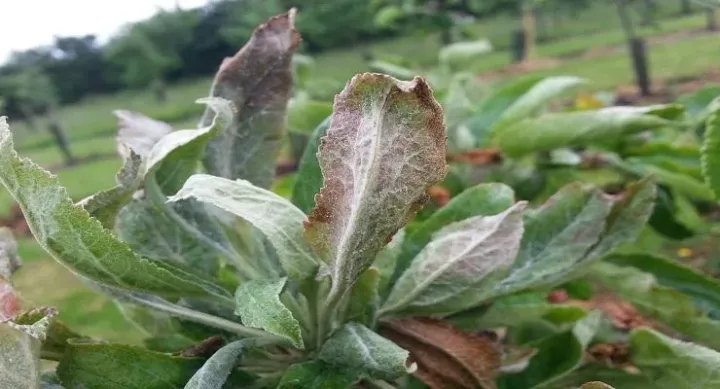
Description
Symptoms
The most recognizable symptom is the appearance of white, dusty patches on leaves and young shoots, resembling a light dusting of flour or talcum powder.
As the infection matures, these patches become denser and may take on a felt-like texture. Small, dark, pinhead-sized structures (cleistothecia) appear within the white growth.
Infected leaves often curl, deform, and stop growing, eventually turning yellow and dropping prematurely. This defoliation can significantly stress the tree during the summer.
Young twigs exhibit stunted growth, characteristic twisting, and necrosis. The tips of the branches are particularly vulnerable and may die back completely under severe pressure.
Fruits infected during the early stages of development often develop cracked or corky skin, rendering them aesthetically unappealing and prone to opportunistic secondary infections.
Pathogen
The causal agent of this disease is the fungus Podosphaera tridactyla (formerly Sphaerotheca pannosa var. cerasi). It is an obligate parasite that specifically infects members of the Rosaceae family.
The fungus develops on the surface of leaves and young shoots, creating a mycelial mat that extracts nutrients from the host plant via specialized structures called haustoria.
Its life cycle involves the production of massive quantities of conidia throughout the growing season, which are easily spread by wind and water splash to neighboring plants.
Overwintering occurs primarily through mycelium hidden within the dormant buds of the tree and via cleistothecia found on fallen leaves and bark.
As an obligate biotroph, the pathogen is highly dependent on the living tissues of the host, meaning its vitality is directly linked to the health and seasonal vigor of the cherry tree.
Conditions for development
Powdery mildew thrives in warm, dry weather conditions, provided there is enough humidity at night to support spore germination and colonization.
High humidity within the canopy, often caused by overcrowded planting or lack of proper pruning, creates a stagnant environment that favors the development of the fungal mat.
Rapidly growing, succulent tissues produced by excessive nitrogen application are particularly susceptible to infection, making young nursery stock highly vulnerable.
Warm temperatures ranging between 18°C and 25°C are optimal for the rapid colonization of the host tissue, allowing the fungus to spread across the orchard in days.
While the disease is often associated with drier climates, the presence of heavy morning dews is sufficient to maintain the infection even when summer rainfall is scarce.
Why it matters
The primary damage is caused by the reduction of the leaf surface area, which decreases photosynthesis and weakens the tree's ability to store energy for the following season.
Severe infestations reduce the tree's winter hardiness, leading to bud death and branch dieback, which directly impacts future yield and the structural integrity of the tree.
Fruit quality is significantly compromised; even if the fruit remains edible, its market value drops due to surface discoloration, scarring, and deformation.
In nursery settings, powdery mildew can cause permanent damage to young trees, leading to stunted growth and potentially making the stock unsellable.
Chronic infection results in overall tree decline, making the orchard more susceptible to other pests and opportunistic diseases that thrive on stressed plants.
Protection
Cultural control is the first line of defense: proper pruning to open up the canopy improves air circulation, and cleaning up fallen leaves reduces the primary inoculum source.
Avoiding excessive nitrogen fertilization helps keep growth rates manageable and prevents the formation of overly tender tissue that the fungus finds attractive.
Chemical control involving the application of fungicides, such as sulfur-based products or systemic triazoles, is effective when applied preventatively or at the first sign of symptoms.
Integrated pest management (IPM) strategies, including the use of resistant cultivars, can significantly reduce the need for chemical intervention in both small and commercial orchards.
- Periodic application of sulfur-based fungicides.
- Systemic treatment with triazoles or strobilurins.
- Regular pruning to increase light and air penetration.
- Selection of disease-resistant cherry varieties.
Discussion
No discussions yet — be the first.