

Description
Symptoms
The first specific sign of infection is the emergence of "basal spikes" or stunted shoots, which have shortened internodes, curled leaves, and a brittle, brittle texture.
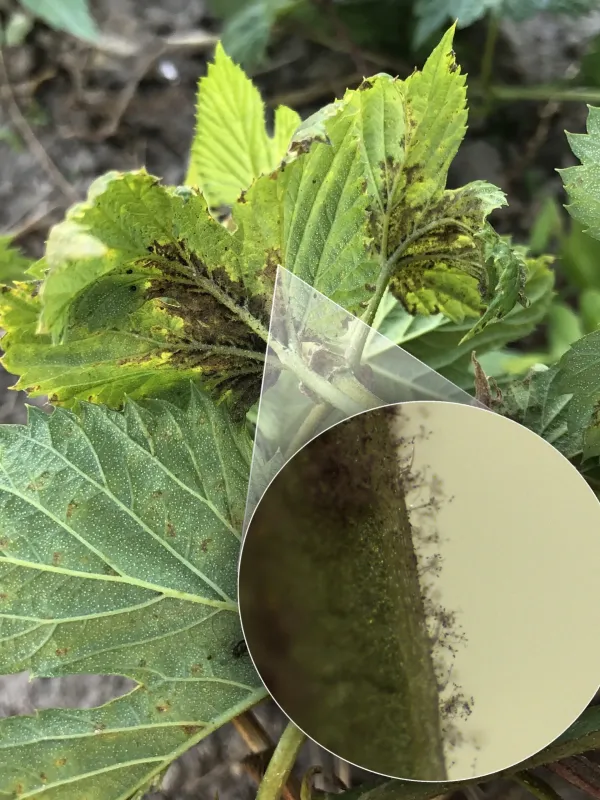
Angular chlorotic spots appear on the upper leaf surface, which eventually turn brown and necrotic; these spots are sharply defined by the leaf veins.
Under high humidity conditions, a thick gray-violet mold, consisting of sporangiophores and sporangia, develops on the undersides of the leaves.
When hop cones are affected, they become brown, deformed, and eventually wither, resulting in a total loss of commercial quality and brewing potential.
Severe infestations can lead to premature defoliation of the entire vine, which weakens the root system and significantly limits the plant's growth for the next season.
Pathogen
The causative agent of the disease is the obligate oomycete pathogen known as Pseudoperonospora humuli, which specifically targets the common hop (Humulus lupulus).
The pathogen overwinters as mycelium within the hop rhizomes, ensuring that the disease remains present on the plantation from one year to the next.
During the spring, the pathogen spreads via sporangia that are transported by wind or splashing rain onto young, susceptible shoots, where they initiate primary infection.
The life cycle involves the production of motile zoospores, which require a film of free moisture on the plant surface to swim and successfully infect host tissues.
The pathogen is capable of rapid secondary cycles of infection throughout the growing season, provided that environmental conditions remain favorable.
Conditions for development
High relative humidity, typically exceeding 90%, is the primary environmental factor that promotes the germination and infection processes of Pseudoperonospora humuli.
Optimal temperatures for the development of the disease range from +15°C to +20°C, a climate often encountered during the spring and early summer periods.
The presence of free moisture, such as dew, fog, or rainfall on the leaves, is essential for the zoospores to navigate and penetrate the plant cells.
Poor canopy management and excessive plant density lead to stagnant air and increased humidity, which significantly exacerbates the spread of the disease within the field.
Agronomic mismanagement, such as excessive nitrogen fertilization, results in succulent tissue growth that is more susceptible to pathogen colonization.
Why it matters
Downy mildew is one of the most destructive diseases in hop production, as it leads to significant yield losses and degrades the quality of the hop cones.
Chronic infection can weaken the hop rootstock so severely that the plants may die during winter, necessitating costly replanting of the entire hop yard.
By interfering with photosynthesis, the disease prevents the plant from accumulating sufficient carbohydrate reserves in the rhizome, impacting future crop vigor.
The essential lupulin and aromatic compounds in the cones are reduced or altered, rendering the harvest unsuitable for commercial brewing requirements.
The economic impact is further magnified by the high labor and chemical costs required to manage the pathogen during epidemic outbreaks.
Protection
The most reliable long-term solution is the use of disease-resistant hop cultivars, which effectively mitigate the need for constant chemical intervention.
Regular sanitation, including the prompt removal and destruction of infected basal spikes, is crucial for reducing the initial inoculum pressure in the spring.
Maintaining proper vine spacing and canopy thinning allows for better air circulation, which helps keep the plant surfaces dry and reduces infection risks.
The systematic application of fungicides, including copper-based products and systemic chemistry, remains a standard and necessary practice in commercial yards.
- Early detection through consistent scouting;
- Pruning and burning of diseased plant material;
- Balancing soil nutrient levels;
- Removing weeds to improve ventilation.
In brief
1
Affects crops
Biology
Pathogens and affected parts
Pathogens
Affected plant parts
whole plant
Content graph
Affects crops · 1
Reference
Connections · Downy mildew of hop
Most often together:
Marketplace
Products · 5


Community
Discussion
No discussions yet — be the first.