
Bean blight
Phytophthora phaseoli
Description
How to identify
The causative agent of this disease is Phytophthora phaseoli, a specialized oomycete pathogen that acts as a parasite on various bean species. This organism belongs to the genus Phytophthora, which includes some of the most destructive plant pathogens globally.
The pathogen completes its life cycle by producing sporangia, which are disseminated through wind and water splashes. Upon landing on a suitable host surface under humid conditions, sporangia release motile zoospores that penetrate the plant tissue.
Survival between growing seasons is facilitated by oospores, which are thick-walled sexual spores. These structures remain viable in the soil and on crop debris for several years, acting as the primary source of infection in subsequent seasons.
The biology of Phytophthora phaseoli is highly sensitive to environmental factors. It requires cool to moderate temperatures and high humidity, making it a particular threat in regions with prolonged rainy spells.
The taxonomy of this pathogen distinguishes it from other common phytophthoras due to its specific host range, primarily limited to the Phaseolus genus, ensuring high adaptive efficiency on host tissues.
What it damages
Common bean (Phaseolus vulgaris) and related species are the primary hosts of this disease. It causes severe agricultural loss by targeting the most productive parts of the plant, specifically flowers and developing pods.
Flower blight is a major issue, as the pathogen infects inflorescences, causing them to wither and drop off prematurely. This prevents pod formation entirely, leading to drastic yield reductions.
If pods are already formed, the fungus invades the pod walls, causing them to blacken and curl. This disfigurement renders the beans unmarketable for both fresh consumption and processing industries.
Systemic infections can weaken the entire plant, leading to reduced vigor and stunted growth. The damage is cumulative, as primary infections spread quickly to adjacent healthy pods within the canopy.
Economic losses are compounded by the decreased quality of the harvested seeds, which may harbor internal infections or lose viability, making them unsuitable for replanting in the following year.
Signs of infestation
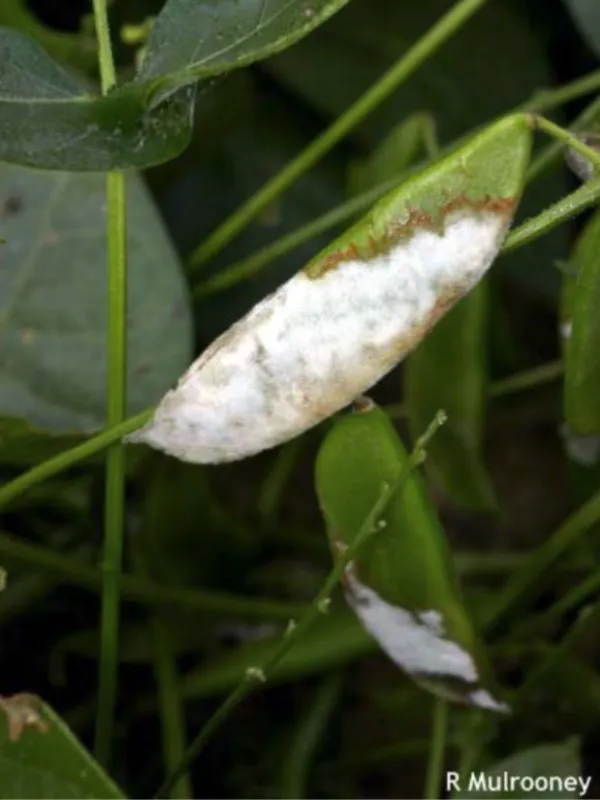
The most diagnostic symptom of Phytophthora phaseoli is the presence of a white, felt-like fungal growth (mycelium) covering the infected pods, stems, and flower stalks.
Initially, small water-soaked lesions appear on the tissues. As the infection progresses, these areas turn dark or necrotic, leading to the characteristic twisting and distortion of the pods as they mature.
Infection on stems can lead to girdling, which disrupts the flow of nutrients and moisture to the upper parts of the plant, resulting in wilting and eventual death of the affected branches.
Leaves may show irregular, brownish-to-black spots with chlorotic halos in conditions of high humidity. While pod infection is the most damaging, leaf symptoms can serve as an early warning of an ongoing outbreak.
Under dry conditions, the visible white growth may disappear, but the pathogen persists in the necrotic tissue, waiting for the next period of high moisture to resume spore production.
Control measures
Effective management begins with rigorous crop rotation. Avoiding planting beans on the same field for at least three to four years helps to reduce the inoculum level in the soil significantly.
The use of disease-free, certified seeds is crucial to prevent the introduction of the pathogen into new areas. Seed treatments can also provide an additional layer of protection for emerging seedlings.
Cultural practices should focus on reducing humidity within the canopy. Wide row spacing and weed control are essential for improving airflow and lowering the microclimate humidity around the plants.
- Applying protective fungicides during the critical flowering stage when humidity is high.
- Deep plowing or sanitation of crop debris immediately after harvest to bury and decompose infected tissues.
- Selecting resistant or tolerant cultivars if available, which can mitigate the impact of disease outbreaks.
Regular field scouting is essential during the reproductive stage. If weather forecasts predict prolonged rain, preventative application of copper-based fungicides is recommended to safeguard the developing yield.
Causes diseases · 1
Discussion
No discussions yet — be the first.