
Alfalfa downy mildew
Peronospora trifoliorum
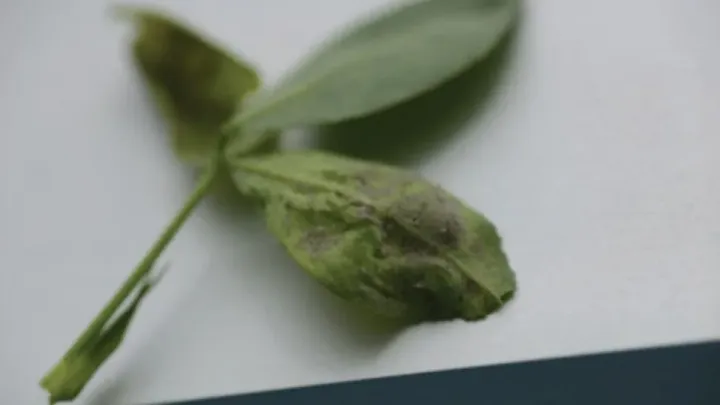
Description
How to identify
The causative agent is the oomycete Peronospora trifoliorum, belonging to the Chromista kingdom. It is an obligate parasite specifically affecting various legume species.
The pathogen's mycelium grows intercellularly within the host tissue, eventually emerging through stomata to produce sporangiophores and sporangia in humid conditions.
Its life cycle relies on the production of thick-walled oospores, which allow the fungus to persist in soil and debris for several years under adverse conditions.
Dissemination occurs primarily via wind-borne sporangia or splashing rain, which spreads the inoculum to healthy tissues during periods of leaf wetness.
Diagnostic identification requires microscopic observation of the characteristic dichotomously branched sporangiophores extending from the underside of leaves.
What it damages
The disease primarily targets alfalfa (Medicago sativa) and can also infect other related legumes like clover, significantly impacting forage production.
The pathogen infects aerial parts of the plant, including leaves, stems, and flower buds, causing systemic symptoms in susceptible alfalfa cultivars.
Major damage results from premature leaf drop, which drastically reduces the photosynthetic surface area and the total yield of dry matter per hectare.
Nutritional value declines as infected plants show lower protein concentrations and altered chemical profiles, making the forage less desirable for livestock.
In severe cases of epidemics, alfalfa downy mildew can lead to significant biomass losses, impacting the economic viability of the forage crop enterprise.
When it appears
The disease is most prevalent in the early spring months, coinciding with cool temperatures and high rainfall, which are optimal for infection.
Prolonged periods of damp weather, including fog and heavy dew, significantly increase the risk of rapid pathogen spread and colonization of the canopy.
During the hot and dry summer months, the pathogen's activity typically decreases, often leading to a temporary remission of visible symptoms.
A secondary peak in disease occurrence may appear in the late autumn if weather conditions revert to cool, moist patterns favoring spore development.
Autumn infections are particularly detrimental, as they reduce the vigor of the plant going into winter dormancy, leading to increased winter-kill rates.
Signs of infestation
The initial signs are manifested as chlorotic, pale-yellow patches appearing on the upper surface of the alfalfa leaflets, often with indefinite margins.
A distinctive grayish-violet to purplish fungal mat develops on the undersides of these lesions, representing the massive production of sporangia.
Affected stems often show signs of stunting, and terminal shoots may become twisted or deformed as the pathogen disrupts normal plant growth processes.
In advanced stages, the infected leaf tissue may necrosis, turn brown, and curl, leading to total desiccation of the lower canopy foliage.
The overall appearance of the field becomes patchy and discolored, signaling a potential infestation that requires immediate agronomic assessment.
Control measures
The most effective strategy is the planting of resistant or tolerant alfalfa cultivars specifically bred for resistance against common leaf spot pathogens.
Good agronomic practices, such as proper crop rotation and ensuring sufficient field drainage, are essential to minimize the environmental suitability for the pathogen.
Early harvesting of the forage crop can help mitigate disease impact by removing the inoculum source before the pathogen completes its secondary infection cycle.
Maintaining balanced soil fertility, particularly adequate potassium levels, helps strengthen plant cell walls and overall host resistance to infection.
- Ensure adequate plant spacing to promote canopy airflow.
- Sanitation by removing or burying infested crop debris.
- Monitoring fields during cool, wet growth stages.
Causes diseases · 1
Discussion
No discussions yet — be the first.