
Pea downy mildew
Peronospora viciae
Description
How to identify
Pea downy mildew is a fungal-like disease caused by the oomycete Peronospora viciae, which belongs to the family Peronosporaceae and specializes in infecting pea crops.
The pathogen is an obligate parasite, meaning it requires living host tissue to complete its life cycle and survives in the soil as persistent oospores.
Oospores are highly resistant structures that can survive in the soil for many years, providing a primary source of infection whenever environmental conditions become favorable.
The disease spreads via sporangia, which are easily disseminated by wind, rain splashes, and movement of machinery through the field, especially in high-moisture conditions.
Development is favored by cool temperatures (10–20 °C) and periods of high humidity or leaf wetness, which are essential for the germination of the zoospores.
What it damages
Infection leads to reduced photosynthetic capacity, stunted plant growth, and in severe cases, the complete death of the pea seedlings early in the season.
The disease can significantly impact pod development, leading to fewer seeds per pod, shriveled grains, and reduced overall weight of the harvested crop.
When seeds are infected, they can harbor the pathogen internally or on their surface, facilitating the long-distance spread of the disease through trade and seed exchange.
The economic impact involves both direct yield losses and the costs associated with fungicide applications and additional agricultural management practices.
Yield reductions in susceptible varieties can range from 10% to 50% depending on the severity of the outbreak and the growth stage at which the infection begins.
Signs of infestation
The most distinctive sign is the appearance of chlorotic, yellowish patches on the upper surface of the leaves, which often expand and turn brown over time.
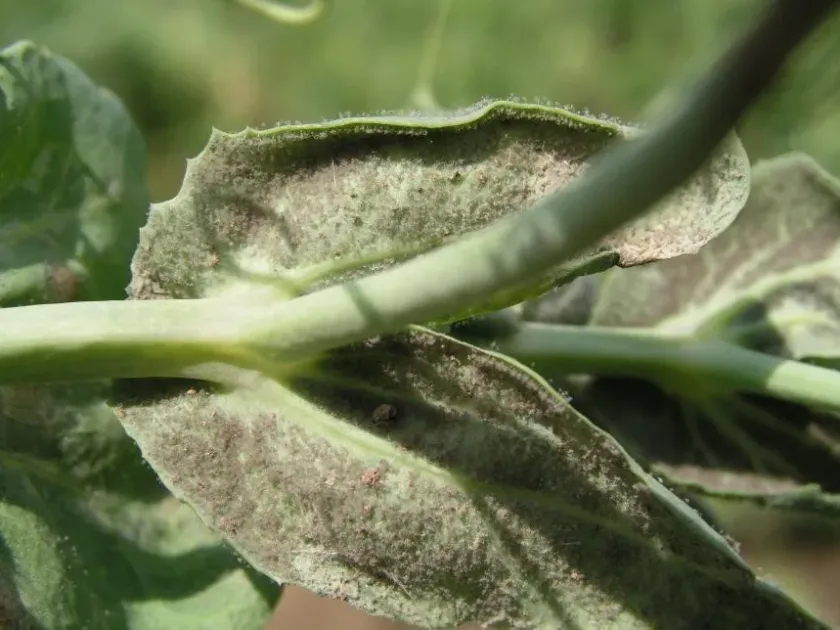
On the underside of these patches, a characteristic gray or violet-tinted moldy growth emerges, consisting of the pathogen's branched conidiophores.
Infected plants may exhibit stunted growth, downward curling of leaves, and in advanced stages, the entire plant may show signs of yellowing and premature senescence.
During humid weather, the sporulation is highly visible, making the identification of the pathogen relatively straightforward even in the early stages of development.
- Chlorotic, irregular patches on the upper leaf surface.
- Grayish-violet fungal growth on the underside of leaves.
- Stunted plant height and distorted leaf shape.
- Premature wilting and shedding of lower canopy leaves.
Control measures
Crop rotation is the most critical cultural practice, with a recommended break of at least 4–5 years between pea crops to allow soil oospore populations to decline.
Sourcing high-quality, disease-free seed is essential to prevent the introduction of the pathogen into new areas where the disease is not yet established.
Selecting resistant or tolerant pea cultivars is the primary management strategy for reducing dependency on chemical inputs and maintaining sustainable yields.
Improved field drainage and management of plant density can help reduce humidity within the canopy, making the environment less favorable for pathogen development.
Fungicide seed treatments and foliar applications using specific systemic chemistry can be effective, provided they are applied early, before the disease becomes widespread.
Causes diseases · 1
Discussion
No discussions yet — be the first.