
Plasmopara umbelliferarum
Plasmopara umbelliferarum
Description
How to identify
Plasmopara umbelliferarum is an obligate parasite belonging to the kingdom Chromista and the class Oomycetes. This pathogen is the primary cause of downy mildew in plants within the Apiaceae (parsley/carrot) family, posing a significant risk to vegetable production.
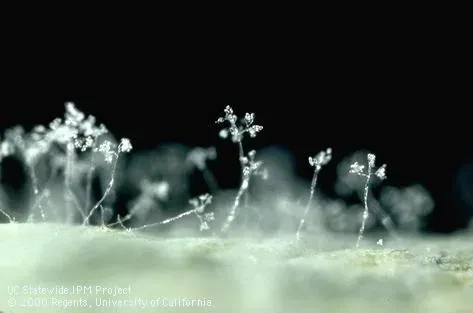
The pathogen’s mycelium develops intercellularly, extracting nutrients from the host through haustoria. In conditions of high humidity, it produces conidiophores that emerge through stomata, forming a white or grayish downy growth on the underside of leaves, which serves as the primary inoculum source.
Its life cycle includes both asexual reproduction (via zoospores) and sexual reproduction (via oospores). Oospores are highly resilient, allowing the pathogen to persist in soil and crop debris for several seasons, making it a difficult pathogen to eradicate once established in a field.
The pathogen is highly specialized for Apiaceae crops, including dill, carrots, and parsnips. It can infect plants at various growth stages, but the most severe damage is typically observed during periods of active foliage development.
Infection begins when zoospores land on a wet leaf surface, germinate, and penetrate the host tissue through stomata. Once inside, the mycelium colonizes the mesophyll, leading to the characteristic yellowing and necrosis of the infected areas.
What it damages
The primary economic impact of Plasmopara umbelliferarum is the loss of marketable yield and quality. Infected leaves yellow, curl, and die prematurely, which is particularly devastating for herb and leafy green crops where the foliage is the primary product.
In seed crops, the pathogen severely affects seed development, leading to stunted or non-viable seeds. This significantly reduces germination rates and vigor, complicating the production of quality seed stocks for future seasons.
The infection systemically alters the plant’s metabolism, particularly reducing photosynthetic efficiency. As a result, the plant’s overall growth is stunted, its defense mechanisms are weakened, and it becomes more susceptible to secondary pests and pathogens.
In commercial dill fields, infections can result in 50-80% yield losses during high-moisture seasons. Farmers often face high costs for intensive fungicide programs to prevent complete loss of their crops.
Under greenhouse conditions, the disease can spread rapidly due to the stable, humid microclimate. A small initial outbreak can escalate into a severe epidemic, destroying entire batches of crops within a short timeframe.
When it appears
The pathogen thrives in cool to moderate temperatures (15-22°C) combined with high relative humidity. Morning dew, frequent rainfall, and foggy conditions are essential for the release and motility of zoospores, which facilitate the rapid spread of the disease.
Initial infection signs typically appear within 7-10 days following exposure. The incubation period is strictly governed by moisture levels; higher humidity leads to a more rapid development of new sporulation cycles.
The most vulnerable growth stages are during canopy closure or the onset of inflorescence development. Dense foliage provides the necessary shade and humidity retention for the pathogen to flourish, turning the crop into a breeding ground.
As temperatures drop during the off-season, the pathogen transitions into its dormant state by forming oospores within the dead plant tissues. These resting spores remain viable throughout the winter, ensuring the pathogen returns when environmental conditions become favorable again.
Dissemination occurs through wind, splashing water from rain or overhead irrigation, and human activity. Contaminated tools and equipment can easily transport spores between fields, requiring strict sanitation protocols.
Signs of infestation
The first symptoms are chlorotic spots appearing on the upper surface of the leaves. Over time, these spots turn yellow and eventually brown, often delimited by leaf veins, giving them a distinct angular appearance.
A telltale sign is the gray or pale violet downy growth on the underside of the leaves, directly beneath the chlorotic spots. In dry weather, this growth may be subtle, but it will quickly reappear once moisture levels rise.
Severe infections lead to leaf curling, premature yellowing, and eventual necrosis. Infected plants exhibit overall stunted growth, while the stems may lose turgor and collapse, rendering the plant completely unmarketable.
- Yellow spots between the leaf veins.
- Grayish-violet fungal down on the leaf underside.
- Leaf curling and deformation.
- Premature dying of the lower canopy.
- Stunted growth and poor root development.
As the disease progresses, these lesions merge, covering the entire leaf area and leading to complete defoliation. In severe cases, the entire plant may wither, resulting in a total crop failure.
Control measures
The cornerstone of management is a robust crop rotation strategy, ensuring that Apiaceae crops are not replanted in the same field for at least 3-4 years. This effectively reduces the soil-borne inoculum pressure.
Rigorous weed control is essential, as wild relatives of carrots and dill can host the pathogen. Removing and destroying all infected crop residues post-harvest is critical to preventing the survival of oospores.
Only certified, disease-free, and treated seeds should be used. Seed treatment is a vital preventative measure, as infected seeds can carry the pathogen into the new growing season.
Chemical control focuses on the use of copper-based fungicides or systemic anti-oomycete agents (e.g., metalaxyl, fosetyl-aluminum) as a preventative measure. Applications must be timed before the onset of humid conditions or at the first sign of symptoms.
Agricultural management, including optimal plant spacing and using drip irrigation instead of overhead systems, helps minimize leaf wetness. In greenhouse production, maintaining low humidity through active ventilation is the most effective preventative strategy.
Causes diseases · 1
Discussion
No discussions yet — be the first.