
Plasmopara pygmaea
Plasmopara pygmaea
Description
How to identify
Plasmopara pygmaea is an obligate parasite belonging to the kingdom Chromista and the phylum Oomycota. It is a specialized pathogen that primarily infects plants in the Ranunculaceae family, particularly the genus Anemone.
Unlike true fungi, this organism is an oomycete, which dictates its life cycle and specific environmental requirements for survival and spread.
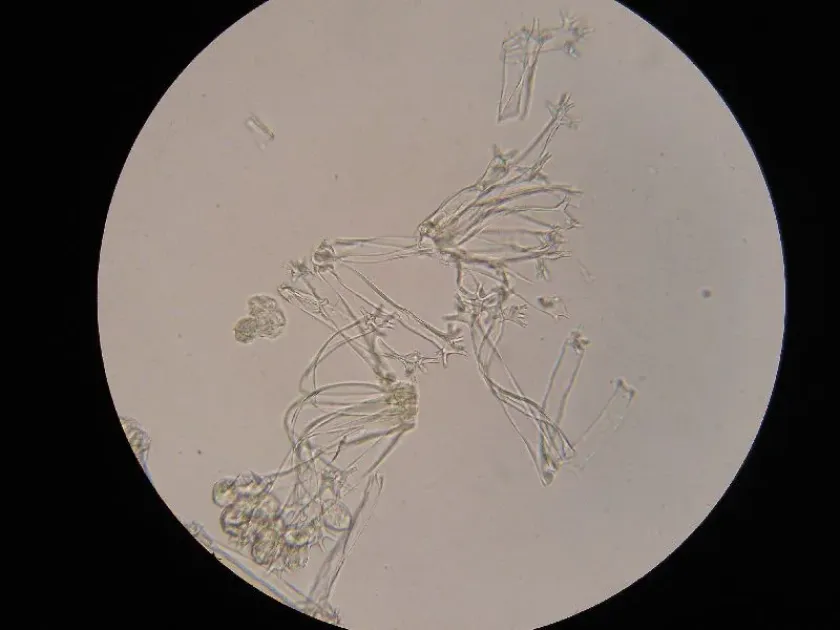
The life cycle includes asexual reproduction through sporangia produced on branched sporangiophores and sexual reproduction, which results in the formation of oospores.
Oospores serve as the primary overwintering structures, allowing the pathogen to persist in soil and infected plant debris for extended periods.
The pathogen utilizes specialized structures called haustoria to penetrate plant cells, extracting essential nutrients and causing significant metabolic stress to the host.
What it damages
The host range is largely confined to Anemone species. The pathogen targets aerial parts of the plant, including leaves, petioles, and stems, leading to severe foliage damage.
The infestation significantly reduces the leaf surface area available for photosynthesis, which impairs the plant's ability to store energy in its rhizomes.
Heavy infection often leads to premature wilting and death of leaves, reducing the plant's vigor and its capacity for future flowering.
In dense plantings, the disease can spread rapidly, creating visible patches of chlorotic and necrotic foliage that detract from the aesthetic value of the plants.
If left unmanaged, the cumulative stress can eventually lead to the loss of entire patches of these perennial plants in a garden setting.
When it appears
The disease typically emerges in early spring when temperatures range between +10°C and +18°C, coinciding with the active growth phase of anemones.
High relative humidity and the presence of surface moisture, such as dew or frequent rain, are critical for the germination of zoospores and successful infection.
The pathogen reaches its peak activity during the flowering period, when environmental conditions usually favor the rapid production and wind-dispersal of sporangia.
As summer approaches and conditions become hotter and drier, the active phase of the disease typically wanes as the pathogen enters a dormant oospore state.
The persistence of oospores in the soil ensures that the pathogen remains a threat to future crops, especially in areas where host plants are replanted repeatedly.
Signs of infestation
Initial symptoms include the appearance of yellow or chlorotic spots on the upper leaf surface, which are often angular and delimited by leaf veins.
A distinctive white or grayish downy growth becomes visible on the underside of the leaves, directly corresponding to the locations of the chlorotic spots above.
Over time, the affected leaf areas turn brown and necrotize, leading to leaf curling and premature senescence of the foliage.
- Yellowish, angular spots on upper leaves.
- White, downy-like fungal growth on the underside of leaves.
- Browning and necrosis of infected tissues.
- Deformation and curling of leaf blades.
- Reduced vigor and stunted overall growth.
The presence of branched sporangiophores visible under low magnification confirms the identification of Plasmopara species.
Control measures
Effective management begins with strict sanitation, including the prompt removal and destruction of infected plant material to reduce the inoculum load.
Improving air circulation by maintaining appropriate plant spacing is essential to minimize the duration of leaf wetness and decrease infection risk.
Chemical control involving fungicides effective against oomycetes, such as those containing copper, metalaxyl, or fosetyl-aluminum, can be used for protection.
Applications should be timed to coincide with early spring growth or upon the very first signs of disease to prevent widespread dispersal of spores.
Rotating planting sites or ensuring proper soil drainage can help mitigate the risk of infection from oospores residing in the soil environment.
Causes diseases · 1
Discussion
No discussions yet — be the first.