
Sclerophthora rayssiae
Sclerophthora rayssiae
Description
How to identify
Sclerophthora rayssiae is a species of oomycete, a group of fungus-like organisms classified under the kingdom Chromista. It acts as an obligate parasite, primarily infecting members of the Poaceae (grass) family.
The life cycle of this pathogen is highly dependent on moisture. It reproduces by forming sporangia that release motile zoospores, which utilize a water film to swim towards the host tissue and initiate a new infection.
Once inside the plant, the pathogen develops a coenocytic mycelium that grows between the cells. It absorbs nutrients directly from the host, which eventually leads to cellular damage and structural decline of the plant tissue.
The organism is capable of sexual reproduction, resulting in the formation of oospores. These thick-walled structures are resistant to environmental stress and allow the pathogen to persist in the soil for several growing seasons.
Taxonomically, it belongs to the family Peronosporaceae. It is often compared to other downy mildew pathogens due to its similar mode of infection and reliance on humid conditions to spread through a field.
What it damages
The pathogen causes severe damage to cereal crops by disrupting their physiological processes. Infected plants often show reduced vigor, stunted growth, and lower overall biomass production.
Damage to the vascular system prevents the efficient transport of water and nutrients to the developing grain. This results in reduced grain filling, lower test weight, and overall poor quality of the harvest.
In cases of heavy infestation, significant yield losses occur due to plant collapse or widespread chlorosis and necrosis of the leaves. This compromises the plant's ability to undergo photosynthesis during critical growth stages.
The spread of the pathogen within a crop creates patchy distribution, where heavily infected zones yield significantly less than healthier areas. This leads to uneven field maturity and harvesting difficulties.
Furthermore, the presence of the pathogen may invite secondary infections by opportunistic fungi and bacteria, further complicating the plant's health status and increasing the total economic impact.
When it appears
Primary infection typically occurs in early spring, triggered by rising temperatures and high soil moisture levels. The pathogen remains active throughout the vegetative growth period if conditions remain humid.
Spore dispersal is most intense following rainfall events or periods of heavy morning dew. Water droplets effectively spread zoospores from the soil or lower leaves to the healthy upper parts of the canopy.
The period between stem elongation and anthesis is the most vulnerable phase for the host. If the pathogen spreads during this window, the impact on grain formation is usually most severe.
As the season progresses towards maturity and conditions become drier, the pathogen shifts into its dormant phase. Oospores are formed within the decaying host tissues to survive the upcoming winter.
Constant monitoring is advised after any significant rain event in the early season, as this is the primary window for establishing the baseline infection levels in a field.
Signs of infestation
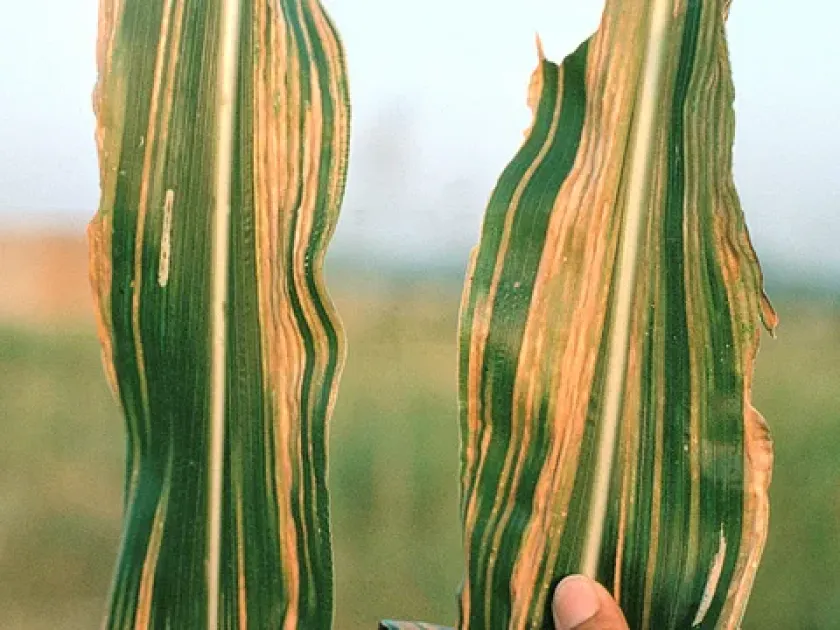
Symptoms usually manifest as chlorotic streaks or discolored spots on the leaf surface. As the infection progresses, these areas become necrotic and may turn brown or greyish.
A diagnostic sign during high humidity is the presence of a delicate, white, or light-colored fuzzy growth on the underside of the leaves, which corresponds to the sporulation of the pathogen.
- Yellowing or streaking of the leaves.
- Curling or wilting of the leaf margins.
- General stunted growth of the plant.
- Development of lesions on the stem and leaves.
- Premature yellowing and senescence of the lower foliage.
Infected fields often exhibit a mosaic pattern of growth. Plants may appear irregular in height and development, with severely affected individuals showing pronounced leaf curling and systemic weakening.
Microscopic analysis of the fuzzy growth will reveal the characteristic sporangia of the species, allowing for definitive identification compared to other common foliar pathogens.
Control measures
Cultural control practices are essential for managing this pathogen. Implementing a strict crop rotation cycle effectively breaks the life cycle by removing the host for several years.
Sanitation is equally critical. Deep plowing of crop residues helps to bury inoculum deeper into the soil, where environmental conditions are less favorable for immediate reinfection.
Fungicide application is recommended when weather conditions favor disease development and early symptoms appear. Systemic fungicides with specific activity against oomycetes provide the most effective control.
Optimizing plant density and improving field drainage are effective preventive measures. A well-ventilated canopy reduces the moisture retention that the pathogen requires for successful colonization.
Breeding and selecting for resistant cultivars represent the most sustainable approach to long-term control, as it reduces the reliance on chemical inputs and mitigates the risk of yield loss.
Causes diseases · 2
Discussion
No discussions yet — be the first.