
Chickpea
Cicer arietinum L.
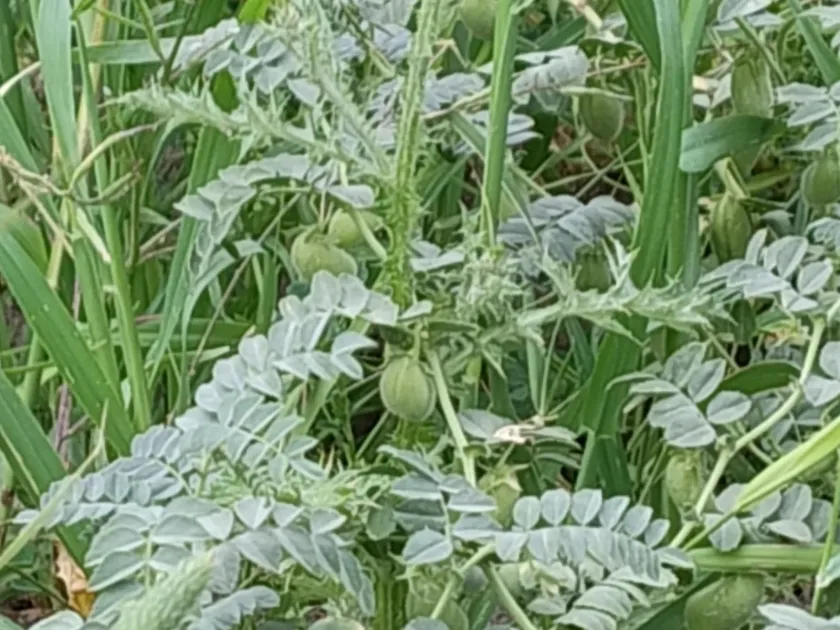
Description
Sowing dates
Chickpeas are typically sown early in the spring, as soon as soil temperatures at planting depth consistently reach +5°C to +7°C.
Early sowing allows the crop to maximize the use of stored winter soil moisture, which is vital for uniform emergence in arid regions.
The optimal seeding depth is 6–8 cm, ensuring that seeds are placed in sufficiently moist soil to facilitate reliable germination.
Chickpeas are remarkably cold-tolerant, with seedlings capable of surviving light frosts as low as -6°C to -8°C without significant damage to the stand.
Delaying the sowing date should be avoided, as it causes the plant to enter the flowering phase during peak heat, resulting in drastic yield reductions.
Growing requirements
Chickpea (Cicer arietinum L.) is a member of the Fabaceae family, originating from the arid regions of Western Asia and the Middle East.
The crop is highly photophilic and requires open, well-lit fields, as it is sensitive to shading by weeds or overcrowded planting conditions.
Chickpeas thrive in light to medium-textured soils, including chernozems and loams, and require excellent drainage to prevent root rot.
The ideal temperature range for active growth is between +20°C and +28°C; however, the plant is exceptionally resistant to drought conditions.
As a legume, it fixes atmospheric nitrogen through symbiotic bacteria, making it an excellent crop for soil nitrogen management in rotation cycles.
Yield
Yield potential of chickpea depends on several factors, including variety selection, moisture availability, and the success of weed control programs.
In standard dryland farming conditions, farmers typically achieve yields ranging from 1.5 to 2.5 tonnes per hectare.
Inclusion of pre-sowing seed inoculation with effective Rhizobium strains is mandatory to boost nodulation and maximize the crop's yield potential.
Under irrigated conditions or in seasons with optimal rainfall distribution, yields can exceed 3.0–3.5 tonnes per hectare for high-yielding varieties.
Field maintenance, including managing plant density to 300,000–500,000 plants per hectare, is essential to reach these yield targets.
Main diseases and pests
Chickpea crops are vulnerable to several fungal and viral pathogens, especially when humidity levels remain high for extended periods.
Commonly encountered diseases include Alternaria blight, Verticillium wilt, Rhizoctonia root rot, and Sclerotinia stem rot.
The crop can also be affected by viral agents such as Tomato mosaic virus and Tobacco mosaic virus, often transmitted by insect vectors.
Charcoal rot (ashy stem blight) and Grey mold (Botrytis) are major threats that cause severe losses during maturation if not controlled.
Effective management requires a multi-pronged approach: using treated seeds, maintaining spatial distance from other legumes, and timely fungicide application.
Harvesting
Chickpeas are ready for harvest when the pods turn yellow or brown and the seeds produce a distinct rattling sound when the plants are shaken.
Direct combining is the standard harvest method, which is efficient due to the crop's relatively uniform maturation and upright growth habit.
Timing is critical: delaying the harvest can lead to pod shattering and significant grain loss, particularly in dry and windy weather conditions.
Target moisture content at harvest should be around 12–14% to ensure long-term stability and prevent molding during storage.
Careful adjustment of combine settings, especially the threshing drum speed, is required to prevent seed cracking and ensure the quality of the harvested grain.