
Description
Symptoms
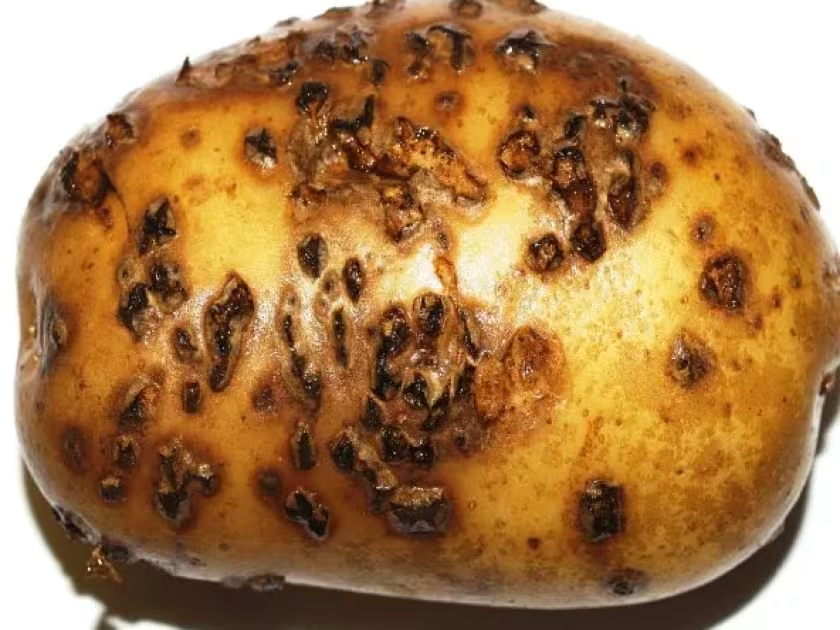
Symptoms appear on tubers as small, raised spots that eventually enlarge into brown, circular, or irregular pustules.
When the pustules rupture, they release a dark, powdery mass consisting of numerous spore balls, which gives the disease its common name.
Root infection manifests as the development of galls or tumor-like growths, which significantly hamper nutrient uptake.
Severe infestations cause tubers to become disfigured, making them unsightly and unsuitable for market sale.
Secondary invasion by soft rot bacteria often occurs in the scab lesions, leading to accelerated decay of the harvested tubers.
Pathogen
Powdery scab is a soil-borne disease caused by the obligate parasite Spongospora subterranea, which belongs to the Plasmodiophorids.
The pathogen utilizes zoospores to infect the roots, stolons, and tubers of the potato plant, primarily through lenticels and wounds.
The fungus produces persistent spore balls (cystosori) that can survive in the soil for up to a decade, making it a difficult pathogen to eradicate.
Once established in a field, it colonizes the host tissue and forces the plant to form galls or lesions, disrupting normal development.
Besides potatoes, this pathogen can also affect other Solanaceae family members, which is important for crop rotation planning.
Conditions for development
Cool and wet soil conditions are the primary drivers of Spongospora subterranea infection and disease progression.
The disease is most prevalent in poorly drained soils where moisture remains high for extended periods, especially during tuber initiation.
Temperatures ranging from 12°C to 18°C provide the ideal environment for the mobility and infection cycle of the zoospores.
Frequent or heavy irrigation during the early tuber development stages drastically increases the risk of outbreaks.
Soil pH also plays a role, as the pathogen tends to thrive in soils that are slightly acidic to neutral in character.
Why it matters
The most immediate economic impact is the severe reduction in potato tuber quality, rendering them unfit for high-value sales.
Infected tubers suffer from increased water loss, resulting in shrinkage and loss of firmness while stored in warehouses.
Root system damage limits the crop's ability to access essential nutrients and water, leading to reduced yield and stunted growth.
Contaminated fields remain a long-term liability because the resilient spore balls are extremely difficult to remove or destroy.
Increased susceptibility to storage rot significantly complicates the preservation of the harvest and leads to total storage losses.
Protection
The most critical control measure is the use of disease-free, certified seed tubers to prevent introducing the pathogen to the field.
Implementing long crop rotations (at least 5 years) helps to reduce the concentration of resting spores in the soil over time.
Improving soil drainage and selecting well-aerated fields are essential strategies for mitigating the impact of the disease.
Treating seed potatoes with appropriate fungicides can protect the crop during the vulnerable early stages of germination and growth.
- Avoiding irrigation during the sensitive tuber initiation phase;
- Removing crop debris immediately after harvest;
- Ensuring proper sanitation of equipment to prevent cross-contamination.
Pathogens and affected parts
Affects crops · 1
Discussion
No discussions yet — be the first.