
Spinach downy mildew
Peronospora farinosa
Description
How to identify
Peronospora farinosa is a highly specialized oomycete pathogen belonging to the kingdom Chromista. It acts as an obligate parasite, causing the destructive disease known as downy mildew, specifically targeting spinach and wild relatives within the Amaranthaceae family.
The pathogen survives primarily as oospores in soil or infected plant debris, which can remain viable for extended periods. Under favorable environmental conditions, these spores germinate to infect host tissue through stomata on the leaf surfaces.
The fungus develops intercellularly, extracting nutrients from plant cells via haustoria. During the growing season, it produces large quantities of asexual conidia on sporangiophores that emerge from the leaf stomata, enabling rapid secondary spread.
Cool, moist weather conditions, specifically temperatures between 10°C and 18°C, are optimal for disease outbreaks. High humidity and leaf wetness are essential for the survival and dispersal of the conidia, facilitating rapid colonization of crops.
If not managed correctly, downy mildew can lead to total crop loss, as the spinach leaves become unmarketable and decay rapidly. Effective management relies on a deep understanding of the pathogen's rapid multiplication rate.
What it damages
The primary economic impact is the destruction of the leafy canopy, rendering the spinach unfit for retail and processing. The disease ruins the aesthetic appeal and quality, causing rapid yellowing and necrosis of the harvestable tissues.
When it appears
The disease typically emerges during cool, damp periods of the spring and autumn. In protected cultivation, it can appear at any time if the internal climate allows for prolonged leaf wetness and moderate temperatures.
Signs of infestation
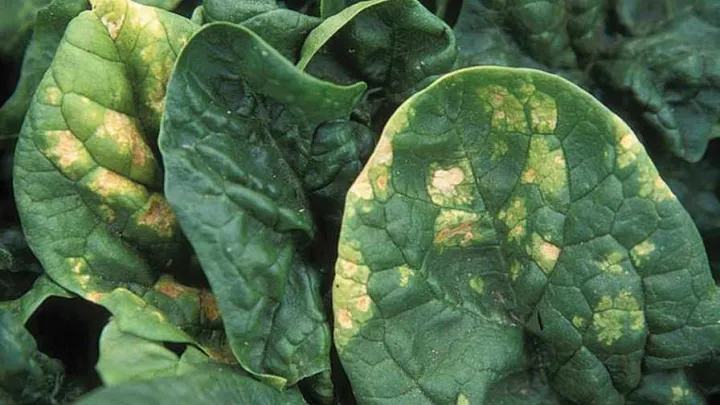
Early symptoms appear as chlorotic, yellowish patches on the upper surface of the leaves. These patches may eventually turn necrotic or brown, leading to the collapse of the leaf tissue if the infection continues to progress.
The diagnostic feature is the presence of a grayish-purple, felt-like fungal growth on the underside of the affected leaf spots. Eventually, the entire plant may become chlorotic, stunted, and eventually succumb to secondary rotting.
Control measures
The most effective strategy involves the deployment of resistant spinach varieties that provide genetic protection against specific races of the pathogen. Crop rotation practices are critical to reduce the build-up of oospores in the soil over time.
- Ensure wide row spacing to promote air circulation and reduce canopy humidity.
- Avoid overhead irrigation practices that extend leaf wetness duration.
- Promptly remove and dispose of all infected crop residues after harvest.
- Apply fungicides according to label recommendations only when environmental risks are high.
- Maintain balanced fertilization to ensure vigorous plant growth and improved stress tolerance.
Causes diseases · 1
Discussion
No discussions yet — be the first.