
Ivy-leaved pelargonium
Pelargonium peltatum (L.) L'Hér.
Description
Sowing dates
Propagation of Pelargonium peltatum is primarily achieved through cuttings, which is the standard commercial practice to maintain genetic uniformity. Cuttings should be taken from healthy, non-flowering shoots in late winter or early spring to ensure vigorous growth during the subsequent season.
When propagating via seeds, sowing should occur in early February in a well-draining, sterile potting medium. Maintaining a consistent temperature between 22 and 24 degrees Celsius is crucial for high germination rates, as the seeds require warmth to break dormancy effectively.
Using rooting hormones can significantly increase the success rate of cuttings by promoting rapid root development. Cuttings should be placed in individual cells or small pots to avoid root entanglement and ensure easy handling during transplanting into final containers.
Hygiene is paramount in the propagation phase; all tools and trays must be thoroughly disinfected to prevent the spread of soil-borne pathogens. Providing adequate spacing between seedlings or cuttings promotes better air circulation, which is essential to prevent early-stage damping-off.
Gradual acclimatization of young plants to lower temperatures and outdoor conditions is a necessary step before final planting. This hardening-off process, lasting about a week, ensures that the plants are resilient enough to withstand the stresses of the growing environment.
Growing requirements
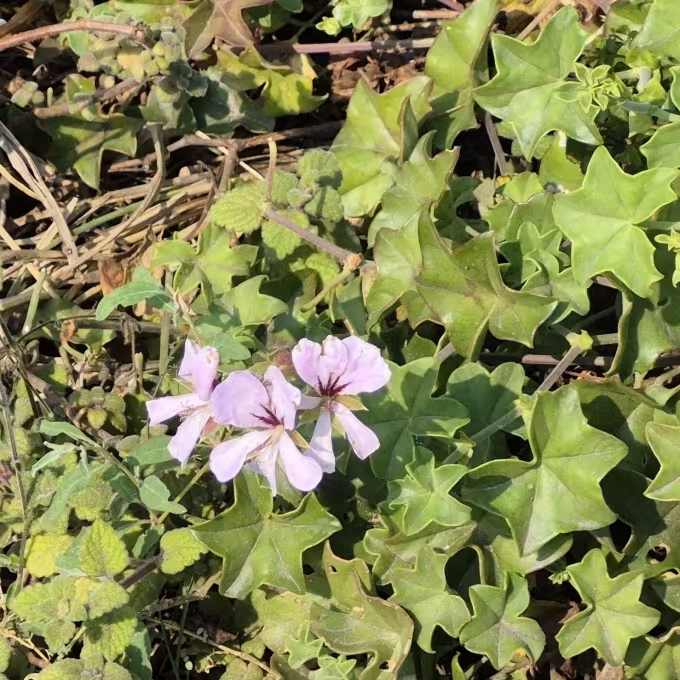
Pelargonium peltatum, a member of the Geraniaceae family, originates from South Africa. It is characterized by its trailing stems and fleshy leaves, which serve as an adaptation to its native xeric environment. This morphology makes it highly suited for hanging baskets and containers.
The plant thrives in well-drained, nutrient-rich soil with a neutral to slightly acidic pH. Proper drainage is the most critical factor in cultivation, as excess moisture in the root zone quickly leads to decay and susceptibility to various pathogenic fungi.
Full sun exposure is required for optimal flowering and dense growth. While the plant can tolerate partial shade, insufficient light will result in leggy stems and reduced bloom counts. Consistent, balanced fertilization during the active growing season is necessary for healthy development.
Temperature management is vital, as the species is not frost-tolerant. In temperate regions, plants must be moved to frost-free environments once temperatures drop below 10 degrees Celsius. Providing good ventilation during the winter storage period is essential to prevent fungal outbreaks.
Watering practices should focus on keeping the substrate slightly moist but never saturated. In professional nursery settings, automated drip irrigation is often preferred to keep the foliage dry, thereby reducing the incidence of foliar diseases caused by water splash.
Main diseases and pests
Pelargonium peltatum is susceptible to several destructive pathogens, often triggered by poor environmental conditions. Grey mold (Botrytis cinerea) and Pythium root rot are among the most common issues in nursery production, flourishing in high-humidity settings.
Systemic diseases such as Verticillium wilt and Rhizoctonia root rot can cause sudden wilting and death, often spreading through contaminated soil or water. Strict quarantine and immediate removal of affected plants are necessary to preserve the health of the remaining crop.
Viral threats, including Tobacco mosaic virus and Tomato mosaic virus, pose a major risk as they are often transmitted by sap-sucking insects. Since there is no cure, the primary defense involves rigorous pest control, specifically targeting aphids and whiteflies.
Anthracnose and Sclerotinia rot can cause necrotic lesions and stem collapse, significantly degrading the aesthetic and market value of the plants. Regular monitoring and the application of appropriate systemic fungicides in a rotation program are standard practices for large-scale operations.
- Aphids (Aphis spp.)
- Whiteflies (Trialeurodes vaporariorum)
- Spider mites (Tetranychidae)
- Fungus gnats (Sciaridae)
- Root decay complex