
Reference · Crops
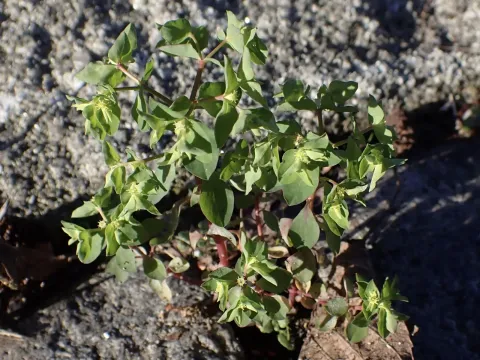
Spurge
Euphorbia L.
Sowing dates for Euphorbia species vary depending on the variety and local climatic conditions. In temperate regions, spring sowing is preferred once the soil temperature consistently reaches 10–12 degrees Celsius to ensure uniform germination.
51
items
What the section contains
 Cypress spurge
Euphorbia cyparissias L.
1 product
Cypress spurge
Euphorbia cyparissias L.
1 product
 Candelabra tree
Euphorbia candelabrum Kotschy
Candelabra tree
Euphorbia candelabrum Kotschy
 Caper spurge
Euphorbia lathyris L.
Caper spurge
Euphorbia lathyris L.
 Corn spurge
Euphorbia segetalis L.
Corn spurge
Euphorbia segetalis L.
 Crested Euphorbia
Euphorbia lophogona Lam.
Crested Euphorbia
Euphorbia lophogona Lam.
 Crown of thorns
Euphorbia milii Des Moul.
Crown of thorns
Euphorbia milii Des Moul.
 Cushion spurge
Euphorbia epithymoides L.
Cushion spurge
Euphorbia epithymoides L.
 Don's Spurge
Euphorbia donii Oudejans
Don's Spurge
Euphorbia donii Oudejans
 Draco-plant spurge
Euphorbia dracunculoides Lam.
Draco-plant spurge
Euphorbia dracunculoides Lam.
 Dwarf spurge
Euphorbia exigua L.
Dwarf spurge
Euphorbia exigua L.
 Euphorbia cornastra
 (Dressler) Radcl.-Sm.
Euphorbia cornastra
Euphorbia cornastra (Dressler) Radcl.-Sm.
 Euphorbia dipladenia
Euphorbia dipladenia
Euphorbia dipladenia
 Euphorbia erythraeae
 (A. Berger) N. E. Br.
Euphorbia erythraeae
Euphorbia erythraeae (A. Berger) N. E. Br.
 Euphorbia geroldii
 Rauh
Euphorbia geroldii
Euphorbia geroldii Rauh
 Euphorbia graminea
 Jacq.
Euphorbia graminea
Euphorbia graminea Jacq.
 Euphorbia guiengola
 W. R. Buck & Huft
Euphorbia guiengola
Euphorbia guiengola W. R. Buck & Huft
 Euphorbia heterophylla
 L.
Euphorbia heterophylla
Euphorbia heterophylla L.
 Euphorbia lagascae
 Spreng.
Euphorbia lagascae
Euphorbia lagascae Spreng.
 Euphorbia leucodendron
 Drake
Euphorbia leucodendron
Euphorbia leucodendron Drake
 Euphorbia lomelii
 Steinmann
Euphorbia lomelii
Euphorbia lomelii Steinmann
 Euphorbia schillingii
 Radcl.-Sm.
Euphorbia schillingii
Euphorbia schillingii Radcl.-Sm.
 Flowering Spurge
Euphorbia corollata L.
Flowering Spurge
Euphorbia corollata L.
 Graceful Sandmat
Euphorbia hypericifolia L.
Graceful Sandmat
Euphorbia hypericifolia L.
 Griffith's spurge
Euphorbia griffithii Hook. f.
Jacquemont's Spurge
Euphorbia jacquemontii Boiss.
Griffith's spurge
Euphorbia griffithii Hook. f.
Jacquemont's Spurge
Euphorbia jacquemontii Boiss.
 Leafy spurge
Euphorbia esula L.
Leafy spurge
Euphorbia esula L.
 Lomi spurge
Euphorbia x lomi Rauh
Lomi spurge
Euphorbia x lomi Rauh
 Long-leaved spurge
Euphorbia longifolia Lam.
Long-leaved spurge
Euphorbia longifolia Lam.
 Martini's Spurge
Euphorbia x martini Rouy
Martini's Spurge
Euphorbia x martini Rouy
 Mediterranean spurge
Euphorbia characias L. x Euphorbia dulcis L.
Mediterranean spurge
Euphorbia characias L.
Mediterranean spurge
Euphorbia characias Wulfenii x E. martinii
Mediterranean spurge
Euphorbia characias L. x Euphorbia dulcis L.
Mediterranean spurge
Euphorbia characias L.
Mediterranean spurge
Euphorbia characias Wulfenii x E. martinii
 Melon Spurge
Euphorbia meloformis Aiton
Melon Spurge
Euphorbia meloformis Aiton
 Mottled spurge
Euphorbia lactea Haw.
Mottled spurge
Euphorbia lactea Haw.
 Painted spurge
Euphorbia cyathophora Murray
Painted spurge
Euphorbia cyathophora Murray
 Pascuita
Euphorbia leucocephala Lotsy
Pascuita
Euphorbia leucocephala Lotsy
 Pedilanthus
Euphorbia tithymaloides L.
Pedilanthus
Euphorbia tithymaloides L.
 Petty spurge
Euphorbia peplus L.
Petty spurge
Euphorbia peplus L.
 Poinsettia
Euphorbia pulcherrima Willd. ex Klotzsch x Euphorbia cornastra (Dressler) Radcl.-Sm.
Poinsettia
Euphorbia pulcherrima Willd. ex Klotzsch x Euphorbia cornastra (Dressler) Radcl.-Sm.
 Poinsettia
Euphorbia pulcherrima Willd. ex Klotzsch
Poinsettia
Euphorbia pulcherrima Willd. ex Klotzsch
 Robb's spurge
Euphorbia robbiae Turrill
Robb's spurge
Euphorbia robbiae Turrill
 Scarlet plume
Euphorbia fulgens Karw. ex Klotzsch
Scarlet plume
Euphorbia fulgens Karw. ex Klotzsch
 Shining spurge
Euphorbia lucida Waldst. & Kit.
Shining spurge
Euphorbia lucida Waldst. & Kit.
 Sikkim spurge
Euphorbia sikkimensis Boiss.
Sikkim spurge
Euphorbia sikkimensis Boiss.
 Snow-on-the-mountain
Euphorbia marginata Pursh
Snow-on-the-mountain
Euphorbia marginata Pursh
 Sun spurge
Euphorbia helioscopia L.
Sun spurge
Euphorbia helioscopia L.
 Sweet Spurge
Euphorbia dulcis L.
Sweet Spurge
Euphorbia dulcis L.
 Terracina spurge
Euphorbia terracina L.
Wild poinsettia
Euphorbia prunifolia Jacq.
Terracina spurge
Euphorbia terracina L.
Wild poinsettia
Euphorbia prunifolia Jacq.
 Wood spurge
Euphorbia amygdaloides L.
Wulfen spurge
Euphorbia characias L. subsp. wulfenii (Hoppe ex W. D. J. Koch) Radcl.-Sm.
Wood spurge
Euphorbia amygdaloides L.
Wulfen spurge
Euphorbia characias L. subsp. wulfenii (Hoppe ex W. D. J. Koch) Radcl.-Sm.
Marketplace
Products in this section · 1
Spurge
Winter sowing is a viable option for many perennial spurge species. Allowing the seeds to undergo natural stratification improves germination rates and helps young plants establish strong root systems before the onset of the summer heat.
Industrial planting schemes usually involve row spacing between 45 and 60 centimeters. This layout facilitates mechanical maintenance, including weeding and soil aeration, which are crucial during the early stages of plant development.
Seeds should be sown at a depth of 2–3 centimeters. Proper soil compaction after sowing is essential to ensure seed-to-soil contact, which significantly improves water absorption and prevents the seeds from drying out in the upper soil profile.
Field preparation must focus on eliminating perennial weeds before planting. As spurge seedlings grow relatively slowly during the first few weeks, maintaining a weed-free field is vital to prevent competition for nutrients and space.
Spurge belongs to the Euphorbiaceae family and is recognized for its remarkable resilience. Most species are drought-tolerant and well-adapted to arid or semi-arid climates, making them suitable for marginal agricultural lands.
The ideal soil conditions for Euphorbia are light, well-drained, sandy, or sandy-loam soils. Excess moisture is generally detrimental to the plant and can cause root rot, therefore site selection should avoid areas prone to waterlogging.
These plants are highly photophilic and require full sun exposure to thrive. Optimal light intensity is necessary for the plant to accumulate high concentrations of hydrocarbons and latex, which are the primary components of economic interest.
The biological hallmark of the genus is the presence of milky latex throughout its tissues. This latex is rich in terpenoids, making the plant a target for research into sustainable biomass production and alternative fuels.
While the nutrient requirement for spurge is relatively low compared to traditional cereals, applying balanced fertilizers during the establishment phase can significantly improve plant vigor and overall biomass yield.
The yield of spurge green biomass is highly variable and depends on the specific species and management practices. In intensive cultivation systems, average dry matter yields can range from 5 to 10 tons per hectare.
Economic productivity is largely driven by the concentration of hydrocarbons stored within the stalks. High-yield varieties, when managed correctly, produce enough biomass to be considered a viable source for industrial bio-products.
Irrigation can lead to substantial increases in biomass volume. However, growers must exercise caution, as excessive water uptake may dilute the concentration of secondary metabolites, potentially reducing the final value of the harvested material.
The harvest should ideally occur during the peak flowering stage. This is when the plant's metabolic activity is concentrated on reproductive growth, resulting in the highest concentrations of latex and other commercially valuable compounds.
Effective yield estimation in commercial fields involves regular sampling and chemical analysis. This ensures that the harvest is timed to capture the maximum volume of raw materials before the plant begins to senesce.
Spurge is naturally protected against many common pests due to the toxic and caustic nature of its milky sap. This inherent chemical defense makes it an excellent candidate for low-input agricultural systems with minimal pesticide requirements.
The primary agricultural threats are fungal diseases that emerge under poorly managed irrigation. Fusarium and Rhizoctonia root rots are the most common issues in fields with heavy soils or poor drainage, highlighting the importance of site preparation.
In hot and dry conditions, spider mites and certain aphid species may occasionally colonize the soft, new growth. These infestations are rarely fatal but can reduce the total photosynthetic area and slow down the plant's growth rate.
Viral diseases, often spread by insect vectors, can cause stunted growth or distorted leaves. Implementing strict sanitary measures and managing weed host populations around the field perimeter can help keep these diseases in check.
Crop rotation is essential for the sustainable management of spurge plantations. Planting a different crop for several years between spurge cycles helps prevent the buildup of soil-borne pathogens and supports long-term field health.