
Caper spurge
Euphorbia lathyris L.
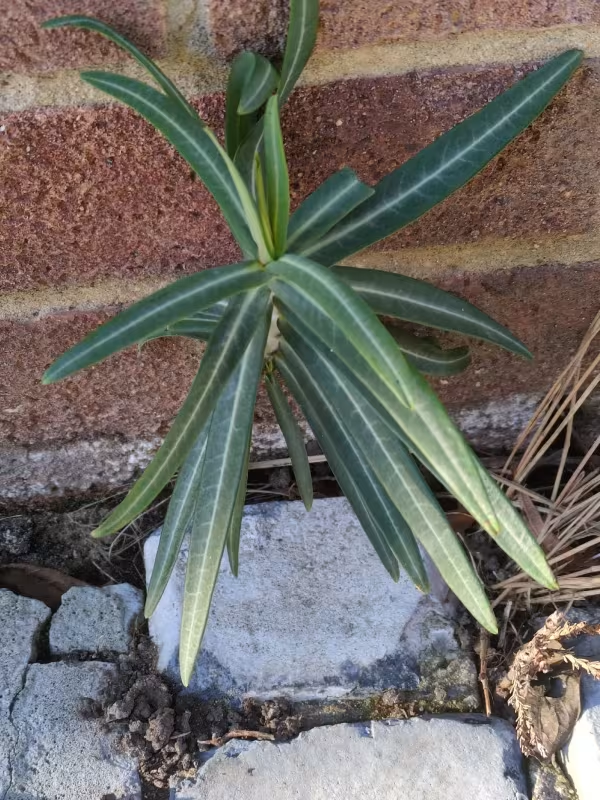
Description
Sowing dates
Caper spurge (Euphorbia lathyris) is an annual or biennial herbaceous plant belonging to the Euphorbiaceae family. It is typically sown in early spring once the soil temperature consistently stays above 10°C.
The planting process involves creating rows spaced approximately 45 to 60 cm apart to facilitate mechanical weeding and ensure optimal canopy development during the growing season.
Seeds are sown at a shallow depth of 2 to 3 cm, as deep planting can inhibit germination and lead to uneven seedling emergence across the field.
In regions with mild winter climates, autumn sowing is possible, which helps the plant utilize winter moisture and establish a more robust root system before the heat of summer.
Depending on the desired plant density, the seeding rate is adjusted to ensure that the final stand allows for adequate sunlight penetration, which is vital for fruit production.
Growing requirements
Caper spurge thrives in well-drained, fertile loamy soils but displays a remarkable adaptability to lighter, sandy textures provided they are properly managed.
This plant is notably drought-tolerant due to its deep taproot, which allows it to access water sources unavailable to shallower-rooted field crops.
Sunlight exposure is a critical factor for successful growth; the species requires full sun to maximize seed yield and to avoid the spindly, weak growth associated with shaded environments.
While the plant is hardy, it is sensitive to waterlogged conditions, making proper soil drainage a key requirement for any commercial cultivation site.
Neutral or slightly alkaline pH levels are ideal for the development of healthy plant tissues and ensuring the efficiency of nutrient uptake from the soil profile.
Yield
The yield of Caper spurge depends heavily on site conditions and agronomic inputs, with expected seed production ranging between 1.5 and 3 tonnes per hectare.
The seeds are highly prized for their high oil content, often exceeding 40–50%, making this species a viable industrial candidate for large-scale biodiesel production.
Beyond seed oil, the lignocellulosic biomass of the plant can be harvested for bioenergy applications, such as anaerobic digestion for biogas production.
Proper nitrogen fertilization programs, when combined with good water management, can significantly increase seed weight and overall vegetative yield per hectare.
Farmers aiming for high yields should monitor the plant's development stages carefully to ensure that moisture stress is mitigated during the critical flowering period.
Main diseases and pests
Due to the presence of a toxic milky latex in all parts of the plant, Caper spurge is naturally resistant to many common agricultural pests that affect other oilseed crops.
Root rot and fungal infections remain the primary biological threats, particularly in areas where soil drainage is poor or during periods of excessive rainfall.
Weed management in the early stages of growth is essential, as the young seedlings of Caper spurge compete poorly with aggressive weed species for nutrients and space.
Wireworms can occasionally cause damage to the roots of emerging seedlings, requiring preventative soil management practices if high pest populations are identified.
Routine cultivation of inter-row spaces is recommended not only to control weeds but also to improve soil aeration, which promotes healthier root development.
Harvesting
Harvesting should be timed when the seed capsules transition from green to a dark brown, indicating that the seeds have reached physiological maturity.
Delayed harvesting risks significant yield loss, as the seed capsules of the plant are prone to shattering and releasing seeds onto the ground when fully mature.
Standard combine harvesters can be adjusted to collect the seeds, with careful attention paid to drum speed to prevent the crushing or damaging of the oil-rich seeds.
Post-harvest processing involves immediate drying to a moisture content of roughly 8–10% to ensure storage stability and prevent oil degradation over time.
Seed cleaning is a vital final step to remove plant debris, ensuring that the final product meets industrial standards for oil extraction processes.