
Mediterranean spurge
Euphorbia characias Wulfenii x E. martinii
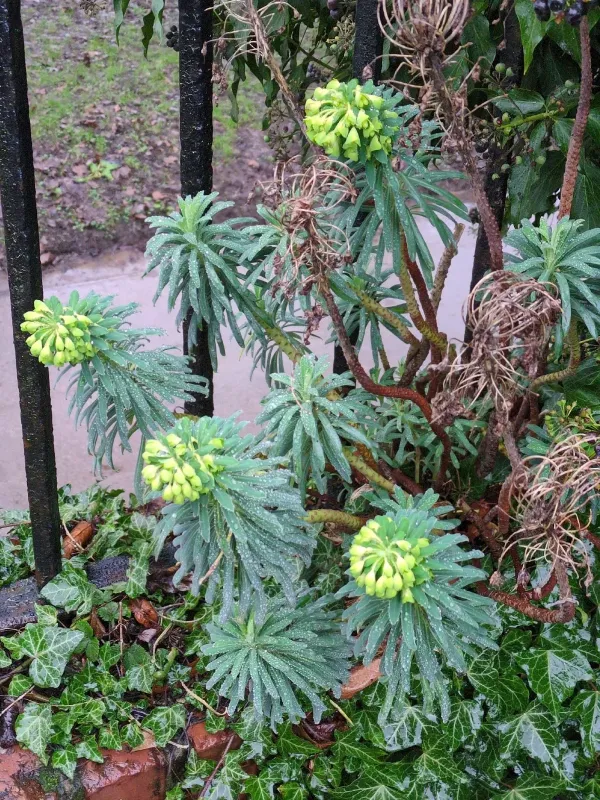
Description
Growing requirements
Mediterranean spurge (Euphorbia characias) is an architectural perennial from the Euphorbiaceae family. This species and its hybrids are highly valued in landscape design for their structural evergreen foliage and long-lasting inflorescences.
Native to the Mediterranean region, this plant thrives in environments characterized by long, hot, dry summers and mild, wet winters. To achieve the best growth, provide it with full sun exposure and protection from harsh, drying winds during the winter.
The success of this culture heavily depends on soil drainage. Mediterranean spurge is extremely sensitive to waterlogged conditions, which lead to root rot. Sandy, rocky, or well-drained loamy soils are ideal for its long-term health and vigor.
Regarding moisture management, this plant is considered drought-tolerant once established. Regular watering is only necessary during the first year after planting to ensure deep root development; later, it prefers a drier environment.
Minimal fertilization is required. A light application of balanced compost or slow-release fertilizer in early spring supports healthy growth, but avoid high-nitrogen fertilizers that can cause the stems to become weak and floppy.
Main diseases and pests
The most significant threat to the health of this plant is overwatering, which creates an environment conducive to soil-borne fungal pathogens. Maintaining optimal drainage is the primary strategy for disease prevention.
Insect pests such as aphids and spider mites may occasionally infest the plant, particularly in sheltered or poorly ventilated locations. Monitoring the undersides of leaves during the spring is advised to detect early signs of infestation.
The plant contains a toxic, milky latex that acts as a natural deterrent against many herbivores, including deer and rabbits. This makes it a great low-maintenance option for gardens frequently visited by wildlife.
Care must be taken during pruning or division, as the sap is a potent skin and eye irritant. Always wear protective gloves and long sleeves when handling the plant to prevent contact with the irritating latex.
In cases of severe infestation or disease, approved horticultural oils or systemic fungicides can be used, but manual removal of damaged parts is often sufficient if the plant is growing in its preferred conditions.