
Spiny spurge
Euphorbia spinosa
Description
Growing requirements
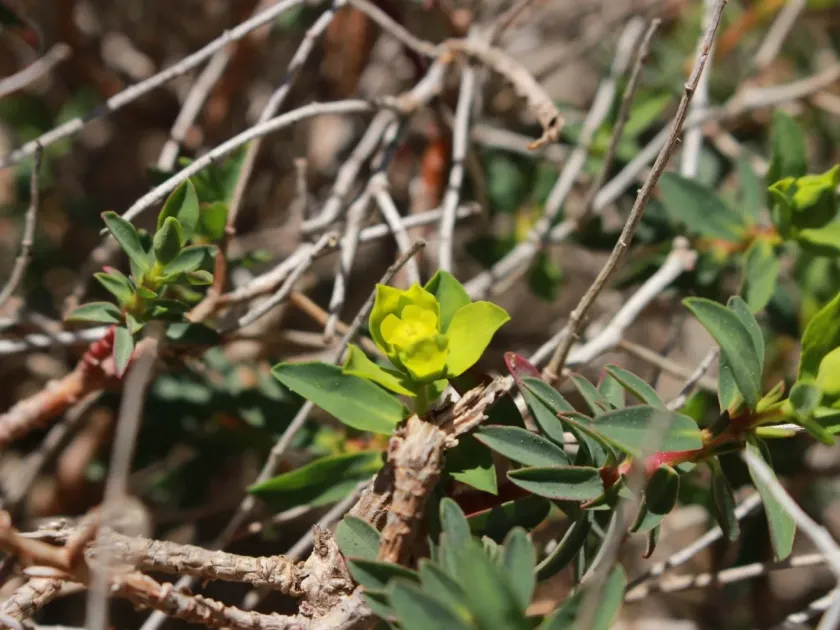
Euphorbia spinosa, commonly known as spiny spurge, is a perennial semi-shrub belonging to the Euphorbiaceae family. It is native to the Mediterranean basin and the Balkan Peninsula, naturally occurring in rocky, sun-drenched habitats where water is scarce.
The plant is characterized by a dense, cushion-like growth habit, typically growing to a height of 10 to 30 centimeters. Its stems are rigid and intricately branched, terminating in sharp spines that protect the plant from herbivory and reduce water loss through evaporation.
To cultivate this species successfully, one must provide a location with full sun exposure. It is highly drought-tolerant and thrives in conditions that would cause most other agricultural crops to fail. Proper site selection is critical, as it requires excellent drainage to prevent crown rot.
The ideal soil for Euphorbia spinosa is a gritty, sandy, or rocky substrate with a neutral to slightly alkaline pH. It does not require fertilizers; in fact, over-fertilization can weaken the plant's structural integrity and make it more susceptible to environmental stress.
In terms of agricultural and horticultural use, the plant is primarily employed in xeriscaping and rock gardens. Its low maintenance requirements and high tolerance for heat make it an ideal choice for arid landscape designs where irrigation is minimal or unavailable.
Main diseases and pests
The most significant threat to the health of Euphorbia spinosa is over-irrigation, which promotes fungal infections like root and stem rot. Maintaining a dry environment around the base of the plant is essential for its longevity and disease prevention.
While the plant is relatively pest-resistant due to its toxic sap, it can occasionally be affected by spider mites or mealybugs under stress. Keeping the plants well-spaced and ensuring good air circulation are the best cultural practices to manage these potential threats.