
Spiral Spurge
Euphorbia spiralis
Description
Growing requirements
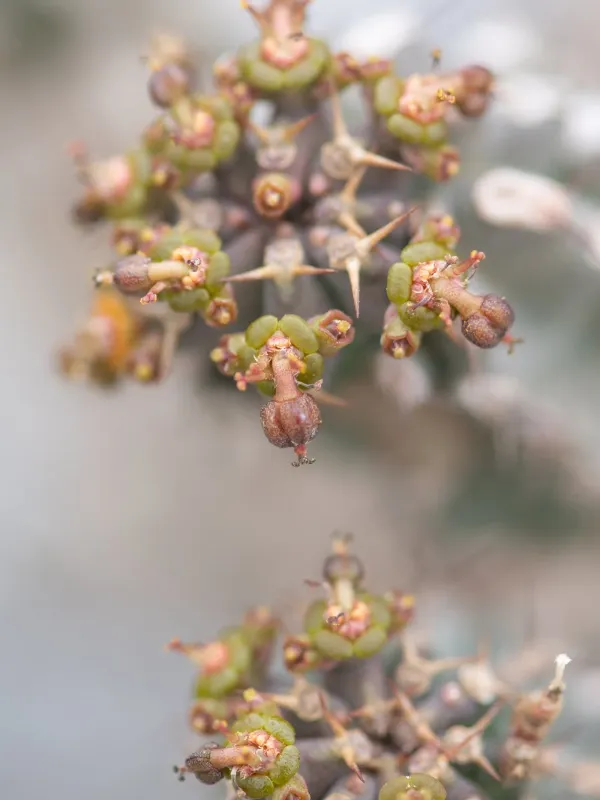
The Spiral Spurge (Euphorbia spiralis) is a fascinating member of the Euphorbiaceae family. This succulent species is renowned for its architectural aesthetic, characterized by its naturally spiraling stems that grow in a distinct, rhythmic pattern.
Native to arid regions of Africa, this plant has adapted to harsh environmental conditions with limited moisture. In cultivation, it thrives in environments that mimic its natural habitat, requiring high levels of solar radiation and excellent air circulation to maintain its structural integrity.
The soil requirements for Euphorbia spiralis are stringent, necessitating a highly porous and well-draining substrate. Growers should utilize mixes specifically designed for cacti, which typically include high percentages of pumice, coarse sand, and grit to ensure the root system never remains saturated.
Temperature management is vital for the health of the plant. During the active growing season, it prefers a temperature range of 20°C to 28°C. During its dormant winter phase, temperatures should be lowered to 12°C–15°C to simulate the cooler, dry season of its origin.
Economically and horticulturally, this plant is primarily valued as a specialty item for succulent collectors and landscape designers. Its geometric appeal makes it an ideal candidate for desert-style landscapes in greenhouses or as a unique sculptural piece in indoor displays.
Main diseases and pests
The most significant threat to the survival of Euphorbia spiralis is fungal rot, usually triggered by excessive watering during the dormant period. When moisture levels are too high, the succulent stems become vulnerable to soft rot, which can quickly turn necrotic.
Pests such as mealybugs are a common problem for this species. These insects tend to hide in the grooves of the spiral stems, making them difficult to detect until they cause significant damage to the epidermis and weaken the plant overall.
Management strategies involve rigorous inspection and the use of insecticidal soaps or systemic treatments when an infestation is identified. Preventative measures include keeping the soil dry and ensuring the plant has adequate space, reducing the micro-humidity that pests prefer.
Handle Euphorbia spiralis with caution, as it contains a milky, caustic sap that can cause skin and eye irritation. Protective eyewear and gloves should always be utilized when pruning or propagating the plant to ensure safety.
In terms of long-term health, sanitation is key. Regularly clearing away dead tissue and providing a stable, well-draining environment will mitigate the majority of risks. A proactive approach to plant hygiene significantly extends the lifespan of this unique botanical specimen.