
Crown of thorns
Euphorbia milii Des Moul.
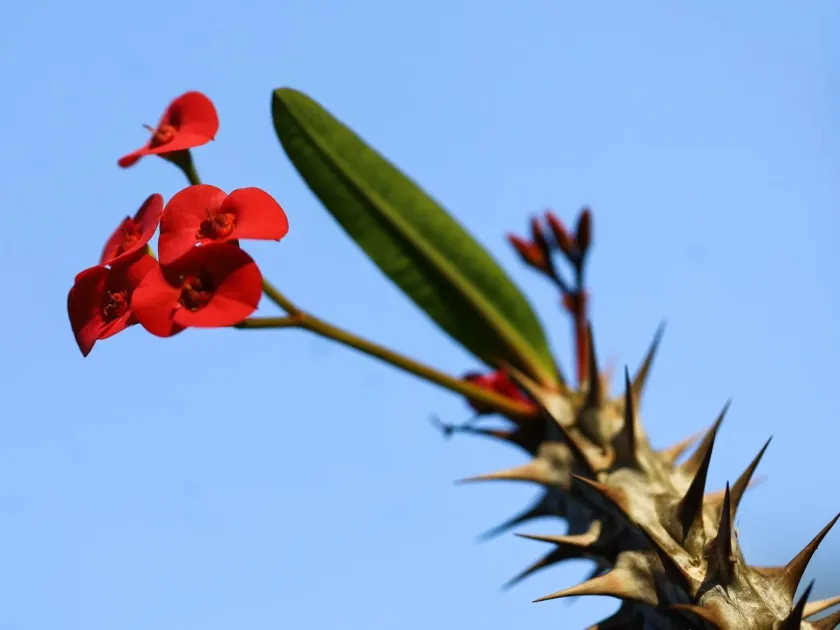
Description
Growing requirements
The Crown of thorns (Euphorbia milii) is a woody, succulent perennial shrub belonging to the Euphorbiaceae family. Originating from Madagascar, the plant has evolved to thrive in tropical climates with high light intensity and distinct dry periods.
For successful cultivation, the plant requires a stable temperature range between +20 and +25 degrees Celsius during the active growth phase. A cooler winter dormancy period around +15 degrees Celsius is beneficial for future flower bud development.
The crop demands a well-drained, porous substrate to ensure root aeration. A mix consisting of loam, leaf mold, and coarse sand provides the necessary structure to prevent water stagnation, which is the primary cause of root failure.
Euphorbia milii is a heliophilic species that requires maximum sun exposure. Placing the plant in a bright location ensures robust growth and encourages the development of its colorful bracts, which are essential for its market appeal.
Watering should be managed with caution, allowing the soil to dry out significantly between applications. The plant is drought-tolerant and does not require high ambient humidity, making it suitable for various indoor and greenhouse environments.
Main diseases and pests
Fungal diseases, particularly root and stem rots, are the most significant threats to the crop. These are primarily caused by overwatering or the use of poorly draining soil, which creates an anaerobic environment for pathogens.
Pest pressure often comes from sucking insects such as mealybugs, scale insects, and spider mites. Regular scouting and the application of systemic insecticides are standard procedures for maintaining plant health in commercial settings.
The plant produces a sticky, toxic latex throughout its stems and leaves. This serves as a natural defense mechanism against herbivores, but it requires that all pruning or handling be performed with gloves to avoid contact dermatitis.
Improving air circulation around the foliage is a key agronomic practice to prevent the spread of fungal spores. Proper spacing between individual plants ensures that humidity does not accumulate, reducing the risk of disease outbreaks.
To ensure high quality, regular pruning is necessary to maintain a balanced shape and promote denser branching. Pruning also helps remove potentially infected tissues, acting as a preventive measure against further spread of pathogens.