
Euphorbia lomelii
Euphorbia lomelii Steinmann
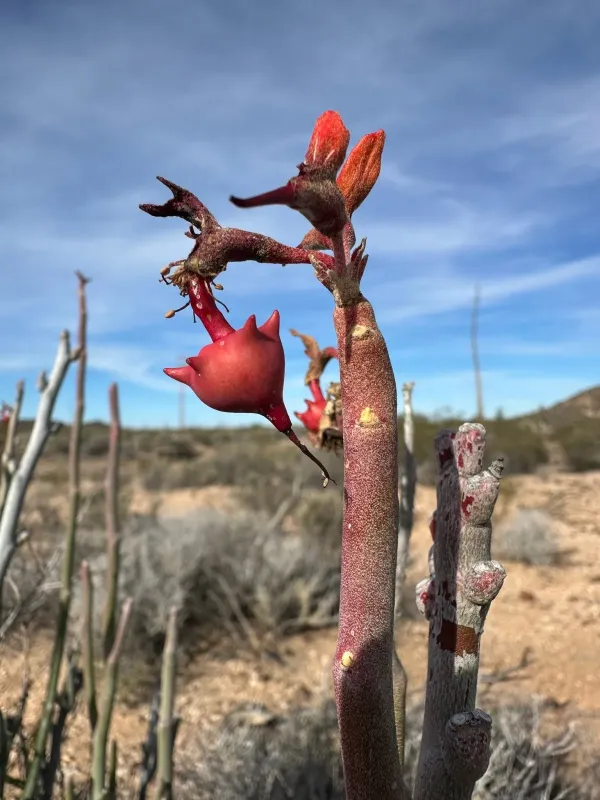
Description
Growing requirements
Euphorbia lomelii is a succulent shrub belonging to the Euphorbiaceae family. Native to the arid regions of Sonora, Mexico, this plant has evolved to survive in extreme desert environments with very limited annual rainfall.
The plant thrives in well-drained, sandy, or rocky soils with low nutrient content. It requires high solar radiation and thrives in temperatures that would be detrimental to many conventional agricultural crops.
Climate requirements for successful cultivation include high thermal units and protection from frost, as the species is highly sensitive to cold temperatures. It is primarily suited for cultivation in regions with arid or semi-arid climatic conditions.
Agrotechnical management focuses on weed suppression during the early stages of plant development. Due to the slow growth rate of the species, mechanical or manual weed control is essential to ensure that young plants establish successfully.
Water management is critical; the plant is highly susceptible to root pathogens triggered by waterlogging. Irrigation should be minimal and strictly controlled, preferably using precision drip irrigation systems in professional plantations.
Yield
The primary economic interest in Euphorbia lomelii lies in its latex content, which can be processed into natural rubber. This makes it a potential candidate for sustainable rubber production in regions where traditional Hevea brasiliensis cannot be grown.
Harvesting involves the collection of biomass, which is then processed to extract the latex. Sustainable harvest techniques focus on pruning rather than whole-plant destruction to ensure the long-term productivity of the field.
The total yield of the crop is determined by plant density and the efficiency of the latex extraction process. Ongoing research into breeding programs seeks to improve the chemical profile of the sap to maximize industrial quality.
Beyond rubber production, the plant shows promise in the pharmaceutical industry due to the presence of specific diterpenes and other secondary metabolites within its tissues that may exhibit biological activity.
The industrial processing of Euphorbia lomelii requires specialized equipment and strict health and safety protocols. The sap is a known irritant, which necessitates the use of protective gear and careful handling during the extraction and harvesting stages.